
Red-capped parrot
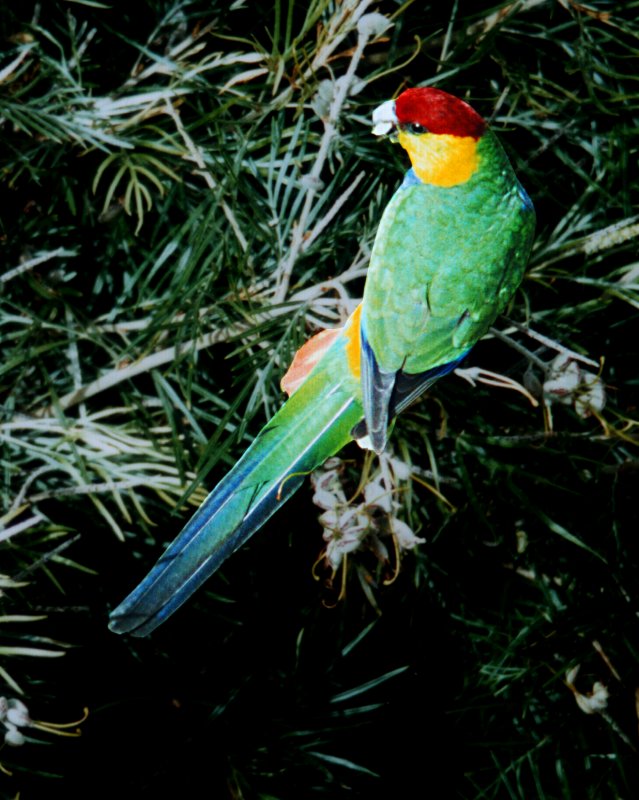
The red-capped parrot is a distinctive broad-tailed parrot native to southwestern Australia, recognized by its bright crimson crown, green-yellow cheeks, and elongated beak. Primarily found in woodland and open savannah, it feeds on seeds, flowers, and berries, occasionally supplementing its diet with insects. Despite historical persecution as a pest and habitat loss, its population is growing, leading to a "least-concern" conservation status.
Key Facts
- ›Native to southwestern Australia, found in woodland and open savannah habitats.
- ›Characterized by a bright crimson crown, green-yellow cheeks, and a notably elongated beak.
- ›Primarily herbivorous, feeding on seeds (especially eucalypts), flowers, and berries; insects are occasionally consumed.
- ›Nesting occurs in tree hollows of large, mature trees.
- ›Considered of least concern by the IUCN, with a growing population despite past pest classification.
- ›Has a reputation for being anxious and difficult to breed in captivity.
Red-Capped Parakeet, Pileated Parrot, Western King Parrot, Purple-Crowned Parrot, Grey Parrot, Hookbill, Blue Parrot, Djar-Rail-Bur-Tong, Djarrybarldung, Jul-U-Up, Chelyup, Djayop
Australia
Woodland, Open Savannah, Heathland, Eucalypt Forest
Crimson, Green, Yellow-Green, Purple-Blue, Dark Green, Yellow-Green Rump, Dark Blue Tail Tip, Red Flanks, White Wing Stripe
Elongated Beak, Bright Crimson Crown, Green-Yellow Cheeks, Purple-Blue Underparts
Seeds, Eucalypt Seeds, Flowers, Berries, Insects, Nectar
Anxious, Difficult To Breed In Captivity
- Rapidly Repeated Contact Call
- Series of High-Pitched Loud Alarm Calls
- Loud Chattering When Agitated Or Marking Territory
Tree Hollows In Mature, Large Trees, Height Between 4.5 and 16 Meters, Nests Are Defended Vigorously
About Red-capped parrot
The red-capped parrot (Purpureicephalus spurius), also known by various other common names including the red-capped parakeet and pileated parrot, is a striking species of broad-tailed parrot endemic to southwestern Australia. Its distinctive appearance, featuring a bright crimson crown, green-yellow cheeks, and a notably elongated beak, sets it apart from other parrot species. This parrot inhabits woodland and open savannah country, where it is primarily herbivorous, feeding on seeds, particularly those of eucalypts, as well as flowers and berries.
Taxonomy and Evolution
First described by Heinrich Kuhl in 1820, the red-capped parrot was initially placed in its own genus, Purpureicephalus, due to its unique physical characteristics, especially its elongated bill. However, genetic studies indicate it is closely related to the mulga parrot (Psephotellus varius) and lies within the lineage of Psephotellus parrots. The specific epithet 'spurius' refers to the marked difference between adult and immature plumages. No subspecies are currently recognized.
Description and Identification
Adult males are characterized by their crimson foreheads and crowns, green hindnecks and cheeks, and purple-blue underparts. The wings, back, and long tail are dark green, with the tail having a dark blue tip. Adult females share a similar plumage but are often slightly duller, with their key distinguishing feature being a white stripe on the under-surface of the wing. Juveniles are predominantly green, gradually developing adult plumage after their first moult.
Distribution and Habitat
The red-capped parrot is found in the Southwest Australia ecoregion, favoring dense to open forests and woodlands, as well as heathland in coastal regions. Its distribution extends south from the Moore River to Esperance, and inland to areas like Gingin and Mooliabeenee. While sedentary in higher rainfall areas, they can be locally nomadic in drier regions, typically remaining within 100 km of the coastline. They are often associated with marri trees, which provide a consistent food source.
Behaviour and Breeding
These parrots are usually observed in pairs or small social groups, though larger flocks, particularly of juveniles, can occur. They are known to be shy and often retreat to the upper canopy when disturbed, which has made detailed study of their breeding and social behavior challenging. Mating is thought to be long-term. The breeding season spans from August to December, with nests constructed in tree hollows of mature trees. The female incubates a clutch of usually five to six eggs, with incubation lasting between 20 to 24 days. Nestlings fledge between 30 and 37 days after hatching.
Diet and Feeding Habits
The diet of the red-capped parrot consists mainly of seeds, with a preference for marri seeds. They also consume seeds from a variety of other native plants, as well as immature fruit, nectar, and occasionally insects. Their specialized beak allows them to extract seeds from tough capsules. They have also adapted to feed on orchard fruits and garden produce in suburban areas.
Conservation and Aviculture
Despite having been historically shot as a pest due to perceived damage to orchard crops, the red-capped parrot's population is currently growing, and it is listed as a species of least concern by the IUCN. Their attractive plumage makes them desirable in aviculture, though they are reputed to be anxious and difficult to breed in captivity. Successful reproduction in captivity was first recorded in England in 1909.
Source: Wikipedia ↗
Frequently Asked Questions
What are the distinctive physical features of the red-capped parrot?
The red-capped parrot is easily recognized by its bright crimson forehead and crown, contrasting with green-yellow cheeks. It also possesses a distinctive long, slender, and hooked beak, unlike most other parrot species.
Where is the red-capped parrot found?
This species is endemic to the Southwest Australia ecoregion, inhabiting dense to open forests and woodlands, as well as heathland in coastal areas. Its range extends south from the Moore River to Esperance.
What does the red-capped parrot eat?
Its diet is predominantly herbivorous, consisting of seeds, particularly from eucalypts, along with flowers and berries. They are known to consume seeds from marri, karri, and various other native plants, and occasionally eat insects.
How does the female red-capped parrot differ from the male?
The adult female is similar to the male but often appears slightly duller. Her key distinguishing feature is a white stripe on the underside of her wings, which is not as prominent or present in males.
What is the conservation status of the red-capped parrot?
The red-capped parrot is classified as a species of least concern by the International Union for Conservation of Nature (IUCN). This is due to its growing population and large range, despite historical issues with habitat loss and being shot as a pest.
What are the nesting habits of the red-capped parrot?
Red-capped parrots nest in tree hollows, typically in older, large trees such as marri or jarrah. The nest sites are usually between 4.5 to 16 meters above the ground and are vigorously defended by the pair.
Related Parrot species
Ornate lorikeet
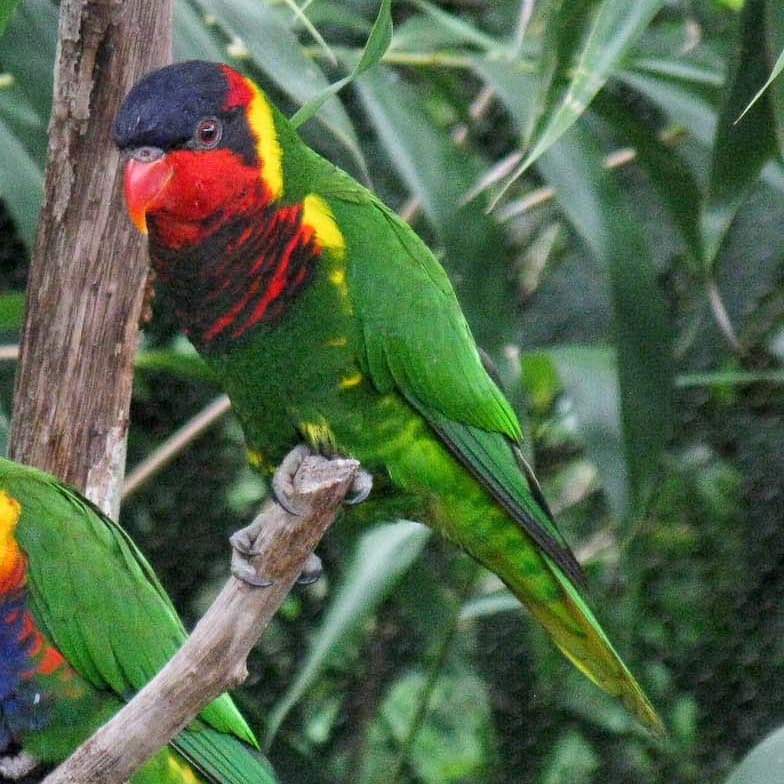
The ornate lorikeet, also known as the ornate lory, is a species of parrot endemic to the Sulawesi archipelago in Indonesia. This primarily green parrot is distinguished by its vibrant purple-blue head, red face, and distinctive red and blue striped chest. It is commonly found in various Indonesian habitats, including forests, woodlands, and plantations.
Blue-eared lory
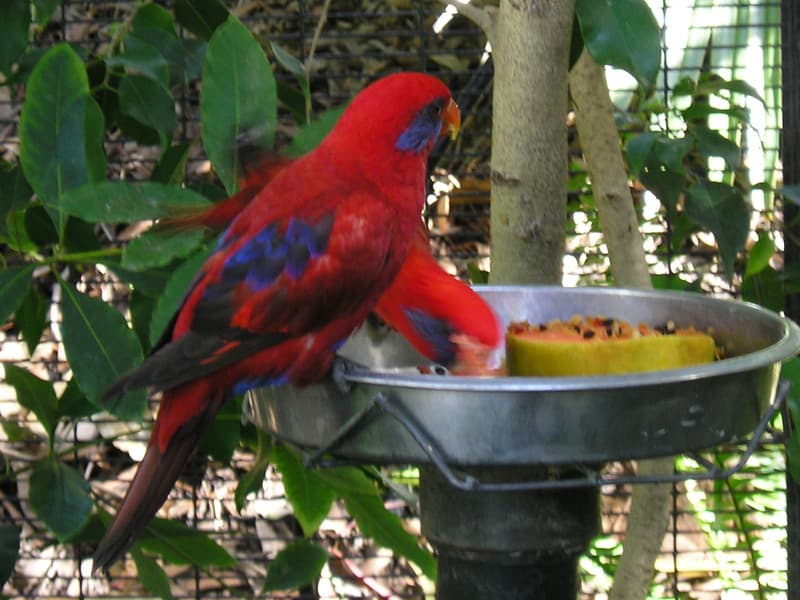
The blue-eared lory is a small parrot native exclusively to the island of Seram in Indonesia. It is distinctive for its vibrant plumage, featuring a red body contrasted with blue cheeks and ear-coverts, and a purple-blue abdomen. This species is considered Near Threatened due to a declining population within its limited range.

Red-crowned parakeet
The red-crowned parakeet (Cyanoramphus novaezelandiae), also known as the red-fronted parakeet, is a small parrot native to New Zealand. It is distinguished by its bright green plumage and a distinctive red marking on its head, along with red patches on its rump. This adaptable species can be found in various habitats and has a diverse diet, though its population has been significantly impacted by invasive predators.