
Blue-eared lory
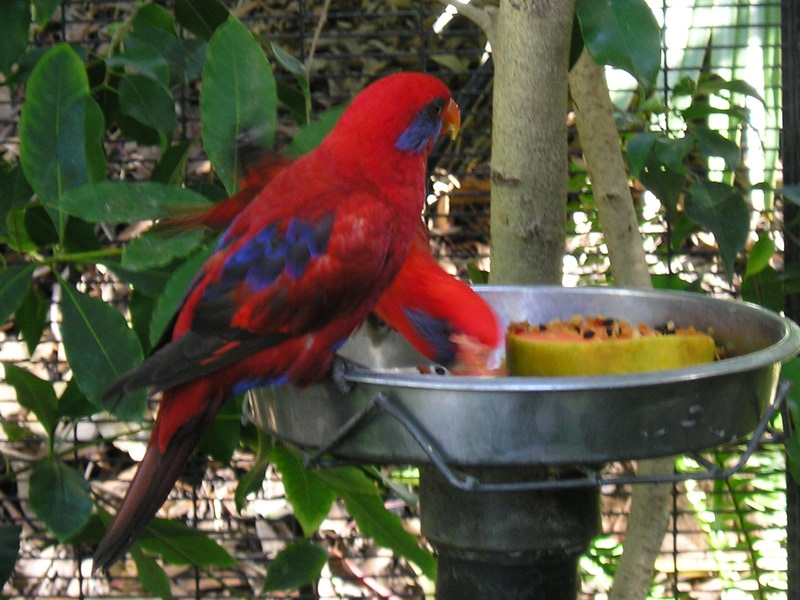
The blue-eared lory is a small parrot native exclusively to the island of Seram in Indonesia. It is distinctive for its vibrant plumage, featuring a red body contrasted with blue cheeks and ear-coverts, and a purple-blue abdomen. This species is considered Near Threatened due to a declining population within its limited range.
Key Facts
- ›Found only on the island of Seram in Indonesia.
- ›Measures approximately 24 cm in length.
- ›Characterized by a red body, blue cheeks and ear-coverts, and a purple-blue abdomen.
- ›Feeds on flowering trees, including tree-heathers.
- ›Typically found in small flocks.
- ›Classified as near Threatened on the IUCN Red List due to a decreasing population.
Ceram Lory, Half-Masked Lory, Seram Lory
Indonesia
Montane Forests, Flowering Trees, Tree-Heathers
Red, Blue, Purple-Blue, Black
Blue Cheeks and Ear-Coverts, Purple-Blue Abdomen and Undertail Coverts, Black Streaked Wings
Flowering Trees, Tree-Heathers
About Blue-eared lory
The Blue-Eared Lory
The blue-eared lory, scientifically known as Trichoglossus semilarvatus, is a distinctive parrot species endemic to the island of Seram in Indonesia. Also referred to as the Ceram lory, half-masked lory, or Seram lory, this bird is easily identifiable by its striking plumage. It measures approximately 24 centimeters in length and features a predominantly red body, accentuated by vivid blue cheeks, chin, and ear-coverts. Its abdomen and undertail coverts display a deep purple-blue hue, and its wings are marked with black streaks.
Habitat and Diet
This species primarily inhabits montane regions, typically found between altitudes of 1600 to 2400 meters, though it can sometimes be observed as low as 800 meters. Its natural environment includes forests rich with flowering trees, where it forages for food. Observations indicate that the blue-eared lory also feeds on tree-heathers found above the tree-line, suggesting an adaptation to higher altitude floral resources.
Conservation and Social Behavior
The blue-eared lory is usually encountered in small flocks, indicating a social nature. Despite being considered common within its limited range, the species is facing population decline. Consequently, it has been evaluated as Near Threatened on the IUCN Red List of Threatened Species, with its numbers reportedly decreasing since at least 2019. This status highlights the importance of conservation efforts for this unique island endemic.
Source: Wikipedia ↗
Frequently Asked Questions
What is the scientific name of the blue-eared lory?
The scientific name of the blue-eared lory is Trichoglossus semilarvatus.
Where does the blue-eared lory live?
The blue-eared lory is found only on the island of Seram, located in the Maluku province of Indonesia.
What are the distinguishing physical features of the blue-eared lory?
This parrot is recognized by its red body, bright blue cheeks and ear-coverts, and a purple-blue abdomen and undertail coverts. Adults have an orange beak, while juveniles have pink beaks.
What does the blue-eared lory eat?
The diet of the blue-eared lory consists of flowering trees, and they have been observed feeding on tree-heathers at higher altitudes.
Is the blue-eared lory common?
While common within its limited geographic range, the species' overall population is decreasing, leading to its classification as Near Threatened.
Related Parrot species
Ornate lorikeet
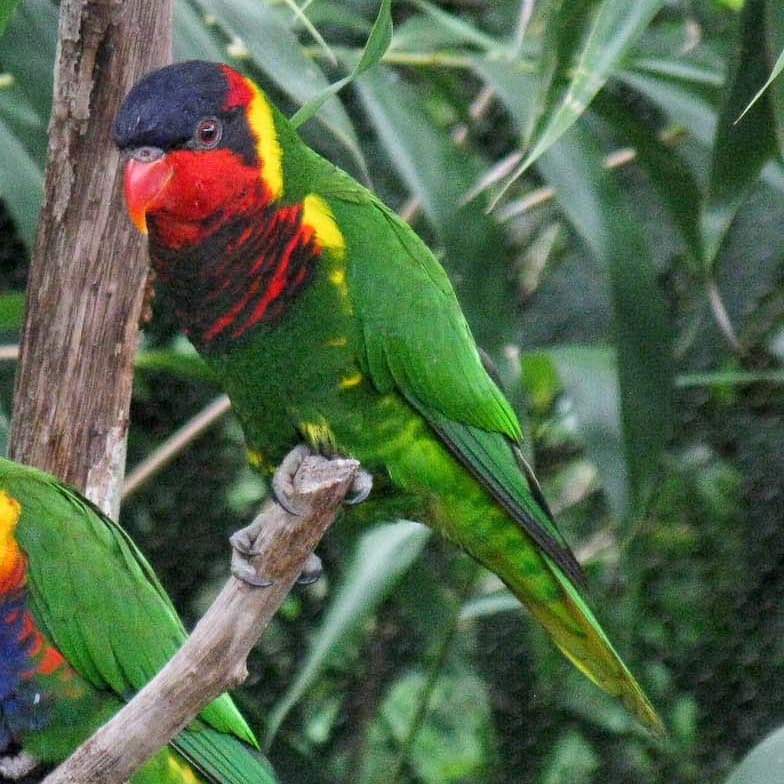
The ornate lorikeet, also known as the ornate lory, is a species of parrot endemic to the Sulawesi archipelago in Indonesia. This primarily green parrot is distinguished by its vibrant purple-blue head, red face, and distinctive red and blue striped chest. It is commonly found in various Indonesian habitats, including forests, woodlands, and plantations.
Black-winged lory
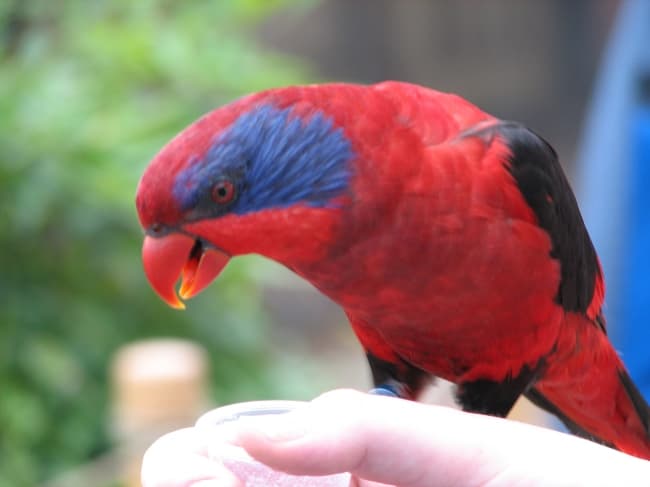
The black-winged lory, scientifically known as Trichoglossus cyanogenius, is a medium-sized parrot native to the islands of Biak, Numfoor, and Mios Num in Indonesia's Cenderawasih Bay. It is distinguished by its vibrant red plumage, contrasting black shoulders, and a striking violet ear-patch.

Nicobar parakeet
The Nicobar parakeet (Psittacula caniceps), also known as Blyth's parakeet, is a large parrot endemic to the Nicobar Islands in the Indian Ocean. It is distinguished by its predominantly green plumage, yellowish-grey head, and striking black facial markings, with notable differences in beak color between males and females. Listed as Near Threatened, its population is declining due to human settlement and its popularity in the caged bird trade.