
Red-fan parrot
Not threatened (listed on CITES Appendix II)
The Red-fan parrot, also known as the hawk-headed parrot, is a distinctive New World parrot native to the Amazon rainforest. Its most striking feature is its elongated neck feathers, which can be raised into an elaborate fan, increasing its apparent size. This species is found across several South American countries and is the sole member of its genus.
Key Facts
- ›Possesses elongated neck feathers that can be raised into a fan-like display.
- ›Inhabits the Amazon rainforest, found in countries like Brazil, Suriname, and Peru.
- ›Feeds primarily on fruits in the forest canopy.
- ›Nests in tree holes and stumps, typically laying two to three eggs.
- ›Juveniles are often docile, but adults can exhibit ILL-tempered and aggressive behavior, especially when breeding.
- ›Listed on CITES Appendix II.
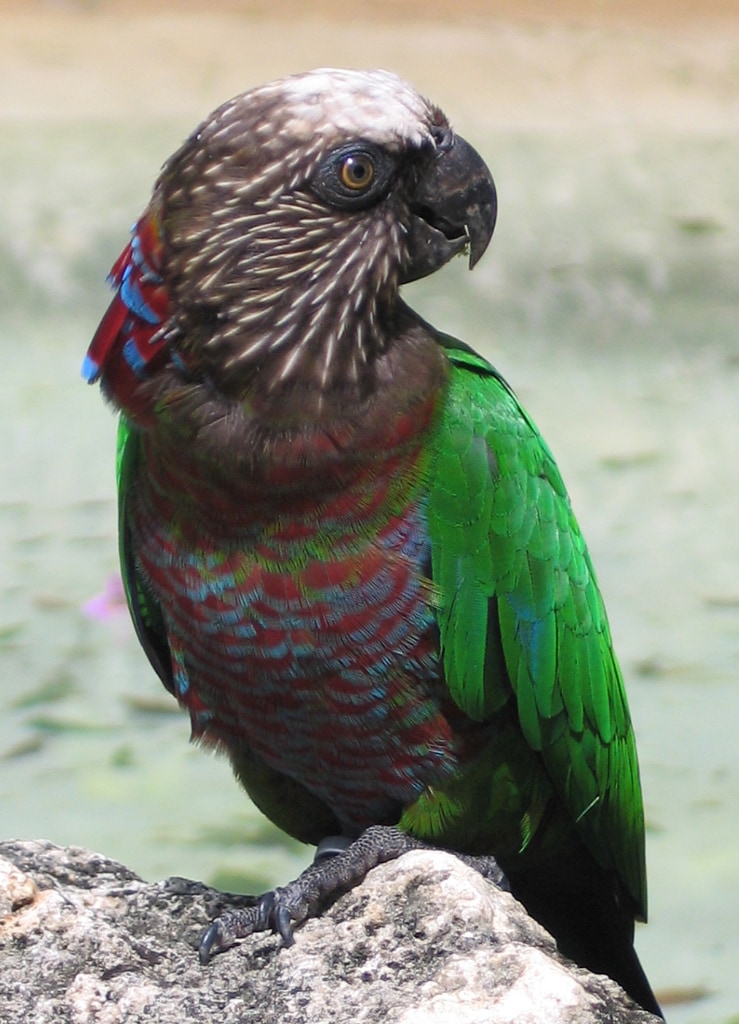
Hawk-Headed Parrot
South America
Amazon Rainforest, Undisturbed Forest, Forest Canopy
- Elongated Neck Feathers That Can Be Raised Into A Fan
Fruits
- Juveniles: Docile
- Adults: Ill-Tempered, Stubborn, Unpredictable, Strong-Willed, Aggressive
Holes In Trees, Holes In Stumps
About Red-fan parrot
The Red-fan parrot, scientifically known as Deroptyus accipitrinus and also referred to as the hawk-headed parrot, is a unique species of New World parrot found predominantly in the Amazon rainforest. It holds the distinction of being the sole member of the genus Deroptyus. Its presence is noted across a wide geographical range in South America, including Brazil, Suriname, Bolivia, Ecuador, Colombia, parts of northeastern Peru, Venezuela, French Guiana, and Guyana.
Description and Behavior
The most visually striking characteristic of the Red-fan parrot is its specialized neck feathers. These feathers are elongated and can be raised at will to form an elaborate fan, a display that significantly increases the bird's apparent size. This defensive mechanism is believed to be employed when the parrot feels threatened. In its natural habitat, the Red-fan parrot typically resides in undisturbed forests, where it forages in the canopy, primarily feeding on fruits. Physically, it is identifiable by its dark brown face marked with white streaks, a bare black patch surrounding its brown eye, green wings, flanks, and tail, and a breast adorned with red and blue bars.
Reproduction and Aviculture
Reproduction for the Red-fan parrot involves nesting in cavities within trees and stumps. A typical clutch comprises two to three eggs, with the incubation period lasting approximately 26 days. Young parrots begin to fledge, meaning they take their first flight, around 10 weeks after hatching. While wild populations are not considered threatened, the species is listed on CITES Appendix II, indicating that its trade is regulated. In aviculture, Red-fan parrots are sometimes kept as companion birds or in aviaries. Juvenile birds are often docile, but adult parrots can exhibit challenging temperaments, being ill-tempered, stubborn, unpredictable, and strong-willed, with a propensity for aggression, particularly when in breeding condition. Successful keeping as pets requires firm handling, a patient owner experienced with birds, and keen observation of parrot body language, though individual temperaments can vary.
Source: Wikipedia ↗
Frequently Asked Questions
What is a Red-fan parrot?
The Red-fan parrot, scientifically known as Deroptyus accipitrinus and also called the hawk-headed parrot, is a species of parrot found in the Amazon rainforest. It is the only member of its genus, Deroptyus.
Where do Red-fan parrots live?
These parrots are native to the Amazon rainforest and are found in various South American countries, including Brazil, Suriname, Bolivia, Ecuador, Colombia, northeastern Peru, Venezuela, French Guiana, and Guyana.
What makes the Red-fan parrot distinctive?
The most notable feature of the Red-fan parrot is its elongated neck feathers, which it can raise to form an elaborate fan. This display is thought to be used when the bird feels threatened and increases its apparent size.
What do Red-fan parrots eat?
In their natural habitat, Red-fan parrots primarily feed in the canopy of the rainforest. Their diet consists mainly of fruits.
How do Red-fan parrots behave in captivity?
While juvenile Red-fan parrots are often docile, adults can be challenging pets. They are known to be ill-tempered, stubborn, unpredictable, and can show extreme aggression, particularly when breeding. They tend to bond with one person and require experienced owners.
What is the conservation status of the Red-fan parrot?
The Red-fan parrot is not considered threatened. However, it is listed on CITES Appendix II, which regulates the trade of species that are not immediately threatened with extinction but could become so.
How do Red-fan parrots reproduce?
Red-fan parrots nest in holes found in trees and stumps. A typical clutch consists of two to three eggs, which hatch after about 26 days. The young birds begin to fledge, or fly, at approximately 10 weeks old.
Related Parrot species

Dusky lory
The dusky lory (Pseudeos fuscata) is a species of parrot native to New Guinea and its offshore islands, known for its striking dark plumage contrasted with bright orange or yellow breast bands. It is a highly social and vocal bird, often observed in large flocks, and exhibits two distinct color morphs: red-orange and yellow. The dusky lory is primarily a nectarivore, adapting to a variety of forest habitats and remaining common across its range, though it faces threats from habitat loss and illegal trade.

Ochre-marked parakeet
The ochre-marked parakeet is a vibrantly colored species of parrot native to Brazil. It is distinguished by its predominantly green plumage, accented with striking red patches, a dark crown, and a bright blue bib on its chest. This parakeet primarily inhabits the canopy of lowland humid forests and forest edges, and is currently listed as Vulnerable due to habitat loss.

Red-collared lorikeet
The Red-collared lorikeet is a species of parrot native to northern Australia, inhabiting wooded areas and adapting well to urban environments. It is distinguished from its close relative, the rainbow lorikeet, by a distinctive orange-red collar on its nape. Annually, many individuals exhibit symptoms of apparent intoxication after the dry season, a phenomenon whose cause remains unclear but is not attributed to fermented nectar.