
Dusky lory
The dusky lory (Pseudeos fuscata) is a species of parrot native to New Guinea and its offshore islands, known for its striking dark plumage contrasted with bright orange or yellow breast bands. It is a highly social and vocal bird, often observed in large flocks, and exhibits two distinct color morphs: red-orange and yellow. The dusky lory is primarily a nectarivore, adapting to a variety of forest habitats and remaining common across its range, though it faces threats from habitat loss and illegal trade.
Key Facts
- ›Native to New Guinea and nearby islands, including Batanta, Salawati, and Yapen.
- ›Characterized by dark brown to blackish plumage with bright orange or yellow breast bands and a pale rump.
- ›Exists in two natural color morphs: an orange (or red) phase and a rarer yellow phase.
- ›Primarily feeds on nectar and pollen, supplemented with soft fruits and occasionally insect larvae.
- ›Highly social and vocal, often seen flying in large flocks and forming communal roosts.
- ›Assessed as 'Least Concern' by the IUCN Red List, despite facing threats from habitat degradation and illegal pet trade.

White-Rumped Lory, Dusky-Orange Lory, Banded Lories, Duskies
Indonesia, Papua New Guinea
Lowland Forest, Montane Forest, Forest Edges, Swamp Forests, Secondary Growth Forests, Wooded Savannas, Coconut Plantations, Urban Gardens
Dark brown to blackish head, neck, and back, Two bright bands across the breast, Pale whitish or cream rump, Red bill, Orange beak, Orange skin at the base of the lower mandible
Nectar, Pollen, Soft Fruits, Flower Buds, Coconut Blossoms, Insect Larvae, Insect Pupae
Intelligent, Engaging, Playful, Curious, Clownish, Affectionate
High-Pitched Ringing Screeches, Metallic "Pings", Softer Warbles, Continuous Chattering, Fast, Ringing Flight Calls
Tree Cavities
About Dusky lory
The dusky lory, scientifically known as Pseudeos fuscata, is a visually striking parrot species native to the island of New Guinea and its adjacent islands, including Batanta, Salawati, and Yapen. Its name derives from the Latin word 'fuscata,' meaning 'dark' or 'black,' reflecting its predominantly dark brown to blackish plumage. This coloration is dramatically contrasted by two bright bands across its breast, which can be either orange or yellow, and a pale whitish or cream rump. The species exhibits a notable polymorphism, existing in two stable color morphs: an orange (or red) phase and a less common yellow phase, both resulting from unique genetic mechanisms influencing feather pigmentation.
Habitat and Distribution
This adaptable species thrives in a broad spectrum of lowland and montane forest habitats, ranging from forest edges and swamp forests to tall secondary growth, wooded savannas, and even coconut plantations and urban gardens. Its extensive geographic range, estimated at over 1.2 million square kilometers, spans parts of Indonesia and Papua New Guinea, between Wallace's Line and the Pitcairn Island group. Dusky lories are primarily sedentary but undertake local, altitudinal movements in response to seasonal flowering cycles.
Behavior and Diet
The dusky lory is characterized by its highly social and vocal nature, rarely being observed alone. These birds are quintessential flocking parrots, often traveling in large, noisy groups of dozens to hundreds of individuals, maintaining constant vocal contact. Their flight is fast and direct, with flocks frequently observed flying high above the forest canopy. They exhibit distinct daily movements, flying to lower altitudes for foraging in the morning and returning to higher elevations in the afternoon. As nectarivores, their diet consists primarily of nectar and pollen, extracted with a specialized brush-tipped tongue. This is supplemented by soft fruits, flower buds, and occasionally insect larvae or pupae for added protein. Their digestive system is adapted for the rapid processing of liquid-heavy foods, leading to characteristically runny droppings.
Reproduction and Lifespan
Dusky lories reach sexual maturity between two and three years of age and form strong monogamous pair bonds. The breeding season typically occurs between November and April, coinciding with peak flowering periods. Pairs become territorial, nesting in tree cavities. The female lays two eggs, which are incubated by both parents for 24 to 28 days. The chicks fledge after approximately eight to nine weeks and remain dependent for a few more weeks. In the wild, their average lifespan is around 13 years, while in captivity, they can live from 19 to over 30 years with proper care.
Conservation and Aviculture
Despite facing threats from habitat degradation due to logging and conversion to plantations, as well as illegal capture for the pet trade, the dusky lory is currently listed as 'Least Concern' by the IUCN. Its adaptability to secondary habitats and the presence of protected areas contribute to its resilience. The dusky lory is popular in aviculture due to its intelligence, engaging personality, and vibrant appearance. It is maintained in various zoo collections worldwide and is known for its playful and sometimes clownish behavior in captivity, requiring spacious aviaries and specialized diets.
Source: Wikipedia ↗
Frequently Asked Questions
What are the different color variations of the dusky lory?
The dusky lory exhibits two distinct color morphs: an orange (or red) phase and a yellow phase. The orange morph has rich orange on its chest and underwings, while the yellow morph has bright yellow in these areas. Both morphs share a noticeable yellow patch on the underwing.
What is the natural habitat of the dusky lory?
Dusky lories inhabit a wide variety of lowland and montane forest environments. They are commonly found along forest edges, in swamp forests, tall secondary growth forests, wooded savannas, coconut plantations, and even urban gardens.
How long do dusky lories live?
The average lifespan of a dusky lory in the wild is approximately 13 years. In captivity, their life expectancy can range from 19 to over 30 years, depending on the quality of diet and care provided.
What do dusky lories eat?
As nectarivores, dusky lories primarily feed on nectar and pollen from flowers, using their specialized brush-tipped tongues. They also consume soft fruits like mangoes and papayas, flower buds, coconut blossoms, and occasionally insect larvae for protein.
Are dusky lories social birds?
Yes, dusky lories are highly social and gregarious birds. They are rarely seen alone and are characterized by their energetic, flocking behavior, often traveling in large, noisy groups and forming communal roosts.
What is the conservation status of the dusky lory?
The dusky lory is currently assessed as 'Least Concern' by the IUCN Red List of Threatened Species. Despite this status, they face ongoing threats from habitat loss due to logging and agricultural expansion, as well as illegal capture for the pet trade.
Related Parrot species

Great-billed parrot
The great-billed parrot is a medium-sized, primarily green parrot distinguished by its exceptionally large red bill. Native to the forest and mangrove ecosystems of Southeast Asian islands, its diet consists mainly of fruits. It is currently assessed as Least Concern due to its widespread and locally common status.

Ochre-marked parakeet
The ochre-marked parakeet is a vibrantly colored species of parrot native to Brazil. It is distinguished by its predominantly green plumage, accented with striking red patches, a dark crown, and a bright blue bib on its chest. This parakeet primarily inhabits the canopy of lowland humid forests and forest edges, and is currently listed as Vulnerable due to habitat loss.
Madeira parakeet
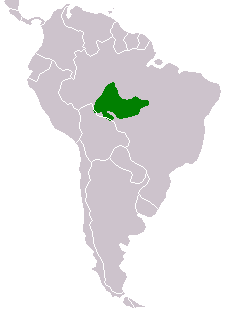
The Madeira parakeet, also known as the Madeira conure, is a species of parrot native to the eastern and central Amazon basin in Brazil and Bolivia. It is distinctive for its white ear coverts, cream upper breast with brown feather shafts, and a yellow eye ring. This species is currently classified as Least Concern, though its population is slowly decreasing due to habitat loss.