
Ambystoma cingulatum
Endangered (review status as of 2026)·Oviparous
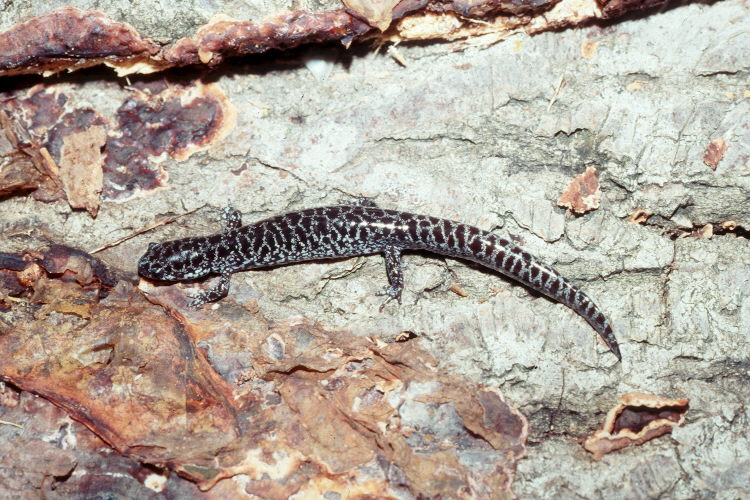
The frosted flatwoods salamander (Ambystoma cingulatum) is an endangered mole salamander native to the southeastern United States. This small, elongated species is characterized by its brownish-to-purplish-black coloration with silvery-white reticulations or bands. It inhabits seasonally wet pine flatwoods and pine savannas, breeding in ephemeral ponds and spending most of its adult life underground.
Key Facts
- ›Small, elongated mole salamander with a total length of 9–13.5 CM.
- ›Coloration includes a dark background with narrow gray or silvery-white net-like markings or bands.
- ›Found in seasonally wet pine flatwoods and pine savannas in the southeastern us coastal plain.
- ›Breeds in shallow, ephemeral ponds with specific overstory and understory vegetation.
- ›Adults spend most of the year in underground burrows, migrating to wetlands to breed.
- ›Listed as federally threatened, with population declines warranting an endangered status review.
Frosted Flatwoods Salamander
Seasonally Wet Pine Flatwoods, Pine Savannas, Ephemeral Ponds, Crayfish Burrows
United States
- Small , Elongated Body
- Small, Indistinct Head
- Short Legs
- Long, Rounded Tail
- Background Coloration of Brownish- To Purplish-Black
- Overlaid With Narrow Gray Or Silvery-White Reticulations, Bands, Or Diffuse Spotting
- Gilled Larvae Have Bold Brown and Yellow Longitudinal Stripes
Small Invertebrates, Earthworms
- Adults Spend Most of the Year Underground In Burrows
- Migrate From Upland Habitats To Natal Wetlands During Rainfall Events Associated With Cold Fronts
- Courtship and Egg-Laying Occur In Dry Pond Basins Or Very Shallow Water
- Larvae Hatch In Response To Pond Inundation
- Habitat Loss
- Urban Development
- Agriculture
- Pine Silviculture
- Alteration of Natural Fire Patterns
- Suppression of Natural Wildfires
- Changes In Fire-Maintained Ephemeral Wetland Plant Communities
About Ambystoma cingulatum
Frosted Flatwoods Salamander (Ambystoma cingulatum)
The frosted flatwoods salamander, scientifically known as Ambystoma cingulatum, is a small, endangered species of mole salamander native to the southeastern United States. Its distinctive appearance includes an elongated body, a small head, short legs, and a long tail, with coloration ranging from brownish- to purplish-black marked by narrow gray or silvery-white net-like patterns. The gilled larvae are visually striking, featuring bold longitudinal stripes of brown and yellow.
Distribution and Habitat
This salamander occupies a very limited geographic range along the southeastern coastal plain, specifically in seasonally wet pine flatwoods and pine savannas. Its habitat is primarily found east of the Apalachicola River, encompassing areas of northern Florida, southern South Carolina, and southern Georgia. The species relies on shallow, ephemeral ponds for breeding, which are typically characterized by pond cypress and black tupelo trees in their overstory and a diverse array of native grasses and herbs in the understory.
Behavior and Reproduction
Adult frosted flatwoods salamanders are largely fossorial, spending most of the year underground in burrows, often those created by crayfish. Their diet is presumed to consist of small invertebrates, with earthworms being the most frequently recorded prey. Between September and December, adults undertake migrations from surrounding upland areas to their breeding wetlands, prompted by rainfall events associated with cold fronts. Courtship and egg-laying occur within dry pond basins or in very shallow water. Females deposit between 100 and 200 eggs in small clusters, typically nestled within herbaceous vegetation or at the entrances of crayfish burrows. The developing embryos hatch upon inundation of the pond basins by rising water levels.
Life Cycle and Conservation
The larval stage typically lasts between 11 and 24 weeks, with metamorphosed individuals leaving the breeding ponds from April to June. Sexual maturity is reached within one to three years. Historically, the frosted flatwoods salamander was likely more common within the fire-maintained longleaf pine-wiregrass ecosystem. However, significant habitat loss and degradation due to urban development, agriculture, and silviculture practices have drastically reduced its numbers. Alterations to natural fire regimes have also negatively impacted the ephemeral wetlands crucial for nesting and larval development. Consequently, populations are now extremely small, fragmented, and discontinuous. The species was listed as federally threatened in 1999, and subsequent population declines have led to a review for endangered status, reflecting the ongoing threats to its survival.
Source: Wikipedia ↗
Frequently Asked Questions
What does the frosted flatwoods salamander look like?
The frosted flatwoods salamander is a small, elongated mole salamander, typically measuring 9 to 13.5 cm in total length. Its coloration is a brownish- to purplish-black background with narrow gray or silvery-white reticulations, bands, or diffuse spotting. The gilled larvae are distinctively marked with bold brown and yellow longitudinal stripes.
Where does the frosted flatwoods salamander live?
This species has a very restricted geographic distribution, found only in the southeastern coastal plain of the United States. Its habitat includes seasonally wet pine flatwoods and pine savannas located east of the Apalachicola River in northern Florida, southern South Carolina, and southern Georgia.
What kind of habitat does it prefer for breeding?
Frosted flatwoods salamanders breed in shallow, ephemeral ponds. These breeding sites are typically characterized by an overstory of pond cypress and black tupelo trees, and a diverse understory of native grasses and herbs.
What do adult frosted flatwoods salamanders eat?
Adult salamanders are believed to feed on a variety of small invertebrates. While they spend most of their time underground in burrows, the few existing prey records primarily indicate earthworms as a food source.
When do frosted flatwoods salamanders migrate to breed?
Adults migrate from their upland habitats to their natal wetlands between September and December. This migration is triggered by rainfall events associated with passing cold fronts.
How does reproduction occur for this species?
Courtship takes place in dry pond basins or very shallow water, where males deposit spermatophores for females. Females lay 100–200 eggs in small groups, typically within herbaceous vegetation or crayfish burrow entrances in the dry pond basin. The embryos hatch when pond basins inundate.
What are the main threats to the frosted flatwoods salamander?
Major threats include habitat loss and degradation due to urban development, agriculture, and pine silviculture. Alteration of natural fire patterns, including the suppression of summer wildfires and the timing of prescribed fires, has also negatively impacted breeding and nesting habitats.
Related Salamander and Newt species

Ambystoma amblycephalum
The blunt-headed salamander (Ambystoma amblycephalum) is a mole salamander endemic to Mexico, specifically found near Morelia in Michoacán state. It inhabits a mixed landscape of grasslands and pine-oak forests at high elevations and requires ponds for breeding. This species is distinctive for having both neotenic (aquatic) and terrestrial adult populations.

Ambystoma gracile
The northwestern salamander (Ambystoma gracile) is a mole salamander found along the northwest Pacific coast of North America. These salamanders are characterized by their firm, brain-like egg masses and can be found from sea level up to the timberline, avoiding areas east of the Cascade Divide. They exhibit a fascinating adaptation where adults can remain gilled (neotenic), a trait that becomes more common at higher elevations.

Ambystoma californiense
The California tiger salamander (Ambystoma californiense) is a vulnerable amphibian native to California, characterized by its black skin with yellow or cream spots. It is a mole salamander that historically inhabited the San Joaquin-Sacramento river valleys but now exists in isolated populations, with some designated as federally endangered or threatened due to habitat loss and hybridization.