
Bolitoglossa subpalmata
Bolitoglossa subpalmata·Plethodontidae
The La Palma salamander (Bolitoglossa subpalmata) is a species of salamander native to Costa Rica and western Panama. It is distinguished by its preference for high-elevation, cold montane forests, a habitat unusual for many other plethodontid salamanders. The species is currently threatened by the loss of its natural environment.
Key Facts
- ›Found in Costa Rica and western Panama.
- ›Inhabits subtropical or tropical moist montane forests.
- ›Occurs at high elevations with cold temperatures.
- ›Threatened by habitat loss.
- ›Belongs to the family Plethodontidae.

La Palma Salamander
Subtropical Or Tropical Moist Montane Forests, Pastureland, Plantations, Rural Gardens, Heavily Degraded Former Forest
Costa Rica, Western Panama
Montane Forest, Pastureland, Degraded Former Forest
Habitat Loss
About Bolitoglossa subpalmata
The La Palma Salamander (Bolitoglossa subpalmata)
The La Palma salamander, scientifically known as Bolitoglossa subpalmata, is a species of salamander belonging to the family Plethodontidae. This species is naturally found in the geographic regions of Costa Rica and western Panama.
Natural Habitat and Distribution
The natural habitats of Bolitoglossa subpalmata are subtropical or tropical moist montane forests. They can also be found in areas that include pastureland, plantations, rural gardens, and heavily degraded former forest environments. A distinctive characteristic of this species is its occurrence at high elevations and in cold temperatures, which are environments not typically inhabited by most other plethodontid salamanders.
Conservation Concerns
The La Palma salamander faces significant threats, with habitat loss being the primary concern for its survival. The ongoing degradation and alteration of its montane forest habitat put the species at risk.
Source: Wikipedia ↗
Frequently Asked Questions
What is the scientific name for the La Palma salamander?
The scientific name for the La Palma salamander is Bolitoglossa subpalmata.
Where is the La Palma salamander found?
The La Palma salamander is found in Costa Rica and western Panama.
What kind of habitats does the La Palma salamander prefer?
This species prefers subtropical or tropical moist montane forests. It also inhabits pastureland, plantations, rural gardens, and heavily degraded former forest areas.
Why is the La Palma salamander considered unusual among its family?
The La Palma salamander occurs at high elevations and experiences cold temperatures, which are atypical habitats for most other plethodontid salamanders.
What are the main threats to the La Palma salamander?
The primary threat to the La Palma salamander is habitat loss.
Related Salamander and Newt species

Cloud forest salamander
The cloud forest salamander (Bolitoglossa carri) is a species of salamander found exclusively in Honduras. It inhabits subtropical or tropical moist montane forests and is distinguished by its specific geographic origin and habitat preference. Unfortunately, this species faces threats primarily from habitat loss.
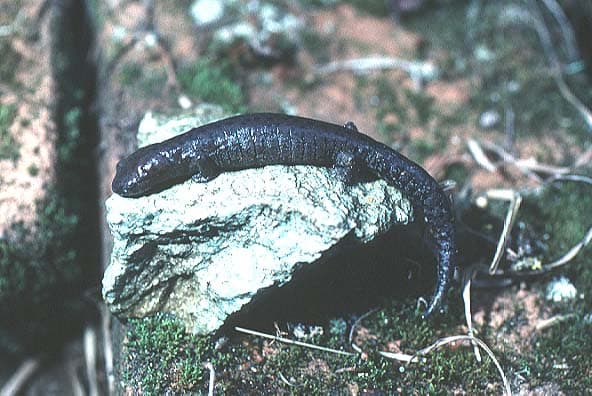
Bolitoglossa heiroreias
The Holy-mountain salamander, scientifically known as *Bolitoglossa heiroreias*, is a species of salamander belonging to the Plethodontidae family. It is native to subtropical and tropical moist montane forests in El Salvador, Guatemala, and potentially Honduras. This species is notably threatened by habitat loss.
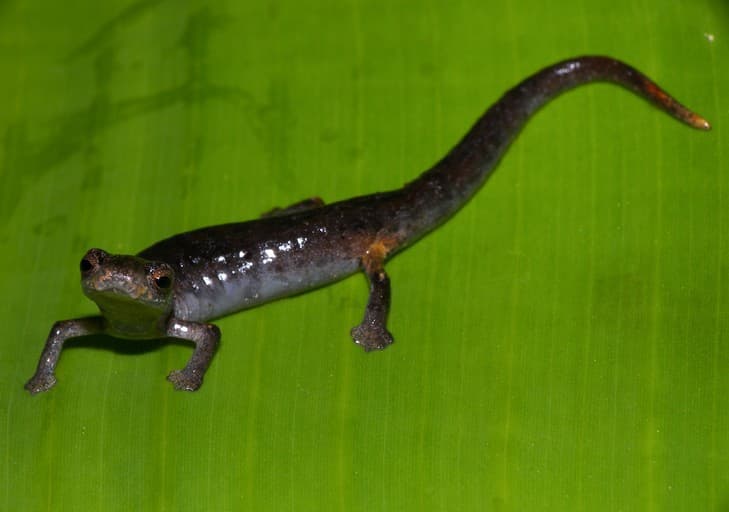
Bolitoglossa phalarosoma
The Medellin climbing salamander, scientifically known as *Bolitoglossa phalarosoma*, is a species of salamander native to the montane forests of Colombia and Panama. This species belongs to the Plethodontidae family and is notably threatened by habitat loss.