
Cloud forest salamander
Bolitoglossa carri·Plethodontidae
The cloud forest salamander (Bolitoglossa carri) is a species of salamander found exclusively in Honduras. It inhabits subtropical or tropical moist montane forests and is distinguished by its specific geographic origin and habitat preference. Unfortunately, this species faces threats primarily from habitat loss.
Key Facts
- ›Endemic to Honduras.
- ›Inhabits subtropical or tropical moist montane forests.
- ›Belongs to the family Plethodontidae.
- ›Its natural habitat is threatened by habitat loss.
- ›Scientific name is Bolitoglossa carri.

Cloud Forest Salamander
Subtropical Moist Montane Forests, Tropical Moist Montane Forests
Honduras
Habitat Loss
About Cloud forest salamander
The cloud forest salamander, scientifically known as Bolitoglossa carri, is a species of salamander native exclusively to Honduras. This elusive amphibian is a member of the Plethodontidae family, a group characterized by the absence of lungs.
Habitat and Distribution
This species is endemic to Honduras, meaning it is found nowhere else in the wild. Its natural habitat is specifically subtropical or tropical moist montane forests. These high-altitude, humid environments are crucial for the survival of the cloud forest salamander, providing the necessary moisture and conditions.
Conservation Concerns
Unfortunately, the cloud forest salamander faces significant threats, primarily due to habitat loss. The degradation and destruction of its montane forest home put this unique species at risk. Conservation efforts are therefore vital to protect the remaining populations and their specialized environment.
Source: Wikipedia ↗
Frequently Asked Questions
What is the scientific name of the cloud forest salamander?
The scientific name of the cloud forest salamander is Bolitoglossa carri. This binomial nomenclature helps in its precise identification within the scientific community.
Where can the cloud forest salamander be found?
The cloud forest salamander is endemic to Honduras, meaning it is found naturally only in this country. Its distribution is limited to this specific geographic region.
What type of habitat does the cloud forest salamander prefer?
This species prefers subtropical or tropical moist montane forests. These environments provide the specific conditions necessary for its survival.
What are the primary threats to the cloud forest salamander?
The cloud forest salamander is primarily threatened by habitat loss. This loss of its natural environment is the most significant danger to its continued existence.
What family does the cloud forest salamander belong to?
The cloud forest salamander belongs to the family Plethodontidae. This family is known for containing lungless salamanders, which breathe through their skin and the lining of their mouths.
Related Salamander and Newt species

Bolitoglossa subpalmata
The La Palma salamander (Bolitoglossa subpalmata) is a species of salamander native to Costa Rica and western Panama. It is distinguished by its preference for high-elevation, cold montane forests, a habitat unusual for many other plethodontid salamanders. The species is currently threatened by the loss of its natural environment.
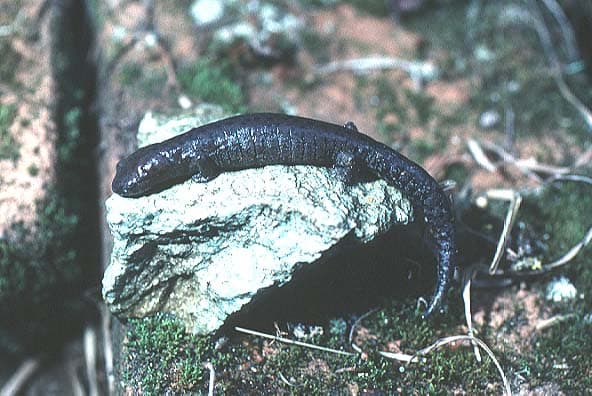
Bolitoglossa heiroreias
The Holy-mountain salamander, scientifically known as *Bolitoglossa heiroreias*, is a species of salamander belonging to the Plethodontidae family. It is native to subtropical and tropical moist montane forests in El Salvador, Guatemala, and potentially Honduras. This species is notably threatened by habitat loss.
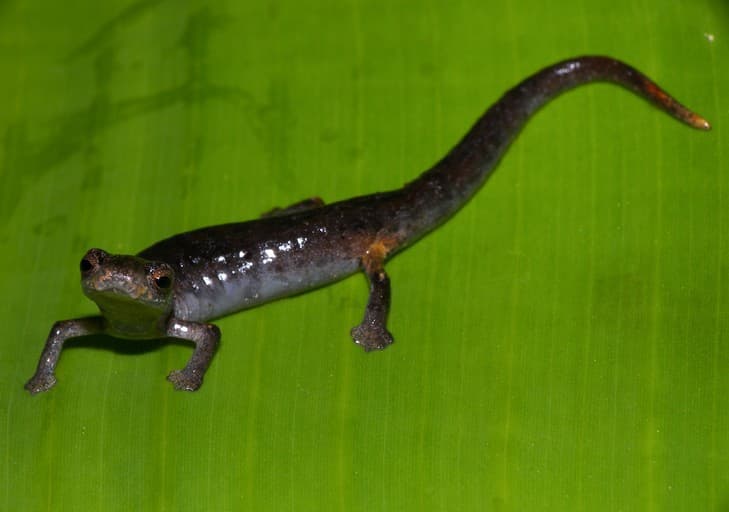
Bolitoglossa phalarosoma
The Medellin climbing salamander, scientifically known as *Bolitoglossa phalarosoma*, is a species of salamander native to the montane forests of Colombia and Panama. This species belongs to the Plethodontidae family and is notably threatened by habitat loss.