
Bosca's newt
Bosca's newt, also known as the Iberian newt, is a species of newt belonging to the Salamandridae family. It is found in Portugal and western Spain, typically inhabiting shallow, vegetated ponds and streams, as well as disturbed artificial water bodies. This newt is characterized by its brownish, yellowish, or dull green coloration with dark spots and an orange belly, and males develop a distinctive brightly colored tail tip during the breeding season.
Key Facts
- ›Found in Portugal and western Spain.
- ›Prefers shallow ponds, streams, and ditches with vegetation.
- ›Both males and females have glandular ridges along their backs and granular skin texture when on land.
- ›Adults display brownish, yellowish, or dull green bodies with dark spots and orange bellies.
- ›Males develop a brightly colored protuberance at the tip of their tail during the breeding season.
- ›Populations are considered stable, though habitat loss poses a threat in some areas.
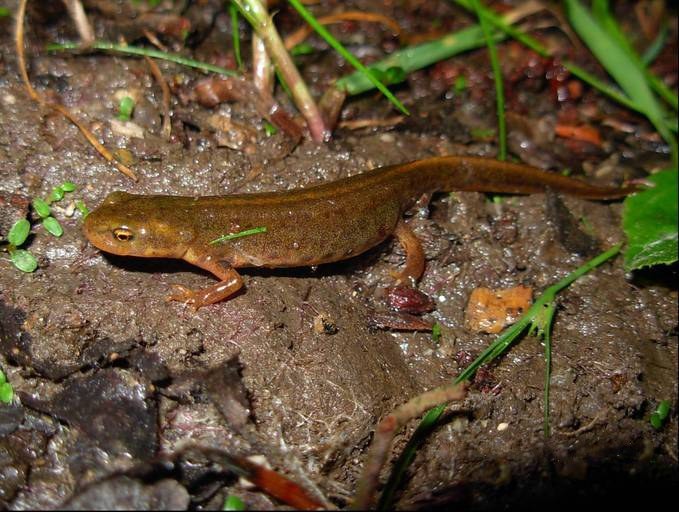
Iberian Newt
Shallow Ponds, Streams Lined With Vegetation, Disturbed and Artificial Water Bodies, Ditches, Oak Woodland, Scrub, Sandy Coastal Strips, Farms, Plantations
Portugal, Spain
- Female Up To 94 Mm Long.
- Male Up To 75 Mm Long.
- Glandular Ridges Along the Back.
- Granular Skin Texture When Out of Water.
- Body Coloration: Brownish, Yellowish, Or Dull Green With Dark Spotting.
- Belly Is Orange.
- Male Develops A Brightly Colored Protuberance At the Tip of the Tail During Breeding Season.
- Mostly Aquatic.
- Males Develop A Brightly Colored Protuberance At the Tip of the Tail During the Breeding Season.
Destruction of Aquatic Habitat, Degradation of Aquatic Habitat
About Bosca's newt
Bosca's newt, scientifically known as Lissotriton boscai and formerly Triturus boscai, is a species of newt belonging to the Salamandridae family. It is also commonly referred to as the Iberian newt. This amphibian is found in Portugal and western Spain, where it inhabits a variety of aquatic and semi-aquatic environments.
Description and Habitat
Adult Bosca's newts exhibit distinct physical characteristics. Females can grow up to 94 millimeters (3.7 inches) in length, while males are typically smaller, reaching up to 75 millimeters (3.0 inches). When out of water, their skin has a granular texture and features glandular ridges along their backs. The body coloration is generally brownish, yellowish, or a dull green, adorned with dark spots, and their bellies are a striking orange hue. Notably, during the breeding season, males develop a brightly colored protuberance at the tip of their tail.
Bosca's newt is predominantly aquatic, favoring shallow ponds and streams that are abundant with vegetation. They are also adaptable and can be found in disturbed or artificial water bodies, such as ditches. Their habitat preferences extend to oak woodlands, scrubland, sandy coastal strips, and even agricultural areas like farms and plantations.
Conservation Status
Currently, the populations of Bosca's newt are considered stable, and the species is not categorized as threatened. However, localized declines have been observed in some areas due to the ongoing destruction and degradation of their essential aquatic habitats. Conservation efforts would focus on protecting and restoring these vital water bodies.
Source: Wikipedia ↗
Frequently Asked Questions
What is Bosca's newt?
Bosca's newt, scientifically known as Lissotriton boscai, is a species of newt belonging to the Salamandridae family. It is also commonly referred to as the Iberian newt.
Where can Bosca's newt be found?
This species is naturally distributed in Portugal and western Spain. It inhabits areas with shallow ponds and streams that are lined with vegetation.
What are the physical characteristics of Bosca's newt?
Females can reach up to 94 mm in length, while males are slightly smaller, up to 75 mm. They have glandular ridges along their backs and their skin is granular when out of water. Their bodies are typically brownish, yellowish, or dull green with dark spotting, and their bellies are orange. Males develop a brightly colored protuberance at the tip of their tail during the breeding season.
What kind of habitat does Bosca's newt prefer?
Bosca's newt is primarily aquatic and lives in shallow ponds and streams that are lined with vegetation. It can also be found in disturbed and artificial water bodies like ditches, as well as oak woodlands, scrub, sandy coastal strips, farms, and plantations.
Is Bosca's newt endangered?
The populations of Bosca's newt are considered stable, and the species is not currently classified as threatened. However, in some regions, populations are experiencing declines due to the destruction and degradation of their aquatic habitats.
Related Salamander and Newt species
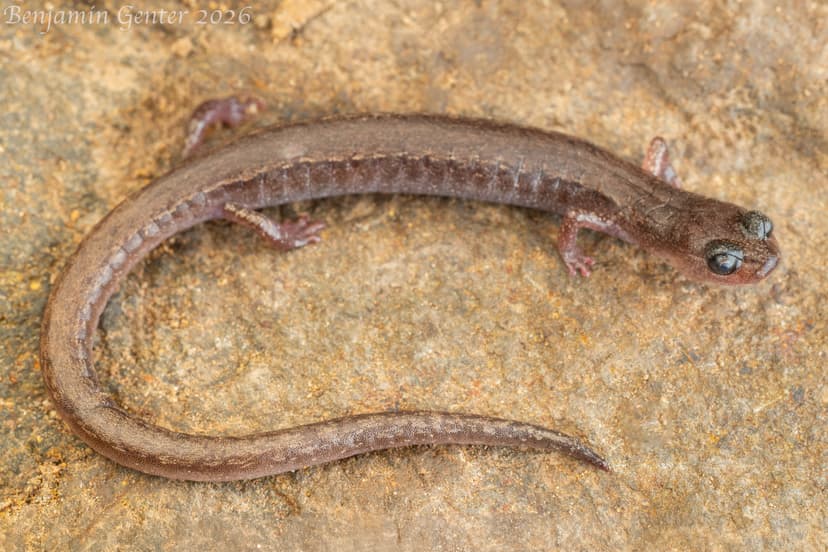
Channel Islands slender salamander
The Channel Islands slender salamander (Batrachoseps pacificus) is a unique salamander species found exclusively on the northern California Channel Islands. Distinguishing features include its elongated tail, short limbs, and a dorsal stripe composed of light speckles. Unlike many other slender salamanders, its longer legs give it a more robust appearance, and the cool, foggy climate allows it to be active year-round.

Batrachoseps wakei
The Arguello slender salamander (Batrachoseps wakei) is a species of salamander endemic to a small coastal area of Santa Barbara County, California. Discovered in 2006, it was formally described in 2021. This species is distinguished by its relatively large size for its genus, a dorsal pattern of vermiculate tan markings, and extensive orange coloration on its tail.

California newt
The California newt, also known as the orange-bellied newt, is a species of newt native to California in the Western United States. It is distinguished by its warty, slate-gray skin on its back and bright orange-yellow underbelly, and produces the potent neurotoxin tetrodotoxin. This species is found in diverse habitats near breeding ponds and creeks, including woodlands and chaparral.