
Channel Islands slender salamander
The Channel Islands slender salamander (Batrachoseps pacificus) is a unique salamander species found exclusively on the northern California Channel Islands. Distinguishing features include its elongated tail, short limbs, and a dorsal stripe composed of light speckles. Unlike many other slender salamanders, its longer legs give it a more robust appearance, and the cool, foggy climate allows it to be active year-round.
Key Facts
- ›Found only on San Miguel, Santa Rosa, Santa Cruz, and Anacapa Islands in California.
- ›Adults measure 4.2 - 7 CM (1.67 - 2.75 in) from snout to vent.
- ›Dorsal coloration is typically brown to pinkish with a prominent, speckled stripe.
- ›Possesses a projectile tongue for capturing small invertebrate prey.
- ›Can detach its tail as a defense mechanism, which regenerates over time.
- ›Eggs are laid underground by the female from late fall to winter.
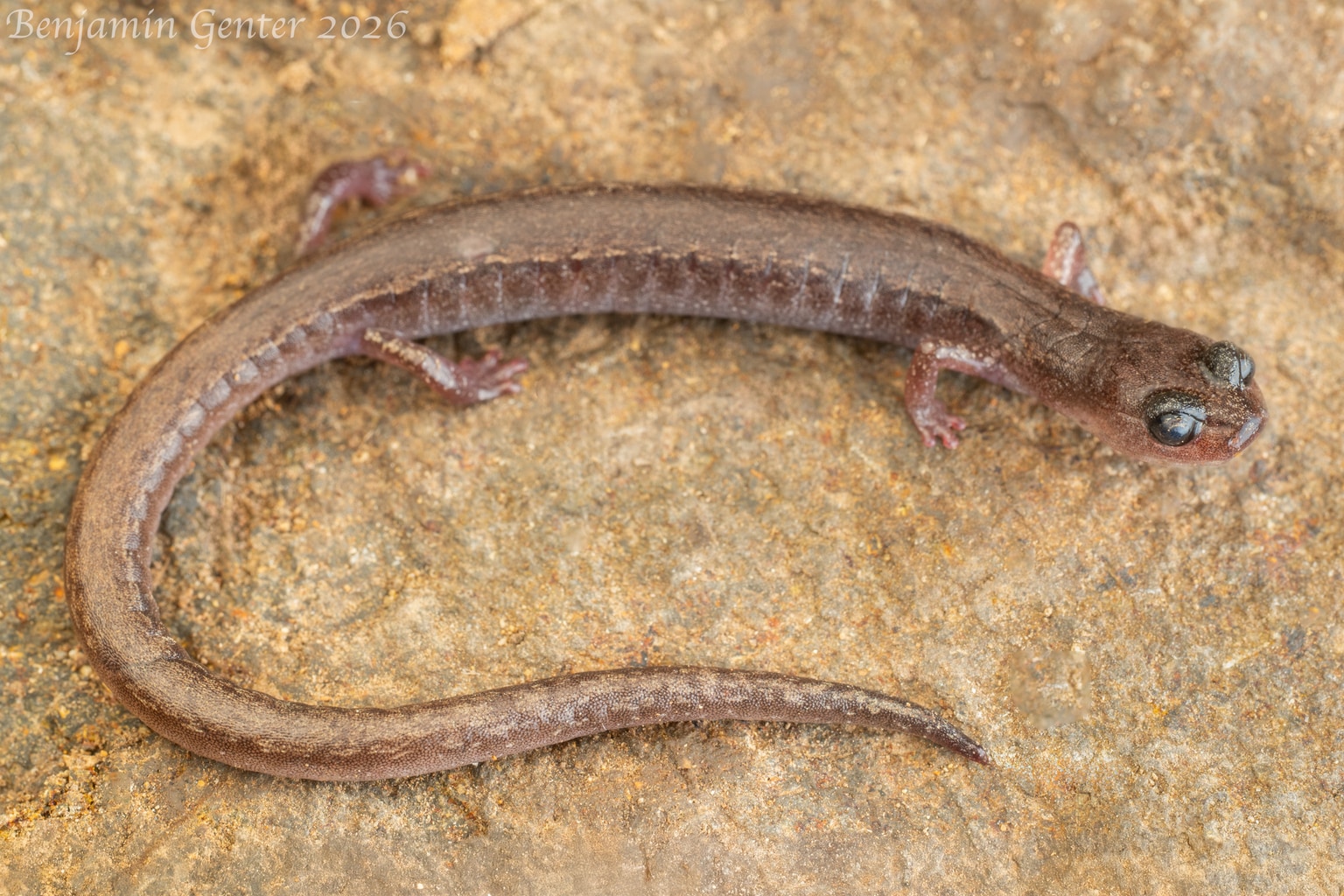
Channel Islands Salamander
Island Coastal Sage Scrub, Grasslands, Chaparral, Oak Woodlands, Pine Woodlands, Beaches Containing Driftwood
San Miguel Island, California, Santa Rosa Island, California, Santa Cruz Island, California, Anacapa Island, California
- Short Limbs
- Narrow Head
- Lean Body
- Elongated Tail
- Four Toes On Each Foot
- More Robust Appearance Than Other Slender Salamanders Due To Longer Legs
- Adult Snout-To-Vent Length: 4.2 - 7 Cm
- Dorsal Coloration: Brown To Pinkish
- Prominent Dorsal Stripe Made Up of Light Speckles
- Throat and Underside of Tail Are Pale
- Abdomen Is Whitish Or Slate With Light and Dark Speckling
- 18-20 Clearly Visible Costal Grooves
Small Invertebrates, Earthworms, Small Slugs, Terrestrial Arthropods, Numerous Insects, Insect Larvae
- When Disturbed, May Coil Up and Remain Motionless
- Can Rapidly Uncoil and Bounce Away
- Detaches Tail To Divert Predators
- Tail Regenerates Over Time
- Active Year-Round Due To Cool and Foggy Conditions
About Channel Islands slender salamander
The Channel Islands slender salamander, scientifically known as Batrachoseps pacificus, is a distinct salamander species belonging to the Plethodontidae family. It is exclusively found on the northern California Channel Islands, making it the only amphibian endemic to this archipelago. The species is characterized by its slender body, short limbs, narrow head, and an exceptionally elongated tail, along with four toes on each foot.
Physical Characteristics and Adaptations
Adults of the Channel Islands slender salamander typically measure between 4.2 and 7 centimeters (1.67 to 2.75 inches) from snout to vent. They possess a more robust build compared to other slender salamanders due to their comparatively longer legs. The dorsal coloration ranges from brown to pinkish and is often marked by a prominent stripe composed of light speckles. The underside of the tail and throat are pale, while the abdomen varies from whitish to slate, frequently featuring light and dark speckling. Distinctive costal grooves, numbering 18-20, are visible along their torso.
Behavior and Ecology
A notable defense mechanism employed by this salamander is tail autotomy, where it can detach its tail to distract predators while it escapes. The detached tail has the capacity to regenerate over time. When disturbed, it may also coil up and remain motionless, relying on its camouflage. Uniquely among slender salamanders in California, the Channel Islands slender salamander can remain active year-round, a trait attributed to the consistently cool and foggy climate of its island home.
Reproduction and Life Cycle
Reproduction occurs underground, with females laying clutches of 13 to 20 eggs in burrows created by other animals or in man-made crevices. This egg-laying typically takes place from late fall to winter. Hatching occurs from winter into early spring. Following hatching, both adult and young salamanders emerge to the surface, often coinciding with rainfall in the subsequent fall and winter. This life cycle can exhibit variations in response to meteorological fluctuations.
Diet and Foraging
The diet of the Channel Islands slender salamander is believed to consist of a variety of small invertebrates. This includes earthworms, small slugs, terrestrial arthropods, and numerous insects, such as insect larvae. It is presumed that they utilize a projectile tongue to capture prey, both above and below the ground surface.
Distribution and Habitat
This species is endemic to four of the northern California Channel Islands: San Miguel Island, Santa Rosa Island, Santa Cruz Island, and Anacapa Island. It inhabits a broad spectrum of environments across these islands. These habitats include island coastal sage scrub, grasslands, chaparral, oak woodlands, and pine woodlands. Unusually for a slender salamander, it can also be found in beaches that contain driftwood.
Source: Wikipedia ↗
Frequently Asked Questions
Where can the Channel Islands slender salamander be found?
This species is endemic to the northern California Channel Islands, specifically on San Miguel Island, Santa Rosa Island, Santa Cruz Island, and Anacapa Island. It is the only amphibian native to these islands.
What does the Channel Islands slender salamander look like?
Adults typically range from 4.2 to 7 centimeters (1.67 to 2.75 inches) in length from snout to vent. They have short limbs, a narrow head, a lean body, and an elongated tail with four toes on each foot. Their dorsal surface is usually brown to pinkish, marked by a distinct dorsal stripe of light speckles.
What does the Channel Islands slender salamander eat?
Its diet likely consists of small invertebrates such as earthworms, small slugs, terrestrial arthropods, and various insects, including their larvae. It is thought to use a projectile tongue to catch its prey both above and below ground.
How does the Channel Islands slender salamander defend itself?
When threatened, it may remain motionless to rely on camouflage or rapidly uncoil and bounce away. It can also detach its tail to distract predators, and this tail will regenerate over time.
When does the Channel Islands slender salamander reproduce?
Females lay eggs underground between late fall and winter, after moving down from the surface. The offspring hatch from winter to early spring. Both adult and young salamanders return to the surface with the rain in the following fall and winter, though this cycle can vary with weather.
What are the habitats of the Channel Islands slender salamander?
This species occupies a diverse range of habitats on the islands, including coastal sage scrub, grasslands, chaparral, oak woodlands, pine woodlands, and even beaches with driftwood. Its ability to be active year-round is facilitated by the cool, foggy conditions.
Related Salamander and Newt species
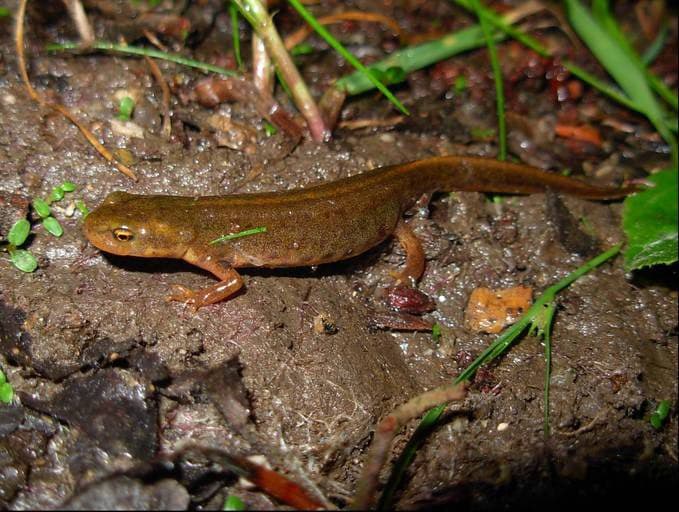
Bosca's newt
Bosca's newt, also known as the Iberian newt, is a species of newt belonging to the Salamandridae family. It is found in Portugal and western Spain, typically inhabiting shallow, vegetated ponds and streams, as well as disturbed artificial water bodies. This newt is characterized by its brownish, yellowish, or dull green coloration with dark spots and an orange belly, and males develop a distinctive brightly colored tail tip during the breeding season.

Batrachoseps wakei
The Arguello slender salamander (Batrachoseps wakei) is a species of salamander endemic to a small coastal area of Santa Barbara County, California. Discovered in 2006, it was formally described in 2021. This species is distinguished by its relatively large size for its genus, a dorsal pattern of vermiculate tan markings, and extensive orange coloration on its tail.

Batrachoseps pacificus
The Channel Islands slender salamander (Batrachoseps pacificus) is a unique species of salamander found only on the northern California Channel Islands. It is distinguished by its year-round activity, a trait uncommon among other slender salamanders in California, due to the islands' cool and foggy climate. This salamander possesses a lean body, short limbs, and an elongated tail, with coloration ranging from brown to pinkish.