
Eurycea bislineata
The northern two-lined salamander (Eurycea bislineata) is a small salamander found in Canada and the United States. It is distinguished by two black stripes running down its back and a preference for habitats near water, such as streams and marshes. This species exhibits complex courtship rituals and a varied diet throughout its life stages.
Key Facts
- ›Adults range from 65–120 MM in total length.
- ›Characterized by two black stripes on a yellow or yellowish-brown back.
- ›Found in temperate forests, shrublands, rivers, marshes, and urban areas.
- ›Courtship involves a tail-straddling walk and the deposition of a spermatophore.
- ›Larvae feed on benthic invertebrates, while adults have a more varied terrestrial and aquatic diet.
- ›Tail autotomy is a common defense mechanism against predators.

Northern Two-Lined Salamander
Temperate Forests, Temperate Shrubland, Rivers, Intermittent Rivers, Freshwater Marshes, Freshwater Springs, Arable Land, Urban Areas, Small Rocky Streams, Seeps, Moist Areas, Stony Shores of Small Lakes and Rivers, Rain Puddles, Swamps, Damp Stream Beds
Canada, United States, Central and Southern Quebec, New Brunswick, Northeastern Ontario, Northeastern United States, Central Virginia, Ohio, Great Lakes Region
- Small Salamander
- Adults Range From 65–120 Mm In Total Length
- Yellow Or Yellowish-Brown Coloration
- Two Black Stripes Running Down the Back, Which May Break Up After the Base of the Tail
- Flanks Are Mottled Grayish Or Brown
- Belly Is Pale Yellowish and Nearly Transparent
- Four Toes On the Fore Feet
- Five Toes On the Hind Feet
- 14–16 Costal Grooves On the Side of the Body
Benthic Invertebrates, Chironomid Larvae, Other Dipteran Larvae, Stonefly Larvae, Cladocera, Copepods, Wood Roaches, Arachnids, Worms, Isopods, Millipedes, Centipedes, Beetles, Snails, Springtails, Flies, Hymenopterans, Sowbugs, Midges, Mayflies, Annelids, Stonefly Nymphs, Caddisfly Larvae, Thrips, Trout Fry
- More Water-Oriented Than Related Species
- Found In and Around Water
- Elaborate Courtship Rituals
- Males May Abrade Female's Skin With Premaxillary Teeth To Introduce Secretions
- Females Search For Suitable Oviposition Sites
- Larvae Remain In Slow-Moving Pools Or Crevices
- Larvae Prowl the Bottom of Streams To Feed
- Metamorphosed Juveniles Leave the Stream But Tend To Remain Close To It
- Adults and Juveniles Are Restricted To Stream Edges, Hiding Under Rocks and Debris During the Day
- Seasonal Migration Occurs, With Some Adults Migrating Into the Forest Post-Breeding
- Majority of Above-Ground Movements Made After Dark and In Wet Weather
- Juveniles and Adults Emerge From Retreats and Forage Along Stream Banks Or Forest Floors Shortly After Dark
- Adults Are Territorial
- Overwinter In Stream Banks
- May Remain Somewhat Active and Continue Feeding In Southern Regions During Winter
- Variable Response To Predators
- Tail Autotomy Is Common
About Eurycea bislineata
Northern Two-Lined Salamander (Eurycea bislineata)
The northern two-lined salamander, scientifically known as Eurycea bislineata, is a species of salamander native to Canada and the United States. It is a member of the Plethodontidae family, which are lungless salamanders.
Description and Habitat
This small salamander typically measures between 65 and 120 mm in total length. Its most distinctive feature is the presence of two black stripes running longitudinally along its yellow or yellowish-brown back, though these stripes may become fragmented further down the tail. The flanks are mottled with grayish or brown patterns, and the belly is a pale, almost transparent yellow. Adults possess four toes on their forefeet and five on their hindfeet, with 14 to 16 costal grooves visible along their sides.
The northern two-lined salamander exhibits a strong affinity for moist environments. Its natural habitats include temperate forests, shrublands, riverbanks, intermittent streams, freshwater marshes, and springs. While it can be found in areas far from running water, such as damp ground or even urban settings, it is notably more water-oriented than some related species. They are frequently observed in and around water bodies like rain puddles, streams, swamps, and damp stream beds, and sometimes along the stony shores of small lakes and rivers.
Reproduction and Life Cycle
Reproduction begins with a complex courtship ritual that can span from September in the southern parts of its range to May in the north. This courtship involves intricate behaviors, including a tail-straddling walk. Males possess specialized premaxillary teeth used to abrade the female's skin, facilitating the introduction of secretions from a mental gland on the chin, which stimulates mating.
Following courtship, the female seeks a suitable site for egg-laying, typically under rocks or logs in or near streams. She demonstrates a unique method of oviposition, often flipping onto her back to press her cloaca against the substrate to lay each egg. The eggs, measuring 2.5–3 mm in diameter, are white or pale yellowish when freshly laid and are surrounded by two membranes. Communal nesting has been documented in several locations.
Upon hatching, the gilled larvae are approximately 10 mm long and remain in slow-moving water or crevices. They begin feeding on benthic invertebrates after their yolk sacs are absorbed. The larval period is variable, with metamorphosis occurring around two years of age in southern regions and three years in the north, at total lengths of approximately 50 mm and 70 mm, respectively.
Adult Ecology and Behavior
Adult northern two-lined salamanders reach sexual maturity between three and four years old. Both adults and juveniles tend to inhabit the edges of streams, seeking shelter under rocks and debris during the day. Seasonal migrations can occur, with some adults moving into the forest after the breeding season.
Most above-ground activity by adults and juveniles takes place after dark, particularly during wet weather. They emerge from their retreats to forage along stream banks or the forest floor. Their diet is diverse, including a wide array of invertebrates. Adults can be territorial, and population densities vary with habitat quality. In colder climates, adults overwinter burrowed up to 80 cm deep into stream banks, while in southern regions, they may remain somewhat active and continue feeding.
Predators and Defense
Due to their size and habitat, northern two-lined salamanders are preyed upon by various animals, including birds, snakes, and other salamander larvae. Their defense mechanisms include remaining motionless or engaging in tail autotomy, a common adaptation that allows them to escape predators by shedding part of their tail.
Source: Wikipedia ↗
Frequently Asked Questions
What does the northern two-lined salamander look like?
The northern two-lined salamander is a small species, typically measuring between 65 and 120 mm in total length. Adults are yellow or yellowish-brown with two distinct black stripes running down their backs, which may break up after the base of the tail. Their flanks are mottled gray or brown, and their bellies are pale yellow and nearly transparent.
Where can I find northern two-lined salamanders?
These salamanders inhabit northeastern North America, with their range extending from central and southern Quebec, New Brunswick, and northeastern Ontario in Canada, down to central Virginia and Ohio in the United States. They prefer habitats like small rocky streams, seeps in forests, and moist areas, sometimes found near small lakes and rivers.
What do northern two-lined salamanders eat?
Larval salamanders feed on benthic invertebrates found at the bottom of streams, including dipteran larvae, stonefly larvae, cladocera, and copepods. Adult diets are more diverse, encompassing wood roaches, arachnids, worms, isopods, millipedes, centipedes, beetles, snails, springtails, flies, and other small invertebrates.
How do northern two-lined salamanders reproduce?
Reproduction involves an elaborate courtship that can occur from September to May. The male deposits a spermatophore, which the female may choose to accept. Females lay eggs, typically under rocks or logs in streams, often flipping onto their backs to make cloacal contact with the substrate to deposit each egg.
What are the predators of the northern two-lined salamander?
Various animals prey on this salamander, including birds like the eastern screech owl, and snakes such as eastern garter snakes and ringneck snakes. Larvae are also vulnerable to other salamander larvae, like those of the northern spring salamander and the blackbelly salamander.
What defense mechanisms does the northern two-lined salamander use?
When threatened, some individuals may remain motionless. A common defense is tail autotomy, where the salamander detaches its tail to escape a predator, which significantly increases its chances of survival. In some populations, a substantial percentage of animals have autotomized tails.
Related Salamander and Newt species

Garden slender salamander
The Garden slender salamander (Batrachoseps major) is a species of salamander found in coastal southern California and northern Baja California, Mexico. It is distinguished from other slender salamanders by its larger size and the pale coloration of its underside. This adaptable amphibian can even thrive in suburban environments where other native wildlife has disappeared.
Ambystoma rosaceum
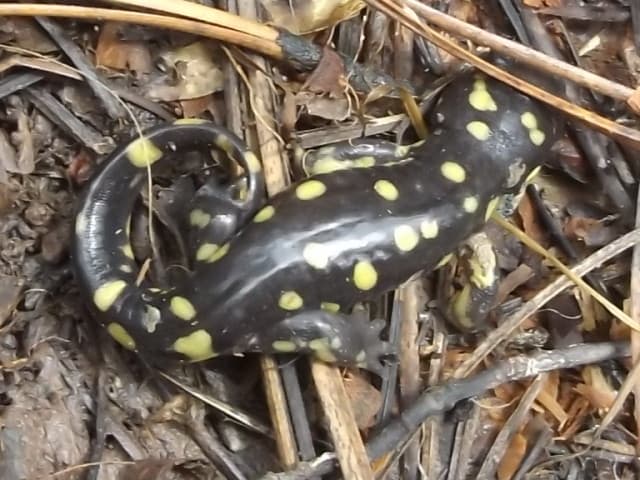
The Tarahumara salamander (Ambystoma rosaceum) is a freshwater mole salamander species endemic to Mexico, found in temperate and montane forests, grasslands, and various aquatic habitats. It is distinguished by its medium size, variable coloration of yellow spots or streaks on a dark background in adults, and the potential for paedomorphosis, where individuals retain larval features. While generally considered Least Concern, it faces threats from habitat loss and introduced species.

Batrachoseps attenuatus
The California slender salamander (Batrachoseps attenuatus) is a lungless salamander native to coastal California and southwestern Oregon. It is distinguished by its narrow, worm-like body, four toes on each foot, and a distinctive coloration, typically black with a reddish or brown stripe. This species is adept at foraging in narrow underground burrows and can adapt to some urban environments.