
Ambystoma rosaceum
The Tarahumara salamander (Ambystoma rosaceum) is a freshwater mole salamander species endemic to Mexico, found in temperate and montane forests, grasslands, and various aquatic habitats. It is distinguished by its medium size, variable coloration of yellow spots or streaks on a dark background in adults, and the potential for paedomorphosis, where individuals retain larval features. While generally considered Least Concern, it faces threats from habitat loss and introduced species.
Key Facts
- ›A freshwater mole salamander species found only in Mexico.
- ›Inhabits temperate forests, montane forests, grasslands, and freshwater bodies.
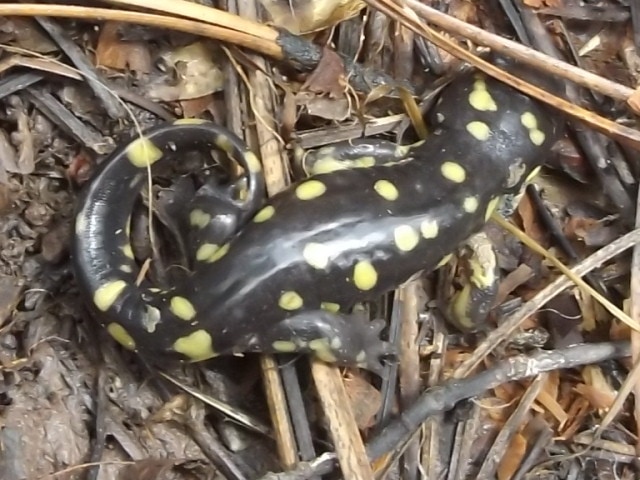
- ›Adults typically display yellow spots or streaks on a dark background, though some are plain.
- ›Can exhibit paedomorphosis, remaining aquatic with gills throughout their lives.
- ›Listed as Least Concern by the IUCN but faces threats from habitat loss and invasive fish.
Tarahumara Salamander
- Temperate Forest
- Subtropical Or Tropical Moist Montane Forest
- Subtropical Or Tropical High-Altitude Grassland
- Rivers
- Freshwater Marshes
- Pastureland
- Ponds
- Springs
- Thornscrub
- Tropical Deciduous Forest
- Cattle Ponds
Mexico, Arizona
- Medium-Sized Salamander
- Maximum Snout To Vent Length of About 80 Mm
- Tail Length of About 73 Mm
- Females Have Longer Bodies and Shorter Tails Than Males
- Newly-Hatched Larvae Are Uniform Brownish-Black
- Older Larvae Have Rows of Yellow and Black Mottling
- Most Terrestrial Adults Have Large Spots Or Streaks of Yellow On A Dark Background
- Some Adults Are Plain
- Some Individuals Are Paedomorphic
- Can Be Paedomorphic, Remaining Aquatic With Gills
- Breeds In Cattle Ponds In Some Agricultural Areas
Habitat Loss, Introduced Predatory Fish, Increasing Agriculture, Border Barrier
About Ambystoma rosaceum
The Tarahumara Salamander
The Tarahumara salamander, scientifically classified as Ambystoma rosaceum, is a species of mole salamander native to Mexico. It is a freshwater species that inhabits a variety of environments, including temperate forests, moist montane forests, high-altitude grasslands, rivers, freshwater marshes, pastures, and ponds. The species is found within the Sierra Madre Occidental mountain range, typically at elevations ranging from 1,675 to 3,100 meters above sea level. There is also a noted presence in parts of Arizona, USA, specifically within the Huachuca Mountains.
Physical Characteristics
This salamander is medium-sized, with adults generally measuring up to approximately 80 mm in snout-to-vent length, complemented by a tail of about 73 mm. Sexual dimorphism is evident, with females possessing longer bodies and shorter tails compared to males. The coloration of the Tarahumara salamander varies with age and life stage. Newly hatched larvae are a uniform brownish-black. Older larvae develop rows of yellow and black mottling. Terrestrial adults typically exhibit large spots or streaks of yellow against a dark background, although some individuals present a plain coloration.
A notable characteristic of the Tarahumara salamander is its capacity for paedomorphosis. This phenomenon results in some individuals retaining their larval features, such as external gills, and remaining in an aquatic state throughout their lives, foregoing the typical metamorphosis into a terrestrial adult. This tendency is observed more frequently in montane streams and ponds.
Distribution and Habitat
The Tarahumara salamander is endemic to Mexico, with occurrences concentrated in the Sierra Madre Occidental. Its habitat is diverse, encompassing pine and pine-oak forests, areas with small, slow-moving streams, springs, and ponds. It can also be found in thornscrub and tropical deciduous forests, as well as on farms and ranches where it may breed in cattle ponds. The species' adaptability allows it to thrive in these varied ecosystems.
Conservation Status
The International Union for Conservation of Nature (IUCN) lists the Tarahumara salamander as 'Least Concern,' indicating a seemingly stable population and a wide distribution. Despite this classification, the species faces significant threats. Habitat loss, driven by land development and increasing agricultural activities in its range, poses a considerable risk. Furthermore, the introduction of predatory fish species into its aquatic habitats threatens its survival. The Mexican government classifies the species as 'PR,' signifying 'Special Protection,' reflecting concerns for its long-term viability.
Source: Wikipedia ↗
Frequently Asked Questions
What is the Tarahumara salamander?
The Tarahumara salamander, scientifically known as Ambystoma rosaceum, is a species of mole salamander found in freshwater environments. It is native to Mexico and belongs to the Ambystomatidae family.
Where does the Tarahumara salamander live?
This species is endemic to Mexico, primarily found in the Sierra Madre Occidental mountain range. Its habitats include temperate forests, montane forests, grasslands, rivers, marshes, pastures, and ponds at elevations between 1,675 and 3,100 meters.
What does the Tarahumara salamander look like?
It is a medium-sized salamander, with adults reaching a snout-to-vent length of about 80 mm. Larvae are brownish-black, while terrestrial adults often have yellow spots or streaks on a dark body, though some are uniformly colored.
Can Tarahumara salamanders remain in their larval form?
Yes, some individuals of the Tarahumara salamander exhibit paedomorphosis. This means they retain their larval characteristics, such as gills, and remain aquatic without undergoing full metamorphosis into a terrestrial adult.
What is the conservation status of the Tarahumara salamander?
The Tarahumara salamander is classified as 'Least Concern' by the IUCN due to its stable population and wide distribution. However, it is also designated for 'Special Protection' by the Mexican government.
What threats does the Tarahumara salamander face?
Major threats to the Tarahumara salamander include habitat loss due to agriculture and development, as well as the introduction of predatory fish species into its aquatic environments. A border barrier has also been noted as a threat in certain areas.
Related Salamander and Newt species

Ambystoma texanum
The small-mouth salamander (Ambystoma texanum) is a species of mole salamander native to the central United States and parts of Canada. It is identifiable by its relatively small head, dark coloration with flecking, and a long tail. This species prefers moist habitats and is known for its nocturnal and subterranean lifestyle.
Alabama waterdog
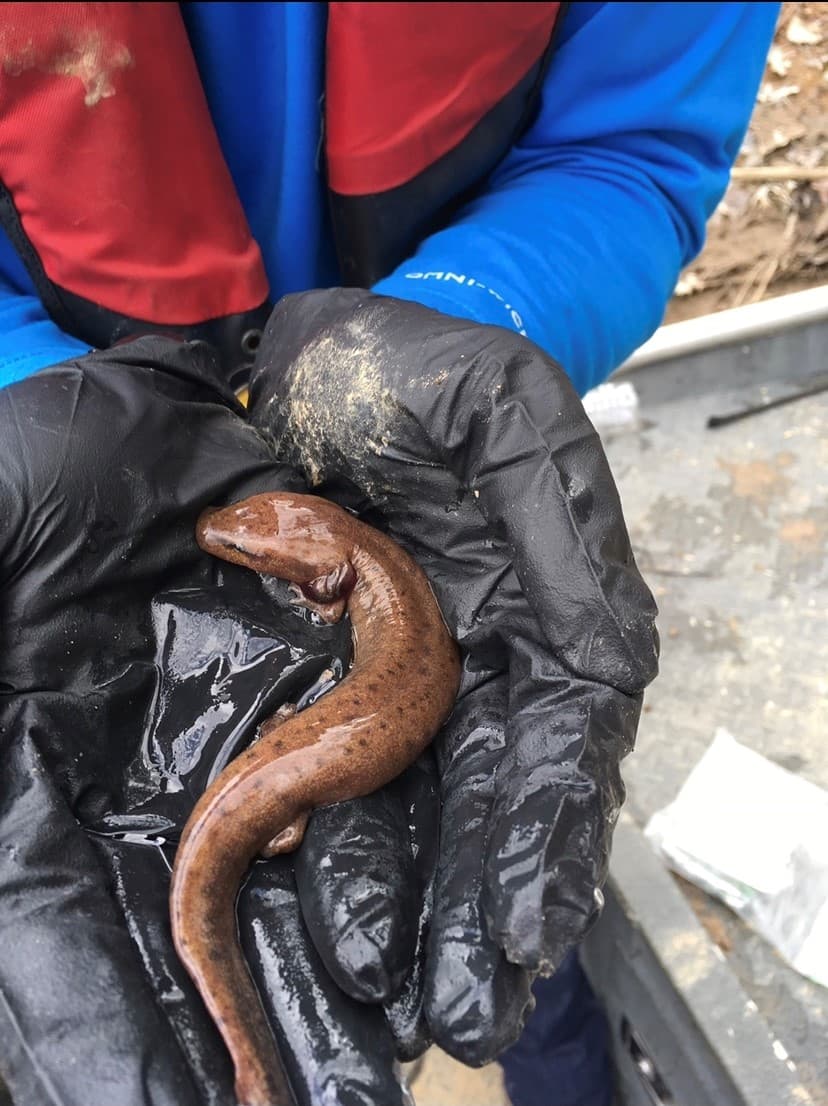
The Alabama waterdog is a medium-sized, perennibranch salamander found in the rivers and streams of Alabama, specifically within the Black Warrior River drainage basin. It is distinguished by its permanent, bushy red gills, and a brown or black dorsum with minimal spotting. This species is currently listed as endangered due to threats like habitat fragmentation and pollution.

Ambystoma macrodactylum
The long-toed salamander (Ambystoma macrodactylum) is a mole salamander native to the Pacific Northwest of North America. It is distinguished by its mottled black, brown, and yellow coloration and a notably long outer fourth toe on its hind limbs. This species occupies a wide range of habitats, from temperate rainforests to alpine meadows, and is known for its subterranean adult lifestyle and aquatic breeding phase.