
Bayou Corne sinkhole
dissolution·United States·Salt dome cavern
The Bayou Corne sinkhole, also known as Doline de Bayou Corne, is a massive geological formation in Assumption Parish, Louisiana, that appeared in August 2012. It was caused by the collapse of an underground salt dome cavern operated by Texas Brine Company. The sinkhole's emergence led to the mandatory evacuation of 350 residents and has since expanded significantly, becoming a major industrial disaster.
Key Facts
- ›Discovered on August 3, 2012, following unusual ground shaking and bubbling water.
- ›Caused by the collapse of an underground salt dome cavern (Oxy3) operated by Texas Brine Company.
- ›Led to the mandatory evacuation of 350 residents from the nearby community of Bayou Corne.
- ›Initially spanned a hectare (2.5 acres) and grew to 37 acres by 2024.
- ›Involved a protracted legal battle between residents and Texas Brine, with some residents accepting buyouts.
- ›A state district judge ruled in 2018 that fault was shared among Texas Brine (35%), Occidental Chemical (50%), and Vulcan (15%).

Doline de Bayou Corne
- Collapse of An Active Salt Dome Cavern
- Industrial Disaster Affecting A Residential Community
About Bayou Corne sinkhole
The Bayou Corne sinkhole, also referred to in French as Doline de Bayou Corne, is a colossal geological event that occurred in Assumption Parish, Louisiana. Its emergence in August 2012 was the direct result of the collapse of an underground salt dome cavern, which had been operated by the Texas Brine Company and was owned by Occidental Petroleum. The incident necessitated the immediate evacuation of 350 residents from the nearby community of Bayou Corne, marking it as a significant industrial disaster.
Background and Formation
The region of Bayou Corne, like much of Louisiana, is situated above extensive salt domes—gigantic underground deposits formed during the Earth's geological history. These salt structures, some reaching thousands of feet below the surface, have long been economically valuable. Historically used for salt mining, in the 20th century, these caverns were also adapted for storing crude oil and natural gas. The Napoleonville Dome, beneath Assumption Parish, contained numerous caverns, six of which were managed by Texas Brine. One such cavern, Oxy3, located over a mile deep and less than 100 feet from oil and gas storage, was in a proximity deemed unsafe, though not illegal at the time. Despite unsatisfactory pressure tests, Texas Brine proceeded with expansion plans in 2010.
The Incident and Expansion
In June 2012, residents began reporting unsettling phenomena: ground tremors and visible bubbles rising from the water. While initial investigations by the U.S. Geological Survey noted increased seismic activity, the exact cause remained elusive, with suspicions initially falling on natural gas leaks. As these symptoms intensified, Texas Brine denied the possibility of a sinkhole. However, by the end of July, the Oxy3 cavern had begun to collapse. This led Louisiana Governor Bobby Jindal to issue a mandatory evacuation order on August 3, 2012, after residents reported the smell of crude oil. Texas Brine's investigation confirmed the collapse of the salt dome's outer wall, leading to sediment ingress and the escape of oil and gas.
The sinkhole's size rapidly increased. Initially spanning a hectare, by February 2014 it had expanded to 26 acres, and by 2024, it covered 37 acres. Texas Brine managed the situation by burning off escaping gas and attempting to stabilize the area. The expansion was accompanied by seismic activity, which caused debris and oil to be ejected from the sinkhole, making room for further material to collapse inward.
Impact and Legal Ramifications
The Bayou Corne sinkhole triggered a complex legal and social aftermath. Residents were involved in extensive legal battles with Texas Brine, receiving weekly payments from the company during the evacuation period. Governor Jindal threatened to sue Texas Brine to compel them to offer buyouts to the affected residents. While some accepted settlements, others joined class-action lawsuits. The ecological impact on local flora and fauna remains largely unstudied, leading to the sinkhole being described as one of the largest ongoing industrial disasters in the United States.
Further complicating matters, Texas Brine filed lawsuits against Occidental Petroleum in 2015, alleging that an oil well drilled by Occidental in 1986 was responsible for the cavern wall breach. In 2018, a state district judge determined shared fault among three companies: Texas Brine (35%), Occidental Chemical (50%), and Vulcan (15%). The mandatory evacuation order was lifted in 2016, but the community's population drastically reduced, with only 32 residents remaining by 2020.
Source: Wikipedia ↗
Frequently Asked Questions
What caused the Bayou Corne sinkhole?
The Bayou Corne sinkhole was caused by the collapse of an underground salt dome cavern, specifically one known as Oxy3, which was operated by Texas Brine Company. This collapse allowed sediment to enter the cavern and oil and gas to escape to the surface.
When was the Bayou Corne sinkhole discovered?
The Bayou Corne sinkhole was discovered on August 3, 2012. Residents had noticed unusual phenomena like ground shaking and water bubbling for some time prior to the official discovery.
How large is the Bayou Corne sinkhole?
The sinkhole initially spanned about a hectare (2.5 acres) when it appeared. By late February 2014, it had grown to 26 acres, and as of 2024, it spans 37 acres.
Were residents evacuated from Bayou Corne?
Yes, due to the sinkhole's formation and the associated risks, Louisiana Governor Bobby Jindal issued a mandatory evacuation order on August 3, 2012, advising 350 nearby residents to leave their homes.
Is the evacuation order for Bayou Corne still in effect?
The mandatory evacuation order for Bayou Corne was lifted in October 2016. However, the community has seen a significant decrease in population, with only 32 residents recorded in the 2020 Census.
What is the geological basis for the Bayou Corne sinkhole?
The sinkhole formed in an area underlain by salt domes, which are gigantic underground deposits of salt. These domes have been exploited for salt mining and, in the 20th century, used as storage reservoirs for crude oil and natural gas.
Related Sinkholes

Big Basin Prairie Preserve
The Big Basin Prairie Preserve in Kansas encompasses a significant sinkhole system, most notably the mile-wide Big Basin and the water-filled St. Jacob's Well. These geological features, formed by sinkhole activity, are historically notable as resting places for the Northern Cheyenne and landmarks for cattle drives. The preserve is a designated National Natural Landmark, managed to protect its unique landscape and wildlife.
Daisetta, Texas
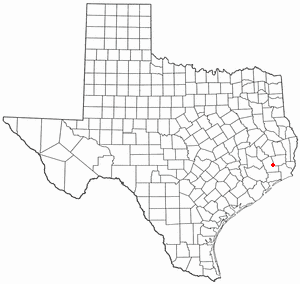
Daisetta, Texas, is a city in Liberty County known for its geological instability due to its location on a salt dome. This geological feature has led to the formation of multiple sinkholes, most notably a large one in 2008 nicknamed "Sinkhole de Mayo," which posed a significant risk to residents. The sinkholes are a direct consequence of the underlying salt dome's movement and potential dissolution.
Deep Lake (Florida)
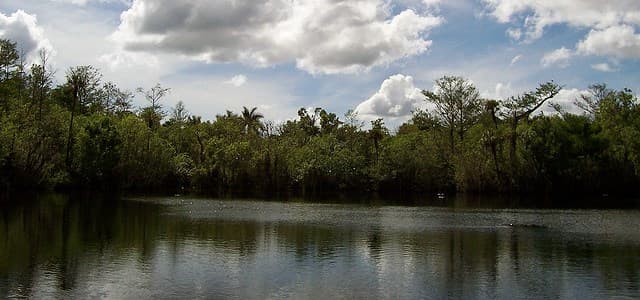
Deep Lake is a natural sinkhole located within Florida's Big Cypress National Preserve. It is geologically significant as the deepest lake south of Lake Okeechobee and one of the deepest in the entire state, forming the namesake for the surrounding community and a nearby swamp strand.