
Blue Hole (New Mexico)
Artesian Well / Cenote·United States·Limestone bedrock
The Blue Hole of Santa Rosa, New Mexico, is a natural artesian well and cenote renowned as a popular scuba diving destination and training site. Its clear, constant temperature waters originate from deep within the Ogallala Aquifer, feeding a complex underground cave system that has captivated explorers and divers for decades.
Key Facts
- ›Circular, bell-shaped pool with a constant temperature of 62 °F (17 °C).
- ›Surface diameter is 80 feet (24 M), expanding to 130 feet (40 M) at the bottom.
- ›Main pool depth exceeds 80 feet (24 M), with cave passages extending to at least 194 feet (59 M).
- ›Inflow of 3,000 us gallons per minute cycles the water every six hours.
- ›Underground cave system contains large boulders, rubble, and historical artifacts.
- ›Sealed by a metal grate since 1976 to prevent access by inexperienced divers.

Underground Cave System, Constant Temperature and Clarity of Water, Popular Dive Training Site
Freshwater
Goldfish, Koi, Carp, Crawdads
About Blue Hole (New Mexico)
The Blue Hole of Santa Rosa
The Blue Hole of Santa Rosa, located east of Santa Rosa, New Mexico, along the historic Route 66, is a remarkable natural phenomenon renowned for its pristine blue waters and its status as a premier destination for scuba diving and training. This circular, bell-shaped pool is not only a popular tourist attraction and swimming venue but also a significant geological feature, classified as both a natural artesian well and a cenote.
Geological Formation and Characteristics
The Blue Hole is formed within limestone bedrock, where groundwater has dissolved the rock over time, creating caverns. Eventually, the roof of one of these caverns collapsed, exposing the groundwater and forming the sinkhole. The constant temperature of the water, a steady 62 °F (17 °C), and its exceptional clarity are maintained by a continuous inflow of 3,000 US gallons per minute originating from deep within the western edge of the Ogallala Aquifer. This high inflow rate ensures the water is completely cycled every six hours. While the surface of the pool measures 80 feet (24 m) in diameter, it widens to 130 feet (40 m) at its base, with the main pool exceeding 80 feet (24 m) in depth. Beneath this surface pool lies a complex labyrinth of cave passages and rooms, extending to depths of at least 194 feet (59 m), where the water sources up through rubble. Objects such as large boulders, rubble, bones, masks, and a crucifix have been found within these submerged caves.
Historical Significance and Exploration
Historically, the Blue Hole served as a vital water source for nomadic tribes and cowboys traversing the arid plains. Its prominence grew in the 1920s with the establishment of Route 66, which passed directly by the site, turning it into a popular stop for travelers. It was later utilized as a fish hatchery starting in 1932 before evolving into a recreational area and dive center. The underwater cave system, however, presented significant hazards, including frequent cave-ins and zero visibility. These dangers led to the cave entrance being sealed with a metal grate in 1976, following a recovery operation that resulted in two fatalities. Despite these closures, expeditions by groups like the ADM Exploration Foundation have periodically explored and mapped sections of the cave system, encountering challenging conditions and further incidents, underscoring the inherent risks of this subterranean environment. Due to these hazards, the accessible cave passages remain closed to the public.
Source: Wikipedia ↗
Frequently Asked Questions
What is the Blue Hole of Santa Rosa?
The Blue Hole of Santa Rosa is a natural artesian well and a cenote, characterized by its clear blue, bell-shaped pool. It is a significant tourist attraction and a highly regarded destination for scuba diving and training in the United States.
How deep is the Blue Hole?
The main pool of the Blue Hole has a depth of more than 80 feet (24 m). The associated underground cave system has been explored to depths of at least 194 feet (59 m), although early depth gauge readings at high altitude suggested greater depths.
What is the water like in the Blue Hole?
The water in the Blue Hole is exceptionally clear and maintains a constant temperature of 62 °F (17 °C) year-round. Its clarity is preserved by a constant inflow of 3,000 US gallons per minute, which cycles the entire volume of water every six hours.
What is found at the bottom of the Blue Hole?
At the bottom of the main pool, divers can find large boulders, rubble, and various objects such as bones, masks, and a crucifix. The entrance to a complex labyrinth of underground cave passages and rooms is also located here.
Is the cave system in the Blue Hole accessible?
The entrance to the cave system has been sealed off to the public with a metal grate since 1976 due to hazards like cave-ins and zero visibility. Limited access has been granted for professional mapping expeditions in specific periods.
What kind of wildlife lives in the Blue Hole?
The fauna present in the Blue Hole includes common aquatic species such as goldfish, koi, carp, and crawdads. These creatures inhabit the pool's clear waters.
Is the Blue Hole a historical site?
Yes, the Blue Hole has historical significance, having been used by nomadic tribes as a water source and by cowboys on cattle drives. Its popularity surged in the 1920s with the arrival of Route 66, making it a notable stop for motorists.
Related Sinkholes
Marvel Cave
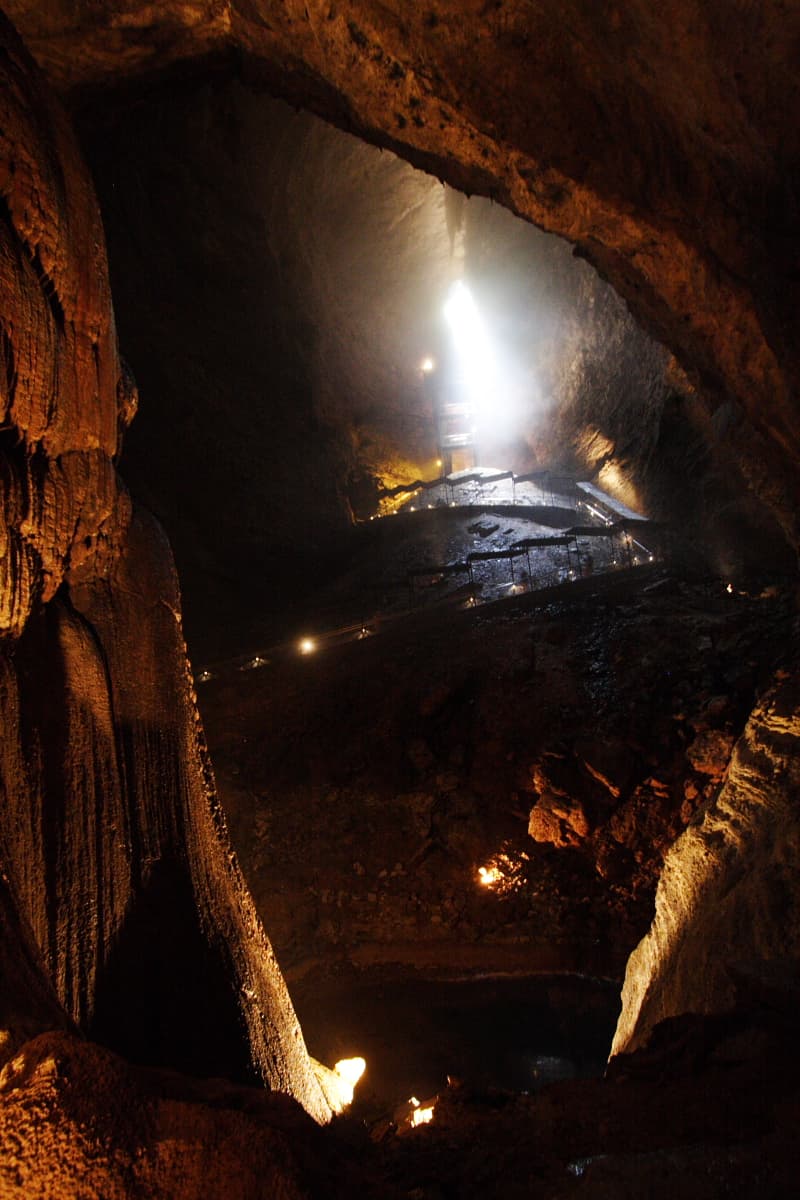
Marvel Cave is a significant karst feature located near Branson, Missouri, recognized as a National Natural Landmark. It is notable for its immense Cathedral Room, one of the largest cave entry rooms in North America, and has a long history as a tourist attraction, dating back to the late 19th century. The cave's geological formations and extensive passages have been a source of exploration and wonder for centuries.

Little Salt Spring
Little Salt Spring is a significant archaeological and paleontological site located in North Port, Florida. This karst feature, classified as a third magnitude spring, is a sinkhole characterized by deep vents that create an anoxic environment, leading to exceptional preservation of ancient artifacts and extinct megafauna fossils. Its discovery revealed a true sinkhole extending over 200 feet deep, similar to Yucatán cenotes, and it has yielded evidence of human use dating back over 12,000 years.

Big Basin Prairie Preserve
The Big Basin Prairie Preserve in Kansas encompasses a significant sinkhole system, most notably the mile-wide Big Basin and the water-filled St. Jacob's Well. These geological features, formed by sinkhole activity, are historically notable as resting places for the Northern Cheyenne and landmarks for cattle drives. The preserve is a designated National Natural Landmark, managed to protect its unique landscape and wildlife.