
Little Salt Spring
sinkhole·United States·karst topography
Little Salt Spring is a significant archaeological and paleontological site located in North Port, Florida. This karst feature, classified as a third magnitude spring, is a sinkhole characterized by deep vents that create an anoxic environment, leading to exceptional preservation of ancient artifacts and extinct megafauna fossils. Its discovery revealed a true sinkhole extending over 200 feet deep, similar to Yucatán cenotes, and it has yielded evidence of human use dating back over 12,000 years.
Key Facts
- ›Classified as a third magnitude spring and a significant example of Florida's karst topography.
- ›Features deep vents creating an anoxic environment below 5 meters, preserving ancient organic materials.
- ›Discovered in 1959 by SCUBA divers, revealing its true depth of over 200 feet.
- ›The sinkhole has a surface pond depth of 40 feet with a central shaft dropping to an inverted cone shape.
- ›Evidence of human use includes hundreds of burials dating from 5,200 to 6,800 years ago.
- ›Fossil remains of extinct megafauna and artifacts from Paleo-Indian and early Archaic periods have been recovered.

- Preservation of Paleo-Indian and Early Archaic Artifacts
- Fossil Bones of Extinct Megafauna
- Anoxic Environment
Freshwater, Oxygen-Depleted Groundwater
Extinct Megafauna
About Little Salt Spring
Little Salt Spring: An Ancient Window into Florida's Past
Little Salt Spring, situated in North Port, Florida, is a remarkable geological formation and a vital archaeological and paleontological site. Classified as a third magnitude spring, it is a prime example of the state's karst topography, characterized by its sinkhole structure. The spring's unique environmental conditions, created by deep vents feeding oxygen-depleted groundwater, result in an anoxic zone below approximately 5 meters. This anoxic environment is crucial for the exceptional preservation of ancient human artifacts and the fossilized remains of extinct megafauna that once roamed Florida.
Discovery and Geological Significance
Initially perceived as a shallow freshwater pond, Little Salt Spring's true nature was revealed in 1959 by SCUBA divers William Royal and Eugenie Clark. They discovered it to be a genuine sinkhole extending over 200 feet deep, bearing similarities to the famous cenotes of the Yucatán Peninsula. The surface of the water lies 40 feet deep, leading to a steep central shaft that descends into an inverted cone shape. The maximum recorded depth at the outer edges is 245 feet, with notable ledges found at 16 and 27 meters below the current water level. The water level within the spring has fluctuated significantly over millennia, influenced by ancient sea levels. During periods of lower sea levels, such as 12,000 to 13,000 years ago when the ocean was over 300 feet lower, the water table in Florida, and consequently in Little Salt Spring, was also substantially lower.
Ancient Human Habitation and Discoveries
Little Salt Spring offers profound insights into ancient human presence in Florida. The site has yielded hundreds of burials dating from 5,200 to 6,800 years ago, found within the surrounding slough. As documented in other wetland burial sites, brain matter has survived in many of the skulls recovered. A particularly significant discovery was the overturned shell of an extinct giant land tortoise found on the 27-meter ledge. Evidence suggests this tortoise was cooked in its shell, with a wooden stake driven into it and signs of a fire beneath. Radiocarbon dating of the wooden stake points to 12,030 years ago, while a bone from the tortoise dates to 13,450 years ago. Although large quantities of human bones have been recovered, their collection was not always conducted under controlled archaeological conditions. The site's historical importance was recognized when it was added to the National Register of Historic Places on July 10, 1979.
Source: Wikipedia ↗
Frequently Asked Questions
What is Little Salt Spring?
Little Salt Spring is an archaeological and paleontological site in North Port, Florida, notable for its geological formation as a sinkhole and its exceptional preservation of ancient artifacts and fossils. It is classified as a third magnitude spring.
What makes Little Salt Spring geologically unique?
The sinkhole features deep vents that create an anoxic environment below approximately 5 meters. This lack of oxygen fosters the remarkable preservation of organic materials, including Paleo-Indian and early Archaic artifacts, as well as fossil bones of extinct megafauna.
When was Little Salt Spring discovered to be a sinkhole?
In 1959, SCUBA divers William Royal and Eugenie Clark discovered that Little Salt Spring was a true sinkhole, extending downward over 200 feet. Previously, it was believed to be a shallow freshwater pond.
What is the depth of Little Salt Spring?
The surface pond of Little Salt Spring is forty feet deep. The central shaft then drops vertically to an inverted cone shape with a maximum determined depth of 245 feet at its outer edges. Ledges exist at 16 and 27 meters below the current water level.
What ancient human evidence has been found at Little Salt Spring?
Hundreds of human burials dating between 5,200 and 6,800 years ago have been discovered in the slough. Evidence of ancient human activity also includes the discovery of a giant land tortoise cooked in its shell, with a wooden stake dating back 12,030 years.
What is the current ownership and management of Little Salt Spring?
The site has been owned by the University of Miami since 1980, with research conducted by its Rosenstiel School of Marine, Atmospheric, and Earth Science. The university retains ownership, although discussions about selling the site to Sarasota County Government have occurred due to funding considerations.
Is Little Salt Spring a protected historical site?
Yes, Little Salt Spring was added to the National Register of Historic Places on July 10, 1979. Its archaeological and paleontological significance makes it a nationally recognized historical site.
Related Sinkholes

Lake Eola Park
Lake Eola Park is a prominent public space in Downtown Orlando, Florida, centered around Lake Eola, a natural sinkhole. The park is historically significant as a donation from Jacob Summerlin in 1883, intended to be beautified and maintained for public enjoyment. It is recognized for its iconic fountain, which serves as an official symbol of Orlando, and hosts numerous community events.

Blue Hole (New Mexico)
The Blue Hole of Santa Rosa, New Mexico, is a natural artesian well and cenote renowned as a popular scuba diving destination and training site. Its clear, constant temperature waters originate from deep within the Ogallala Aquifer, feeding a complex underground cave system that has captivated explorers and divers for decades.
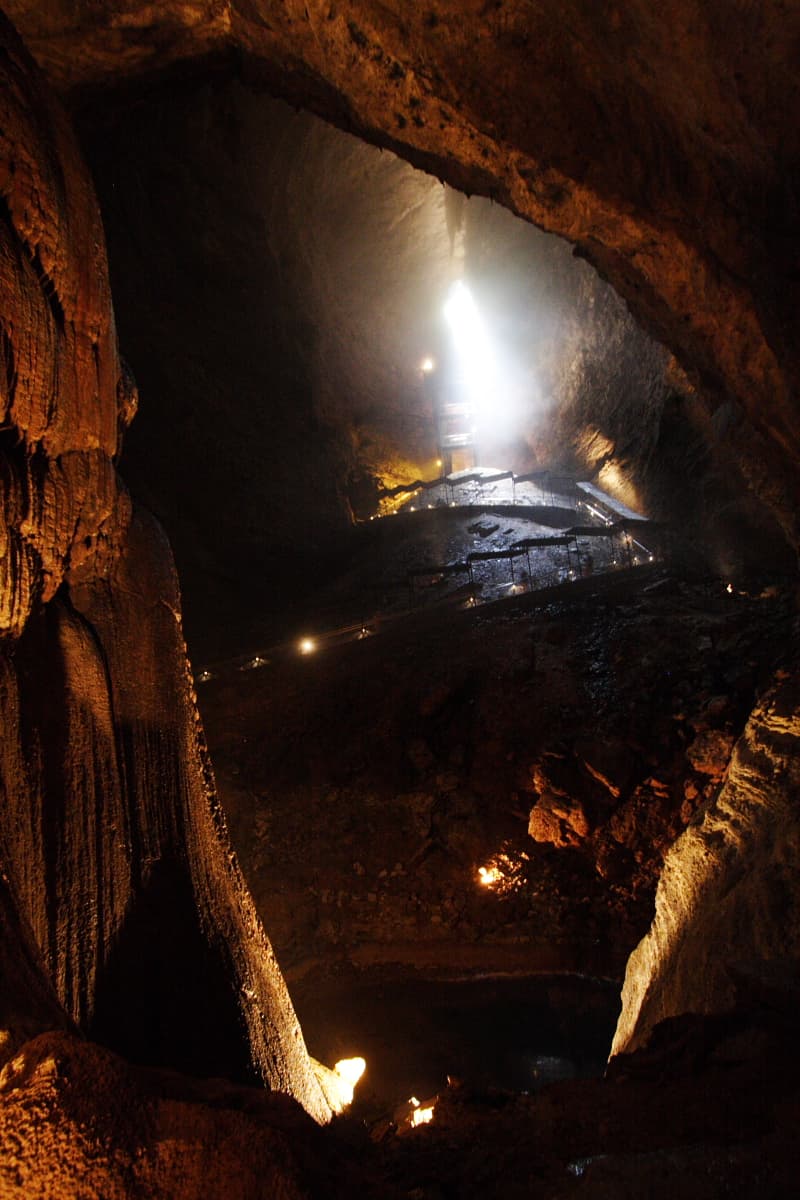
Marvel Cave
Marvel Cave is a significant karst feature located near Branson, Missouri, recognized as a National Natural Landmark. It is notable for its immense Cathedral Room, one of the largest cave entry rooms in North America, and has a long history as a tourist attraction, dating back to the late 19th century. The cave's geological formations and extensive passages have been a source of exploration and wonder for centuries.