
Cave of Swallows
The Cave of Swallows, known locally as Sótano de las Golondrinas, is a massive open-air pit cave in San Luis Potosí, Mexico. It is geologically significant as the largest known cave shaft in the world, renowned for its immense vertical drop and the daily spectacle of thousands of birds exiting and entering its depths. The cave's unique formation and the presence of diverse wildlife make it a notable natural wonder and a destination for extreme sports.
Key Facts
- ›The cave mouth measures 49 by 62 meters (161 by 203 ft) and widens to an internal chamber of approximately 303 by 135 meters (994 by 443 ft).
- ›It features a freefall drop of 333 meters (1,093 ft) from the lowest side of the opening, making it the world's largest cave shaft.
- ›The cave is formed in limestone of Middle Cretaceous age, specifically the El Abra and Tamabra formations.
- ›Its Spanish name, Sótano de las Golondrinas, translates to 'Basement of the Swallows,' referring to the swifts and parakeets that inhabit it.
- ›The cave is a popular destination for BASE jumping and vertical caving, with a rappelling descent to the floor taking up to an hour.
Sótano de las Golondrinas, Cave of the Swallows
Largest Known Cave Shaft In the World, Dramatic Vertical Drop, Daily Bird Spectacle, Popular Base Jumping and Caving Destination
White-Collared Swifts, Green Parakeets, Millipedes, Scorpions, Insects, Snakes
About Cave of Swallows
The Cave of Swallows
The Cave of Swallows, known in Spanish as Sótano de las Golondrinas, is a colossal open-air pit cave situated in the municipality of Aquismón, within the state of San Luis Potosí, Mexico. This natural wonder holds the distinction of being the largest known cave shaft in the world, characterized by its immense proportions and dramatic vertical drop. Its elliptical mouth, measuring 49 by 62 meters (161 by 203 ft), is undercut around its perimeter, widening into a vast chamber that extends approximately 303 by 135 meters (994 by 443 ft). The freefall depth from the opening to the cave floor is a staggering 333 meters (1,093 ft) from the lowest side, with a slightly greater drop of 370 meters (1,210 ft) from the highest side. When combined with a series of narrower pits known as "The Crevice" at its base, the total depth of the cave system reaches 515 meters (1,690 ft).
Geological Formation and Ecology
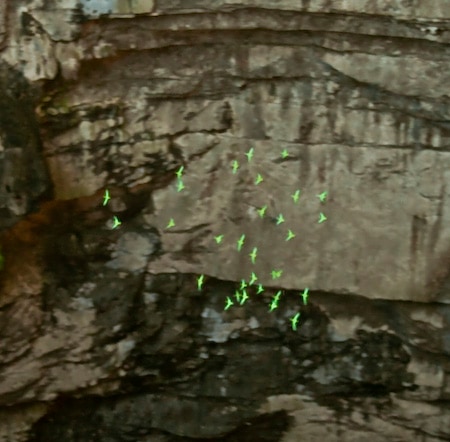
Geologically, the Cave of Swallows is formed within limestone of Middle Cretaceous age, specifically the El Abra and Tamabra formations. While the precise mechanisms of its speleogenesis are still under study, it is understood to be a result of solutional enlargement along a vertical fracture, followed by vadose enlargement. The cave's name, "Basement of the Swallows," derives from the abundant birdlife that resides within its walls. These include white-collared swifts (vencejos) and green parakeets (periquillo quila), which create a spectacular daily spectacle. Each morning, thousands of birds exit the cave in concentric circles before descending rapidly to their nests in the evening, a sight that has become a popular draw for tourists.
Human Interaction and Tourism
The cave has been known to the local Huastec people since ancient times. Its modern discovery and documentation began with T. R. Evans, Charles Borland, Randy Sterns, and Sid West, who were first shown the cave on December 27, 1966. The first documented descent took place on April 4, 1967. Today, the Cave of Swallows is a renowned destination for extreme sports tourism. Its immense vertical drop makes it a prime location for BASE jumping, with participants freefalling for nearly ten seconds to reach the floor. It is also a popular site for vertical caving, where experienced cavers rappel down to the bottom, a descent that can take up to an hour, with the return climb often taking considerably longer. Visitors should be aware of the cave's environment, which includes thick vegetation at the mouth, a floor covered in debris and guano, and potential health risks like histoplasmosis. The cave floor and walls are also inhabited by a variety of fauna, including millipedes, scorpions, insects, and snakes.
Source: Wikipedia ↗
Frequently Asked Questions
What is the Cave of Swallows?
The Cave of Swallows, or Sótano de las Golondrinas, is a vast open-air pit cave located in San Luis Potosí, Mexico. It is recognized as the world's largest cave shaft due to its immense size and depth.
What makes the Cave of Swallows geologically significant?
Its geological significance lies in its status as the largest known cave shaft globally and its dramatic vertical dimensions. It was formed through solutional enlargement along a vertical fracture in limestone bedrock.
What kind of birds live in the Cave of Swallows?
The cave is named for the many birds that inhabit it, primarily white-collared swifts (vencejos) and green parakeets (periquillo quila). While named for swallows, actual swallows are rarely found there.
What is the depth of the Cave of Swallows?
The freefall drop from the opening to the floor is 333 meters (1,093 ft) from the lowest side and 370 meters (1,210 ft) from the highest side. Including a series of pits called 'The Crevice' at the bottom, the total depth reaches 515 meters (1,690 ft).
Is the Cave of Swallows safe for visitors?
While popular with tourists, visitors should be aware of potential health risks such as histoplasmosis from fungi in the guano. The cave floor also harbors millipedes, scorpions, insects, and snakes. Extreme sports activities require specialized training and equipment.
What activities are popular at the Cave of Swallows?
The cave is a major destination for extreme sports, particularly BASE jumping due to its sheer drop. It is also a popular site for vertical caving, where cavers rappel down to the cave floor.
Related Sinkholes

Dzibilchaltun
Dzibilchaltun is a significant Maya archaeological site in Yucatán, Mexico, notable for its continuous occupation spanning thousands of years and its unique Temple of the Seven Dolls. The site's location was strategically chosen for proximity to salt production and a vital cenote, Cenote Xlakah, which served as a religious center and a source of water.

Sacred Cenote
The Sacred Cenote is a water-filled sinkhole located at the Maya archaeological site of Chichen Itza in Mexico's Yucatán Peninsula. Historically, it served as a significant site for pre-Columbian Maya rituals, where offerings of valuable objects and human sacrifices were made to the rain god Chaac. Archaeological explorations, notably by Edward Herbert Thompson, have recovered a vast array of artifacts and human remains, providing insights into Maya culture and religious practices.

Sima de las Cotorras
Sima de las Cotorras, meaning "Sinkhole of the Parrots," is a significant geological formation in Chiapas, Mexico, renowned for its large population of Mexican green parakeets. This sinkhole is a prime example of karst topography, shaped by tectonic and erosive forces on limestone, and serves as a vital ecotourism site aimed at benefiting local communities and preserving the environment.