
Sima de las Cotorras
Sima de las Cotorras, meaning "Sinkhole of the Parrots," is a significant geological formation in Chiapas, Mexico, renowned for its large population of Mexican green parakeets. This sinkhole is a prime example of karst topography, shaped by tectonic and erosive forces on limestone, and serves as a vital ecotourism site aimed at benefiting local communities and preserving the environment.
Key Facts
- ›Located in the El Ocote Biosphere Reserve in western Chiapas, Mexico.
- ›Measures 140 meters (460 ft) in depth and 160 meters (520 ft) in diameter.
- ›Features a straight drop of 97 meters (318 ft).
- ›Home to an estimated 3,000 Mexican green parakeets (Psittacara holochlorus), an endangered species.
- ›Contains a unique tropical deciduous rainforest ecosystem at its bottom, distinct from the surrounding environment.
- ›Features ancient cave paintings, some dating back at least 7,500 years.

Sinkhole of the Parrots, Sinkhole of the Parakeets, Sima del Copal
Large Population of Mexican Green Parakeets, Tropical Deciduous Rainforest At the Bottom, Cave Paintings, Karst Topography
Mexican Green Parakeets, Owls, Foxes, Coyotes, Rabbits, Opossums, Badgers, Squirrels, Armadillos, Penelopina Nigra, Chachalacas
About Sima de las Cotorras
What is Sima de las Cotorras?
Sima de las Cotorras, which translates to "Sinkhole of the Parrots" or "Sinkhole of the Parakeets," is a prominent geological formation located within the El Ocote Biosphere Reserve in the western part of Chiapas, southern Mexico. It is a large, vertical sinkhole formed by the complex interplay of tectonic forces and erosive processes acting upon the region's limestone bedrock. While not the largest or deepest sinkhole in the area, Sima de las Cotorras is particularly renowned for its vibrant ecosystem and its role as a sanctuary for thousands of Mexican green parakeets.
Geology and Formation
The sinkhole is a product of karst topography, a landscape characterized by dissolution of soluble rocks like limestone. Tectonic movements in the Sierra Madre de Chiapas, involving the folding and fracturing of the relatively soft limestone, created weaknesses in the rock. Water, both on the surface and underground, then eroded these fractures over thousands of years, leading to the eventual collapse of the overlying rock and the formation of the sinkhole's deep, vertical shaft. The sinkhole's opening is elliptical, with varying rim elevations, and its walls reveal distinct geological layers, with stalactites and stalagmites visible about 70 meters down.
Biodiversity and Ecosystem
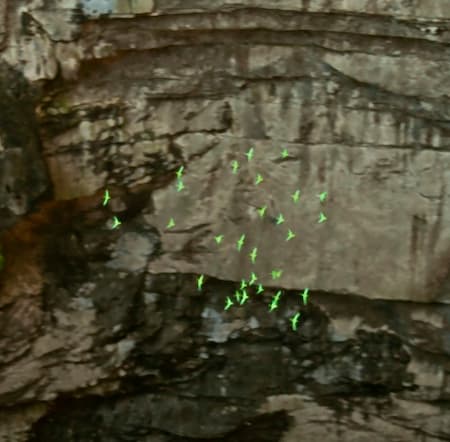
What sets Sima de las Cotorras apart is the unique tropical deciduous rainforest that thrives at its bottom, creating a microclimate distinct from the surrounding drier grasslands and shrublands. This lush interior is home to plant species not found elsewhere in the region. The sinkhole's most famous inhabitants are the Mexican green parakeets (Psittacara holochlorus), an endangered species, numbering an estimated 3,000 individuals. These birds congregate in the sinkhole for much of the year, using its sheltered environment as a nesting site. The sinkhole also supports a variety of other wildlife, including various bird species, mammals, and reptiles.
Cultural and Ecotourism Significance
Evidence of human presence in the area dates back at least 7,500 years, with significant archaeological finds including approximately 75 cave paintings, arrowheads, and pottery shards. The cave paintings, found high on the sinkhole walls, are a rare and important cultural heritage. In 1985, the Sima de Cotorras Ecotourism Center was established to offer local Zoque families an alternative source of income, promote environmental conservation, and deter migration from the area. The center provides visitors with access to the sinkhole, including guided tours to see the cave paintings, the unique flora, and the parakeets, as well as opportunities for rappelling. Despite efforts to balance ecological preservation with economic viability, the site faces challenges related to promotion and accessibility, with most visitors being local day-trippers drawn by the spectacle of the parrots.
Source: Wikipedia ↗
Frequently Asked Questions
What is Sima de las Cotorras known for?
Sima de las Cotorras is most famous for being a habitat for thousands of Mexican green parakeets, which fly in and out in circular patterns throughout the year. It is also recognized for its geological features and as an ecotourism destination.
Where is Sima de las Cotorras located?
It is situated in the El Ocote Biosphere Reserve in western Chiapas, southern Mexico, approximately 90 minutes from the state capital, Tuxtla Gutierrez, and about 19 km from the town of Ocozocoautla de Espinoza.
What are the dimensions of Sima de las Cotorras?
The sinkhole is 140 meters (460 ft) deep and 160 meters (520 ft) in diameter. The sheer drop to the bottom is 97 meters (318 ft).
What geological processes formed Sima de las Cotorras?
Sima de las Cotorras was formed by tectonic forces and erosion acting on the region's limestone. Tectonic folding created cracks, which were then widened by water erosion over thousands of years, leading to the collapse of the rock.
What kind of ecosystem is found at the bottom of Sima de las Cotorras?
The bottom of the sinkhole supports a tropical deciduous rainforest microsystem with broadleafed species that are not found outside its walls. This interior environment retains more moisture than the surrounding areas.
Are there any historical or archaeological findings at Sima de las Cotorras?
Yes, there are significant archaeological finds including approximately 75 cave paintings, arrowheads, and pottery shards. The cave paintings depict human figures, celestial bodies, and animals, and are considered a rarity due to their location high on the sinkhole walls.
What is the purpose of the Sima de Cotorras Ecotourism Center?
The ecotourism center was established in 1985 to provide local Zoque families with an alternative income source, preserve the local environment, and encourage younger generations to remain in the area. It offers amenities and activities for visitors.
Related Sinkholes

Dzibilchaltun
Dzibilchaltun is a significant Maya archaeological site in Yucatán, Mexico, notable for its continuous occupation spanning thousands of years and its unique Temple of the Seven Dolls. The site's location was strategically chosen for proximity to salt production and a vital cenote, Cenote Xlakah, which served as a religious center and a source of water.

Sacred Cenote
The Sacred Cenote is a water-filled sinkhole located at the Maya archaeological site of Chichen Itza in Mexico's Yucatán Peninsula. Historically, it served as a significant site for pre-Columbian Maya rituals, where offerings of valuable objects and human sacrifices were made to the rain god Chaac. Archaeological explorations, notably by Edward Herbert Thompson, have recovered a vast array of artifacts and human remains, providing insights into Maya culture and religious practices.
Cave of Swallows
The Cave of Swallows, known locally as Sótano de las Golondrinas, is a massive open-air pit cave in San Luis Potosí, Mexico. It is geologically significant as the largest known cave shaft in the world, renowned for its immense vertical drop and the daily spectacle of thousands of birds exiting and entering its depths. The cave's unique formation and the presence of diverse wildlife make it a notable natural wonder and a destination for extreme sports.