
Ahaetulla prasina
active hunter·unknown
The Ahaetulla prasina, commonly known as the Asian vine snake, is a slender, arboreal snake native to Southern and Southeast Asia. It is characterized by its long, pointed snout and variable coloration ranging from brown to green. While mildly venomous, it is not considered a threat to humans and primarily preys on small reptiles and amphibians.
Key Facts
- ›Found across a wide distribution in Southern and Southeast Asia.
- ›Possesses an extremely slender body with a long, pointed snout.
- ›Coloration varies from light brown to dull yellow-green and fluorescent green.
- ›Feeds on small reptiles like lizards and amphibians such as tree frogs.
- ›Mildly venomous due to being a rear-fanged species, but not dangerous to humans.
- ›Diurnal, meaning it is active during the day.

Asian Vine Snake, Boie's Whip Snake, Gunther's Whip Snake, Oriental Whip Snake
Asia
Light Brown, Dull Yellow-Green, Fluorescent Green
Small Reptiles, Lizards, Amphibians, Tree Frogs
- Opisthoglyphous
- Convergent Evolution With South American Vine Snakes
About Ahaetulla prasina
The Ahaetulla prasina, commonly known as the Asian vine snake, is a species of moderately venomous, arboreal snake native to Southern and Southeast Asia. Its scientific name, prasina, is derived from the Greek word for the color green. This species belongs to the genus Ahaetulla within the subfamily Ahaetuliinae, though recent studies suggest the genus may require taxonomic revision.
Distribution and Habitat
Ahaetulla prasina boasts a wide geographic range across Asia, inhabiting countries such as India, China, Thailand, Vietnam, Malaysia, Indonesia, and the Philippines. As an arboreal species, it primarily resides in trees and other elevated environments within its natural habitat.
Physical Description
The Asian vine snake is characterized by its extremely slender body and a distinctively long, pointed snout that is more than twice the length of its eye. Its coloration is variable, ranging from light brown and dull yellow-green to a striking, almost fluorescent green. Adults can reach a total length of up to 1.8 meters (6 feet), with a tail accounting for approximately 0.6 meters (2 feet) of that length. Its appearance shares similarities with South American vine snakes, a result of convergent evolution rather than close genetic relation.
Diet and Behavior
This snake is a diurnal predator, meaning it is active during the day. Its diet consists mainly of small reptiles, particularly lizards, and amphibians like tree frogs. Despite being mildly venomous due to its rear-fanged dentition, Ahaetulla prasina is not considered a threat to humans.
Subspecies and Captivity
Four subspecies of Ahaetulla prasina are recognized: A. p. medioxima, A. p. preocularis, A. p. prasina (the nominate race), and A. p. suluensis. In recent years, the Asian vine snake has gained popularity in the pet trade, becoming a favored species among hobbyists.
Source: Wikipedia ↗
Frequently Asked Questions
What is the Ahaetulla prasina?
The Ahaetulla prasina is a species of arboreal vine snake found in Southern and Southeast Asia. It is known for its slender body and long, pointed snout, and is mildly venomous.
Where is the Asian vine snake found?
The Asian vine snake has a broad distribution across Southern and Southeast Asia, including countries like India, China, Thailand, Vietnam, Malaysia, Indonesia, and the Philippines.
What does the Ahaetulla prasina eat?
The diet of the Ahaetulla prasina consists mainly of small reptiles and amphibians. This includes prey such as lizards and tree frogs.
Is the Asian vine snake dangerous to humans?
No, the Asian vine snake is considered mildly venomous due to its rear-fanged nature. However, it is not regarded as a threat to humans.
What are the common names for Ahaetulla prasina?
Ahaetulla prasina is known by several common names, including the Asian vine snake, Boie's whip snake, Gunther's whip snake, and the Oriental whip snake.
What is the appearance of the Ahaetulla prasina?
This snake has an extremely slender body with a long, pointed snout that is more than twice the length of its eye. Its coloration can range from light brown to dull yellow-green, and sometimes a startling fluorescent green.
When is the Asian vine snake active?
The Asian vine snake is diurnal, meaning it is active and hunts during the daytime.
Related Snakes

Alsophis rijgersmaei
The Leeward Island racer (Alsophis rijgersmaei) is a slender, fast-moving snake inhabiting several islands in the Lesser Antilles, including Anguilla and Saint Barthélemy. Its coloration ranges from light grey to dark brown, and it is primarily a diurnal predator that feeds on lizards, bird chicks, and rodents, employing venom or constriction to subdue larger prey.
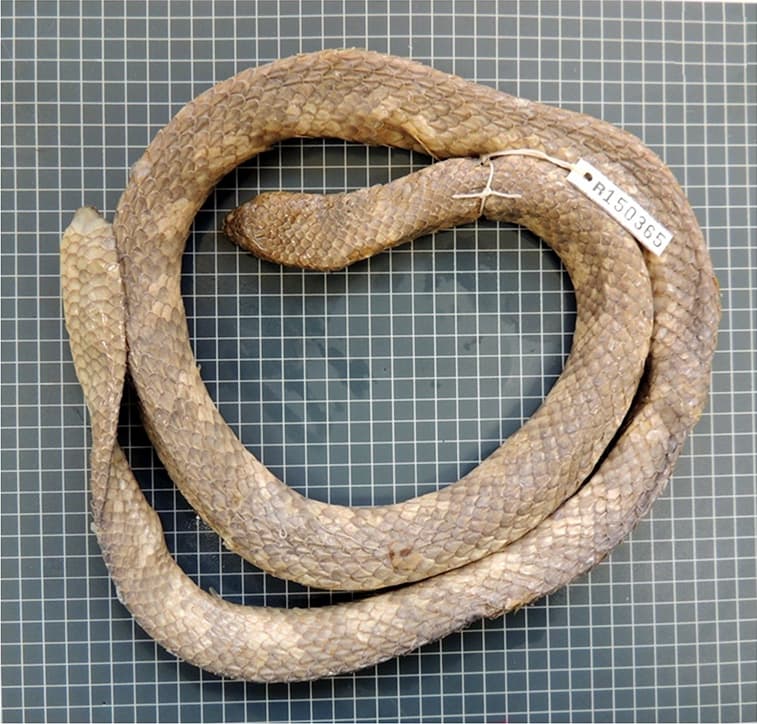
Aipysurus foliosquama
Aipysurus foliosquama, commonly known as the leaf-scaled sea snake, is a venomous elapid snake discovered in the waters off Australia. Once thought extinct from its original habitat in the Ashmore and Cartier Islands, a population was rediscovered in the seagrass beds of Shark Bay, Western Australia in 2015. This species is characterized by its purple-brown coloration and a diet primarily consisting of wrasse and gudgeon fish.

Aipysurus apraefrontalis
The short-nosed sea snake, scientifically known as *Aipysurus apraefrontalis*, is a venomous sea snake found in reef areas off the northern coast of Western Australia. Distinctive for its small, pointed head and slender brown body with darker bands, this species is long-lived and slow-growing. Its populations are complex, with a potentially extirpated oceanic group and an extant coastal variant that may represent a separate species.