
Austrochilidae
Austrochilidae is a small spider family comprising nine species across two genera, Austrochilus and Thaida. These spiders are endemic to the Andean forests of central and southern Chile and adjacent Argentina. They are notable for their basal placement within the Araneomorphae, exhibiting a mix of primitive and advanced arachnid features.
Key Facts
- ›Consists of two genera: Austrochilus and Thaida.
- ›Endemic to the Andean forests of Chile and Argentina.
- ›Placed basally within the Araneomorphae.
- ›Exhibits a combination of primitive and derived features.
- ›Contains a total of nine described species.

Chile, Argentina
- Retention of Four Book Lungs
- Some Features of Silk Production Are Regarded As Derived
About Austrochilidae
What is Austrochilidae?
Austrochilidae is a small but evolutionarily significant family of spiders, containing nine species distributed across two distinct genera: Austrochilus and Thaida. These spiders are exclusively found in the unique environment of the Andean forests, specifically in central and southern Chile and extending into adjacent regions of Argentina.
Evolutionary Significance
The taxonomic placement of Austrochilidae has been a subject of study, with molecular phylogenetic research consistently placing these genera as basal members within the Araneomorphae, one of the two major suborders of spiders. This means they represent an early branch in the evolutionary tree of modern spiders. Their morphology reflects this basal position, exhibiting a fascinating combination of "primitive" and "advanced" characteristics. For instance, the retention of four book lungs is considered a primitive trait, linking them to earlier spider forms. Conversely, certain aspects of their silk production are viewed as derived, indicating evolutionary innovation within their lineage.
Source: Wikipedia ↗
Frequently Asked Questions
What are the genera within the Austrochilidae family?
The Austrochilidae family currently includes two genera: Austrochilus and Thaida. These genera contain all the known species within this spider family.
Where are Austrochilidae spiders found?
Austrochilidae spiders are endemic to the Andean forest regions of central and southern Chile, as well as adjacent areas in Argentina. They are not found naturally in any other parts of the world.
What is significant about the phylogenetic placement of Austrochilidae?
Austrochilidae are considered basal members of the Araneomorphae, meaning they represent an early lineage in the evolution of this major spider group. This placement is supported by molecular studies and their retention of four book lungs.
Do Austrochilidae spiders have any unique evolutionary features?
Yes, the family displays a mix of primitive and advanced characteristics. While they retain primitive features like four book lungs, some aspects of their silk production are considered derived, suggesting an interesting evolutionary path.
Related Spider species

Porrhothelidae
Porrhothelidae is a monotypic family of mygalomorph spiders found exclusively in New Zealand. These spiders are distinguished by specific anatomical features, including small posterior sigillae and a single row of teeth on the chelicerae. The genus Porrhothele, containing all members of this family, was established in 1892.
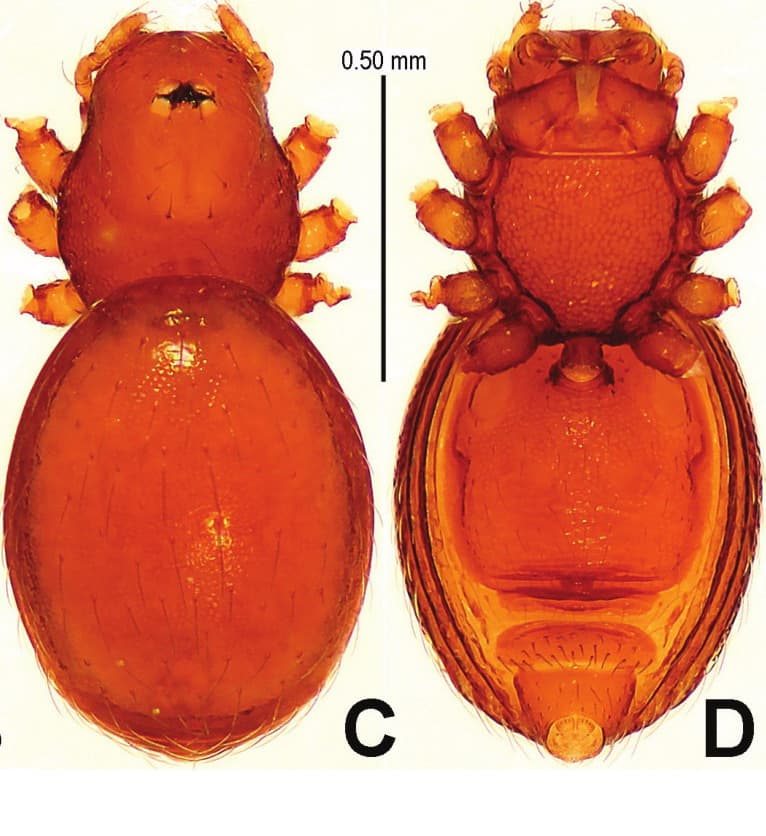
Tetrablemmidae
Tetrablemmidae, also known as armored spiders, is a family of tropical araneomorph spiders first described in 1873. They are primarily found in Southeast Asia, with some species extending to Africa and the Americas. A distinctive feature of many Tetrablemmidae spiders is their possession of only four eyes, a trait shared with certain members of the Caponiidae family.