
Buff-rumped woodpecker
The buff-rumped woodpecker is a bird species found in Southeast Asia, native to areas including southern Myanmar, Thailand, Malaya, Sumatra, and Borneo. It is characterized by its small nuchal crest, black-and-white wings, fine barring on its belly, and a prominent whitish-buff rump patch. Males are distinguished by a red "mustache" stripe.
Key Facts
- ›Found in southern Myanmar, Thailand, Malaya, Sumatra, and Borneo.
- ›Inhabits subtropical or tropical dry and moist lowland forests.
- ›Males possess a distinctive red "mustache" stripe.
- ›Often forages in pairs and joins mixed-species flocks.
- ›Observed leaf-gleaning and foraging for ants in the forest canopy.
- ›Threatened by habitat conversion to palm-oil and rubber plantations.
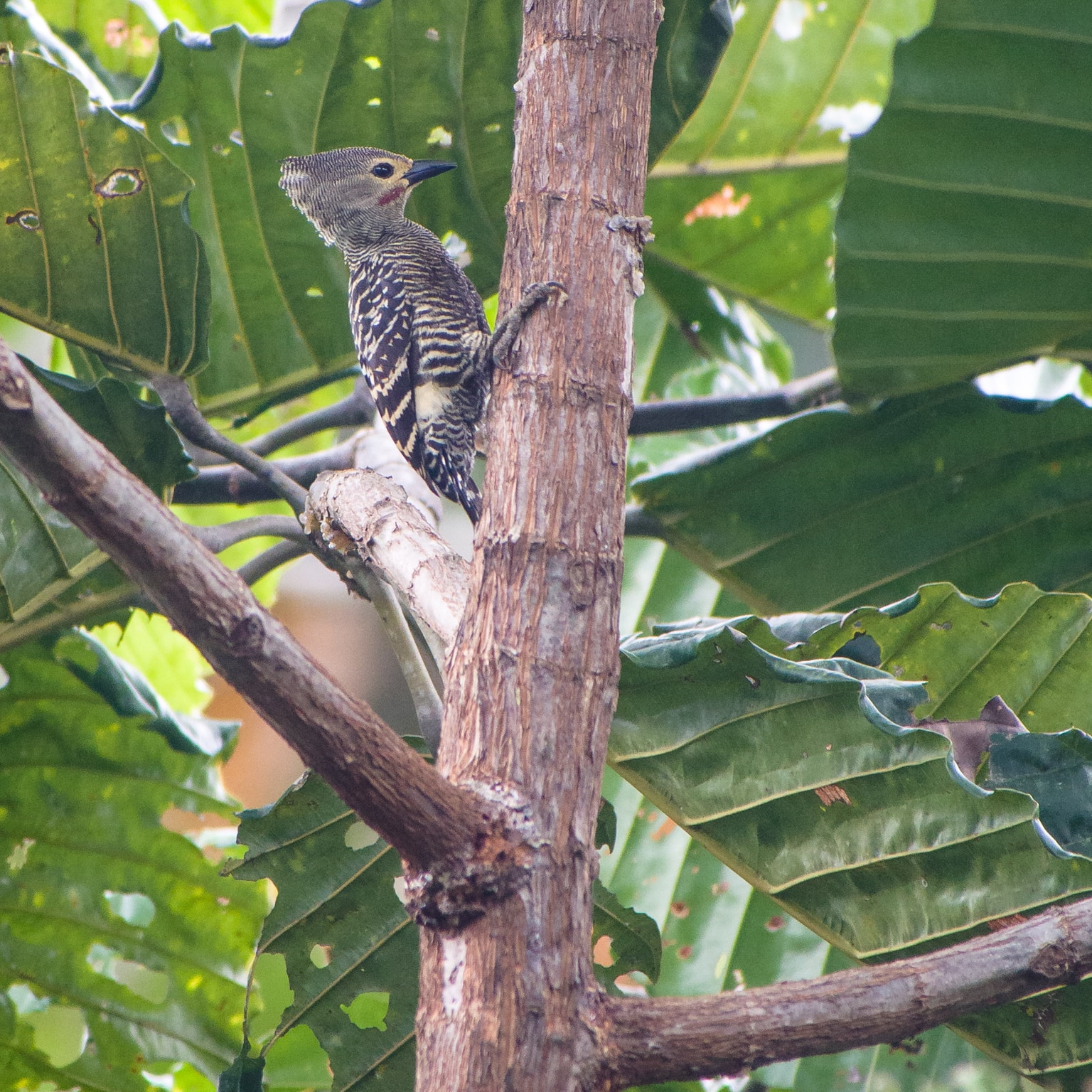
Zebra Woodpecker
Southeast Asia, Southern Myanmar, Thailand, Malaya, Sumatra, Borneo
Small Nuchal Crest, Black-and-White Wings, Fine Barring On Belly, Red "Mustache" Stripe, Whitish-Buff Rump Patch
Insects, Ants
Forages In Pairs, Joins Mixed-Species Flocks, Leaf-Gleaning, Foraging For Ants In Canopy
Repurposed Old Nest-Holes of Other Species
Not Specified
About Buff-rumped woodpecker
The buff-rumped woodpecker, scientifically known as Meiglyptes grammithorax, is a species of bird belonging to the family Picidae. It is native to the diverse forest ecosystems of Southeast Asia. Historically, specimens were collected and identified, with one notable example included in a collection presented to Lord Edward Smith-Stanley in 1825 by Sir Stamford Raffles, who initially labeled it as a zebra woodpecker.
Morphology and Identification
This woodpecker is recognized by several distinct physical characteristics. It possesses a small nuchal crest atop its head and wings marked with a striking black-and-white pattern. The belly features fine barring, and males are further distinguished by a prominent red "mustache" stripe. A notable, though not always visible, feature is a whitish-buff rump patch that gives the species its common name.
Distribution and Habitat
The buff-rumped woodpecker's range encompasses southern Myanmar, Thailand, Malaya, Sumatra, and Borneo. It primarily inhabits subtropical or tropical dry forests and subtropical or tropical moist lowland forests. While it was previously observed in Singapore, it is now believed to be locally extirpated from the area, likely due to extensive habitat loss.
Behavior and Ecology
These woodpeckers are often observed foraging in pairs and have a tendency to join mixed flocks composed of other insectivorous bird species. Their foraging techniques include leaf-gleaning and actively searching for ants within the forest canopy. An interesting behavioral observation notes pairs repurposing and excavating old nest-holes that were previously used by other bird species.
Conservation Concerns
The buff-rumped woodpecker faces significant threats, primarily from the ongoing conversion of native forests in the Sundaic region into large-scale palm-oil and rubber plantations. This habitat degradation poses a considerable risk to the long-term survival of the species.
Source: Wikipedia ↗
Frequently Asked Questions
What are the distinctive physical features of the buff-rumped woodpecker?
The buff-rumped woodpecker has a small nuchal crest, black-and-white wings, and fine barring on its belly. Males are further identified by a red "mustache" stripe. A prominent whitish-buff rump patch is also a distinguishing characteristic, though it may not always be visible.
Where is the buff-rumped woodpecker found?
This species is native to Southeast Asia, specifically in southern Myanmar, Thailand, Malaya, Sumatra, and Borneo. It was once observed in Singapore but is now thought to be locally extirpated.
What is the habitat of the buff-rumped woodpecker?
The buff-rumped woodpecker primarily occupies subtropical or tropical dry forests and subtropical or tropical moist lowland forests. These are the natural environments where it is typically found.
How does the buff-rumped woodpecker find food?
They often forage in pairs and have been observed joining mixed flocks with other insectivorous birds. Their foraging behavior includes leaf-gleaning and searching for ants in the forest canopy.
What are the threats facing the buff-rumped woodpecker?
The species is presumed to be threatened by the conversion of native forests in the Sundaic region into palm-oil and rubber plantations. This habitat loss poses a significant risk to their population.
Related Woodpecker species

Red-backed flameback
The Red-backed flameback is a species of woodpecker endemic to Sri Lanka, known for its predominantly crimson plumage and black markings. It inhabits various forest types and man-made environments, and its diet primarily consists of ants.

Bamboo woodpecker
The Bamboo woodpecker (Gecinulus viridis) is a bird species found in the forests of Myanmar, Laos, Thailand, and Malaysia. It inhabits subtropical or tropical dry and moist lowland forests.

Pale-headed woodpecker
The pale-headed woodpecker (Gecinulus grantia) is a species of bird found across several Asian countries, inhabiting subtropical and tropical forests. It is particularly associated with bamboo forests and mountainous regions.