
Great spotted woodpecker
The great spotted woodpecker is a medium-sized bird characterized by its pied black and white plumage and a distinctive red patch on its lower belly. It inhabits diverse woodlands across the Palearctic region and parts of North Africa. This adaptable species is known for its varied diet, including insect larvae, seeds, and even the eggs and chicks of other birds, and its habit of excavating tree cavities for nesting.
Key Facts
- ›Medium-sized woodpecker with pied black and white plumage.
- ›Found across Eurasia and parts of North Africa.
- ›Diet includes insect larvae, seeds from cones, and eggs/chicks of other birds.
- ›Nests in tree cavities excavated by both sexes.
- ›Known for its rapid drumming, up to 16 strikes per second.
- ›Classified as a species of least concern by the IUCN.

Picus Major
Eurasia, North Africa
Pied Black and White Plumage, Red Patch On Lower Belly, Crimson Nape Patch In Males, Stiff Tail Feathers Used As A Prop, Zygodactyl Feet
Insect Larvae, Invertebrates, Seeds, Nuts, Berries, Tree Sap, Eggs and Chicks of Other Birds
- Chiseling into trees to extract larvae
- Picking food from tree surfaces and bark fissures
- Using an 'anvil' to hammer hard items like cones and nuts
- Drilling rings of holes for tree sap
Holes excavated in living or dead trees, Utility poles, Nest boxes
Sharp 'Kik' Call, Rattling 'Krrarraarr' When Disturbed, 'Gwig' Courtship Call, Rapid Drumming
About Great spotted woodpecker
The great spotted woodpecker (Dendrocopos major), historically referred to as Picus major, is a widely distributed and recognizable bird species found across Eurasia and into parts of North Africa. This medium-sized woodpecker is distinguished by its striking pied black and white plumage, complemented by a scarlet patch on its lower belly. Males possess an additional crimson marking on their nape, which is absent in females, and juveniles feature a red crown.
Habitat and Distribution
This adaptable species thrives in a broad spectrum of woodland environments, encompassing broadleaf, coniferous, and mixed forests. It also readily occupies modified landscapes such as parks, gardens, and olive groves, demonstrating a capacity to coexist with human presence. Its range extends from sea level up to significant altitudes, varying by region.
Behavior and Diet
Great spotted woodpeckers are known for their active lifestyle, spending much of their time climbing trees. They exhibit specialized anatomical adaptations to manage the physical stresses of their hammering behavior, whether for foraging or excavating nest holes. Their diet is diverse and opportunistic, including insect larvae extracted from wood, adult insects, spiders, seeds, nuts, berries, and tree sap. They are also known to raid the nests of other birds for eggs and chicks and have been observed visiting bird feeders.
Nesting and Reproduction
Pairs of great spotted woodpeckers are territorial and excavate their own nest cavities, typically in living or dead trees. These cavities are unlined, save for wood chips from excavation. The breeding season, from mid-April to June, involves the laying of a clutch of four to six glossy white eggs. Both parents share incubation duties and care for the altricial young, which fledge after approximately 20-23 days. The species typically raises one brood per year.
Conservation Status
The great spotted woodpecker boasts a large population and a vast geographical range. It is classified as a species of least concern by the International Union for Conservation of Nature (IUCN), with its population generally considered stable or slightly increasing. This positive status is attributed to its adaptability, flexibility in habitat choice, and the ongoing planting of forests which provide suitable breeding grounds and resources.
Source: Wikipedia ↗
Frequently Asked Questions
What does the great spotted woodpecker look like?
Adults are 20–24 cm long with glossy blue-black upperparts, white facial markings, and a scarlet lower belly. Males have a crimson patch on the nape, absent in females. Juveniles are less glossy with a brown tinge and red on their crown.
Where does the great spotted woodpecker live?
This species has a wide distribution across Eurasia, from Ireland to Japan, and extends into North Africa. It inhabits a variety of woodlands, including broadleaf, coniferous, and mixed forests, as well as modified habitats like parks and gardens.
What does the great spotted woodpecker eat?
It is omnivorous, feeding on insect larvae extracted from trees, adult insects, spiders, seeds, nuts, berries, and tree sap. They also raid nests of other cavity-nesting birds for eggs and chicks, and will visit bird feeders for seeds and suet.
How does the great spotted woodpecker make its nest?
Great spotted woodpeckers excavate their own nest holes in living or dead trees, or occasionally in utility poles or nest boxes. The cavities are unlined, with wood chips from excavation often covering the base.
What sounds does the great spotted woodpecker make?
Its primary call is a sharp 'kik', which can be repeated as a rattling 'krrarraarr' when disturbed. They also produce a courtship call, 'gwig', and engage in rapid drumming on trees for contact and territorial advertisement.
Related Woodpecker species
Fire-bellied woodpecker
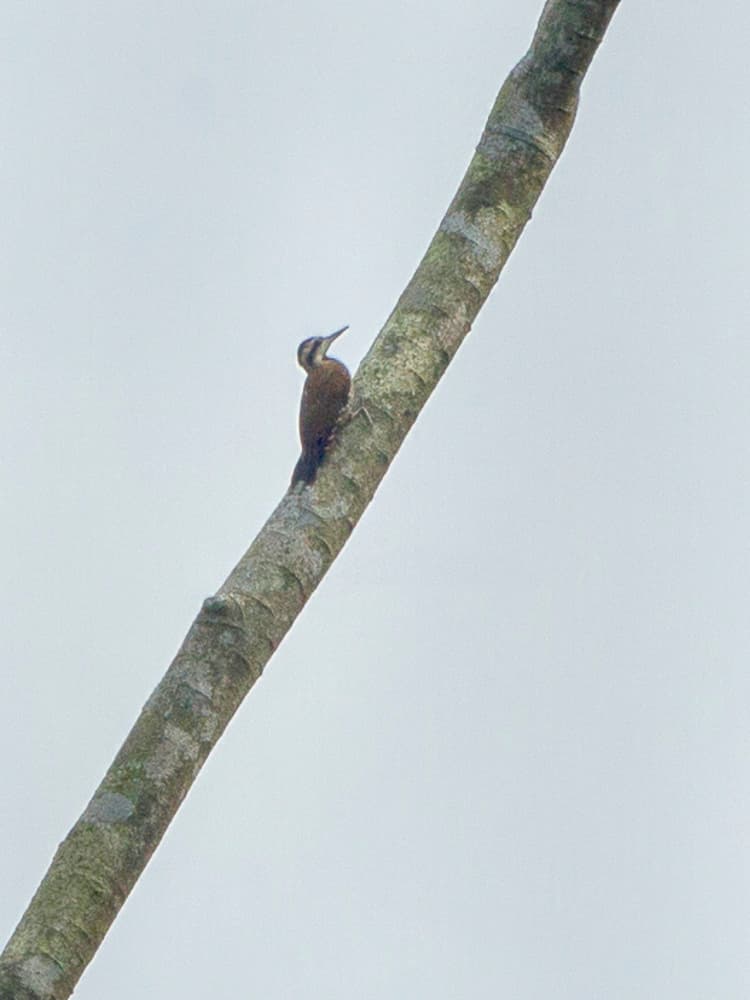
The fire-bellied woodpecker is a bird species found across tropical West Africa, inhabiting various wooded environments from primary rainforest edges to savannahs. It is characterized by its olive-bronze upperparts, crimson rump, and a striking scarlet belly, with males displaying a red crown and females a black one. This species is common and its population is considered stable or increasing, leading to a 'least concern' conservation status.

Lesser spotted woodpecker
The lesser spotted woodpecker (Dryobates minor) is the smallest European woodpecker, characterized by its broad barring on the wings and narrower bars on its lower back. This species is found across the Palearctic region, inhabiting woodlands and parks, and is often overlooked due to its habit of foraging in the tops of tall trees. Its diet primarily consists of insects, particularly wood-boring larvae and surface-living insects during the breeding season.

Northern flicker
The Northern Flicker is a medium-sized woodpecker found across most of North America and parts of Central America. It is notable for its diverse common names, often derived from its vocalizations, and for being one of the few woodpecker species that migrate. This bird exhibits distinct plumage variations between its eastern and western populations, particularly in the color of its wing and tail shafts.