
Greater yellownape
The greater yellownape is a large, olive-green woodpecker species found across East Asia, inhabiting moist lowland and montane forests. It is distinguished by a prominent yellow-crested nape and throat, contrasting with its olive-green back, brownish crown, and grey underparts. The species' natural range extends from northern and eastern India to southeastern China and parts of Indochina and Sumatra.
Key Facts
- ›Large olive-green woodpecker with a distinctive yellow-crested nape and throat.
- ›Inhabits subtropical or tropical moist lowland and montane forests.
- ›Found in East Asia, including India, China, Indochina, Hainan, and Sumatra.
- ›Crown is brownish, flight feathers are chestnut barred with black.
- ›Bill often appears whitish.

East Asia, India, China, Indochina, Hainan, Sumatra
Prominent Yellow-Crested Nape and Throat, Brownish Crown, Chestnut Barred With Black Flight Feathers, Whitish Bill
About Greater yellownape
The greater yellownape (Chrysophlegma flavinucha) is a species of bird belonging to the woodpecker family, Picidae. This significant avian species is distributed across a wide area of East Asia, with its range extending from the northern and eastern parts of India through to south-eastern China. It is also found in the region of Indochina, on the island of Hainan, and further south on Sumatra.
Habitat and Description
The natural habitats favored by the greater yellownape are characterized by moisture and are found in both lowland and montane areas within subtropical and tropical zones. Its appearance is notable: it is a large woodpecker, primarily olive-green in coloration. A defining feature is its prominent yellow-crested nape and throat, which offers a striking contrast. The bird's crown is brownish, while its flight feathers are a chestnut color, distinctly barred with black. The bill of the greater yellownape often presents a whitish appearance, contributing to its unique look.
Source: Wikipedia ↗
Frequently Asked Questions
What are the key physical characteristics of the greater yellownape?
The greater yellownape is a large woodpecker that is predominantly olive-green in color. It is easily recognized by its prominent yellow-crested nape and throat, which stand out against its darker plumage. Its crown is brownish, flight feathers are chestnut barred with black, and its bill often appears whitish.
Where is the greater yellownape species found?
This woodpecker species has a broad geographic range across East Asia. Its distribution extends from northern and eastern India eastward to south-eastern China, and it is also found in Indochina, on the island of Hainan, and on Sumatra.
What kind of habitats does the greater yellownape prefer?
The greater yellownape thrives in humid forest environments. Its natural habitats include subtropical or tropical moist lowland forests, as well as subtropical or tropical moist montane forests.
Are there any other common names for the greater yellownape?
While the article text does not list alternative common names, the scientific name for this species is Chrysophlegma flavinucha.
Related Woodpecker species

Grey-capped pygmy woodpecker
The grey-capped pygmy woodpecker is a small, dark Asian bird belonging to the woodpecker family. It is characterized by its grey crown, red nape in males, and prominent dark streaking on its buff underside. Its range spans from the Himalayas and Manchuria to Southeast Asia, inhabiting various forest types.
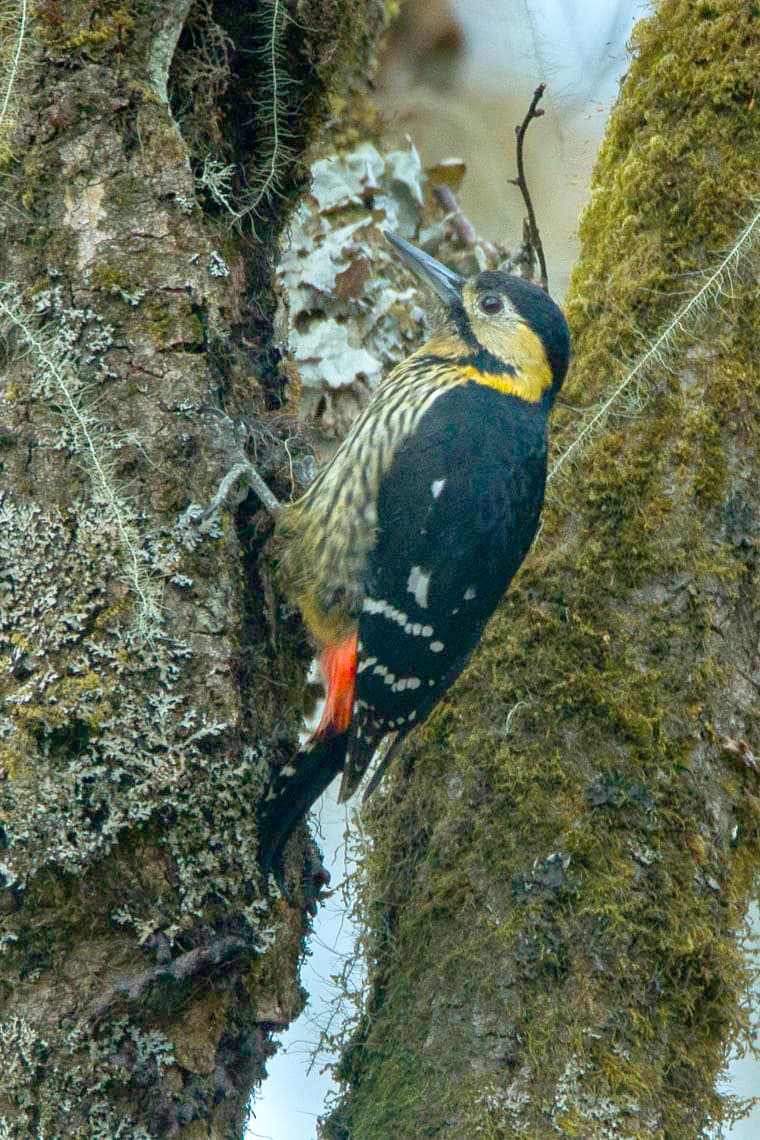
Darjeeling woodpecker
The Darjeeling woodpecker is a medium-sized pied bird found in the northern Indian subcontinent, primarily inhabiting the Himalayas and adjacent regions. It is characterized by its black upperparts with white scapular patches, yellow neck sides, and a long bill, with males possessing a red nape patch.
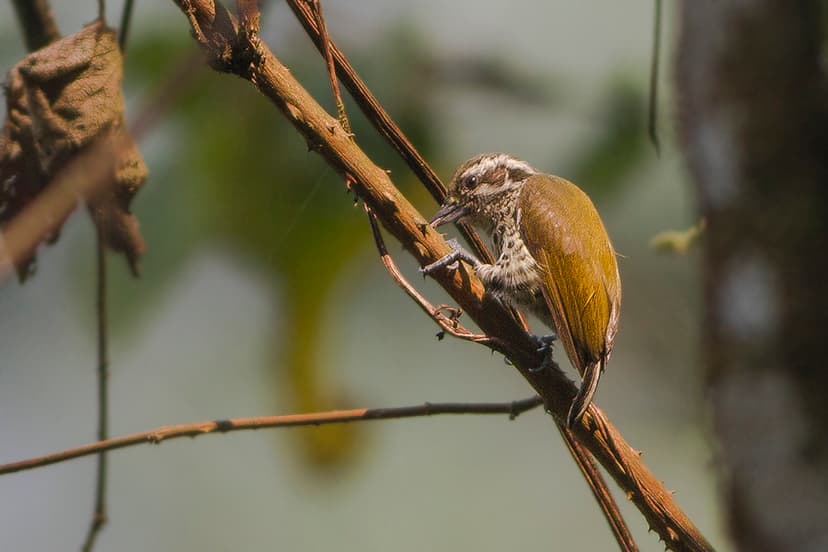
Speckled piculet
The Speckled Picullet is a bird species found across India, China, and Southeast Asia, inhabiting various forest types including boreal and montane forests. These small woodpeckers are characterized by their olive-green backs, white head stripes, and spotted undersides, with males displaying orange and brown on their forecrown.