
Imperial woodpecker
The Imperial woodpecker (Campephilus imperialis) is a critically endangered, possibly extinct, woodpecker species endemic to Mexico. If extant, it is the world's largest woodpecker, reaching up to 60 cm in length, characterized by its black plumage, large white wing-patches, and a distinctive ivory-colored bill. Its decline is largely attributed to habitat destruction and hunting.
Key Facts
- ›It is considered the world's largest woodpecker species if still extant, measuring up to 60 cm in length.
- ›The male has a red-sided crest, while the female's crest is entirely black and recurved.
- ›Its primary habitat is open montane forests of pine and oak, typically at high elevations.
- ›The species feeds mainly on insect larvae found under the bark of dead pine trees.
- ›No confirmed sightings have occurred since 1956, leading to its classification as critically endangered (possibly extinct).
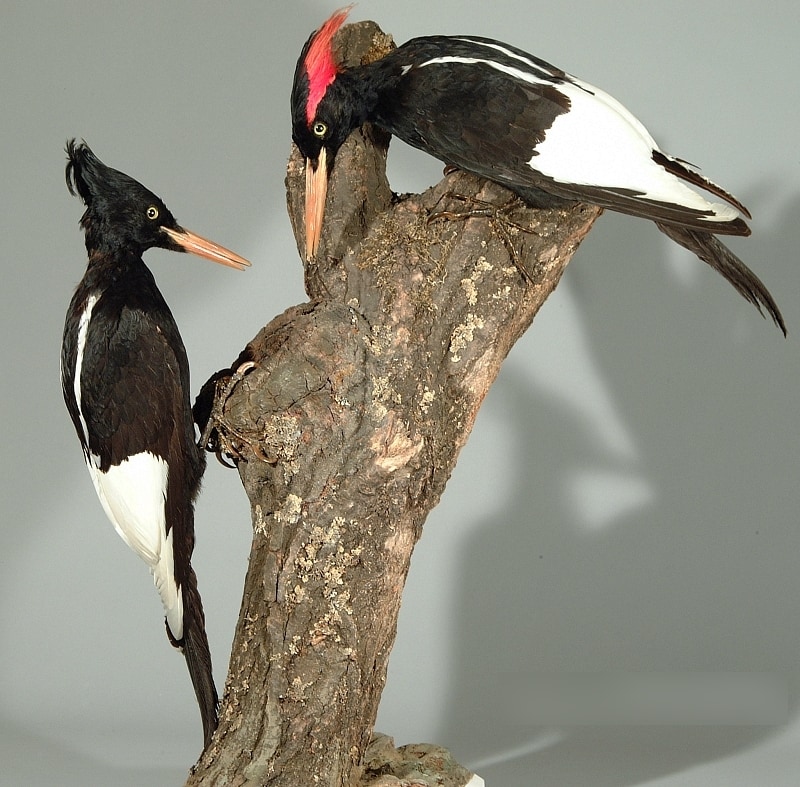
Mexican Ivory-Billed Woodpecker
Mexico
Montane Pine-Oak Forests, Open Forests With Dead Trees
Large Ivory-Colored Bill, Large White Wing-Patches, Red-Sided Crest, All Black Underparts
Insect Larvae
- Extracting larvae from under bark of dead trees
Cavities In Trees
Toy Trumpet-Like
About Imperial woodpecker
The Imperial woodpecker, scientifically known as Campephilus imperialis, is a large woodpecker species endemic to Mexico. If it still exists, it holds the distinction of being the world's largest woodpecker, with individuals reaching lengths of 56 to 60 cm (22 to 23.5 inches). It is sometimes referred to as the Mexican ivory-billed woodpecker due to its close relation and visual similarity to the ivory-billed woodpecker.
Description and Ecology
This conspicuous bird is characterized by its predominantly black plumage, accented by large white wing-patches and thin white "braces" on its mantle. Males possess a striking red-sided crest, while females have an entirely black, recurved crest. A notable feature is its substantial, ivory-colored bill. The Imperial woodpecker was once widespread throughout the Sierra Madre Occidental of Mexico, favoring open montane forests rich in large pines and abundant dead trees, typically found at elevations between 2,100 and 2,700 meters. Its diet primarily consisted of insect larvae, especially beetle larvae, extracted from beneath the bark of dead pine trees. Breeding occurred between February and June, with clutches of one to four eggs. A mated pair required a significant territory of approximately 25 square kilometers of mature forest.
Decline and Possible Extinction
The Imperial woodpecker is currently listed as "critically endangered (possibly extinct)" by the IUCN and BirdLife International. No confirmed sightings have been recorded since 1956, leading to the widespread belief that the species is extinct. Its dramatic decline is attributed to a combination of factors, including extensive habitat destruction and fragmentation caused by logging, as well as hunting. Historical accounts suggest that logging interests encouraged local populations to kill the birds, believing they damaged valuable timber, and poisoning campaigns may have significantly impacted populations in the 1950s. The species' reliance on large, dead old-growth trees made it particularly vulnerable to habitat changes.
Legacy
Despite its presumed extinction, efforts continue in conservation biology to analyze extinction risks and search for any surviving individuals. The last known visual record of the species is a film captured in 1956. The Government of Mexico officially declared the Imperial woodpecker extinct in 2001, though its rediscovery would trigger immediate legal protection.
Source: Wikipedia ↗
Frequently Asked Questions
Is the Imperial woodpecker extinct?
The Imperial woodpecker is generally believed to be extinct, with no confirmed sightings since 1956. However, the survival of a few individuals is considered a remote possibility by some researchers.
What is the size of the Imperial woodpecker?
The Imperial woodpecker is a very large bird, with a typical size ranging from 56 to 60 centimeters (22 to 23.5 inches) in length, making it potentially the world's largest woodpecker species.
What did the Imperial woodpecker eat?
Its primary food source was insect larvae, particularly those of beetles, which it extracted from beneath the bark of dead pine trees. This foraging habit made it dependent on forests with numerous dead trees.
Where did the Imperial woodpecker live?
The Imperial woodpecker was found in the Sierra Madre Occidental mountain range in Mexico, inhabiting open montane forests composed of pine and oak, usually at elevations between 2,100 and 2,700 meters.
Why did the Imperial woodpecker disappear?
The primary reasons for its decline and probable extinction are habitat destruction and fragmentation due to logging, combined with hunting. Active eradication campaigns by logging interests and over-hunting for folk medicine and food also accelerated its disappearance.
Related Woodpecker species
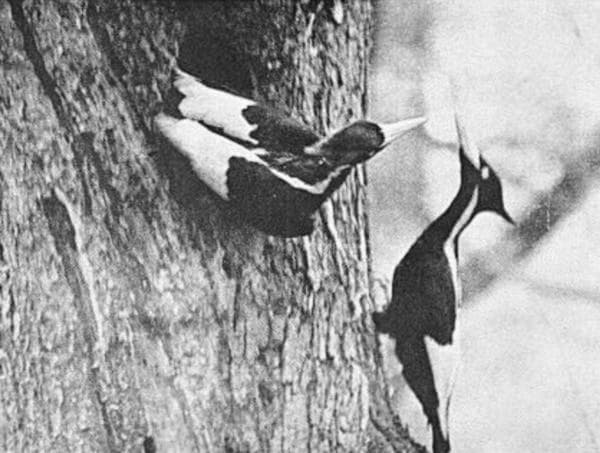
Ivory-billed woodpecker
The Ivory-billed woodpecker (Campephilus principalis) is a large woodpecker native to the Southern United States and Cuba, distinguished by its striking black and white plumage and an ivory-colored bill. Once widespread in bottomland hardwood and temperate coniferous forests, its populations have drastically declined due to habitat destruction and hunting, leading to its current status as critically endangered and possibly extinct.

Arabian woodpecker
The Arabian woodpecker is a species found exclusively in the Sarawat Mountains of Saudi Arabia and Yemen, making it the sole woodpecker to breed on the Arabian Peninsula. This bird, approximately 18 cm in length, is characterized by its brownish head with a red crown patch in males, olive-grey streaked plumage, and a grey underpart with a red-suffused belly. It inhabits various woodland environments, from sea level up to 2,800 meters, feeding primarily on insect grubs and spiders.

Arrowhead piculet
The Arrowhead piculet is a small bird belonging to the woodpecker family, characterized by its distinctive plumage and a varied diet. It is found in the Guianas region of South America, inhabiting a range of environments from mangroves to montane forests.