
Little grey woodpecker
The little grey woodpecker is a small bird found across a wide range in Africa, from Senegal to Sudan. It is characterized by its greyish-brown upperparts barred with white, and a distinctive red rump, especially visible in flight. While considered somewhat rare, its extensive range and stable population have led to its conservation status being listed as least concern.
Key Facts
- ›A very small woodpecker, measuring between 12 and 14 cm in length.
- ›Males possess a red hind crown and nape, absent in females.
- ›Features a greyish-brown body, wings, and tail barred with white.
- ›Has a distinct red rump and upper tail coverts, noticeable during flight.
- ›Inhabits steppe environments with scattered trees, wadis, and dry stream beds.
- ›Feeds on insects found in trees like Acacia and Balanites by pecking and hammering.

Sahelian Woodpecker
Africa
Steppe With Scattered Trees, Wadis, Dry Stream Beds
Red Rump and Upper Tail Coverts, Red Hind Crown and Nape, Relatively Long and Broad Beak
Insects
Pecking, Hammering
Branch of An Acacia Tree
About Little grey woodpecker
The little grey woodpecker, scientifically known as Dendropicos elachus, is a small bird belonging to the woodpecker family, Picidae. Also referred to as the Sahelian woodpecker, this species is recognized for its modest size, typically measuring between 12 and 14 centimeters in length, and its distinct plumage.
Description and Identification
The most striking feature of the little grey woodpecker is its red rump and upper tail coverts, which are particularly visible when the bird is in flight. The upper parts of its body, wings, and tail are a greyish-brown, marked with white barring. While both sexes share similar overall coloration, males are distinguished by a red hind crown and nape, a feature absent in females. The head is brown, accented by a subtle white supercilium and a narrow, darker brown moustachial stripe. Its beak is described as relatively long and broad, grey in color, with greenish-grey feet and brown eyes. Juveniles tend to have a duller overall appearance compared to adults.
Ecology and Habitat
Information regarding the specific ecology of the little grey woodpecker is somewhat limited. However, its typical habitat comprises steppe regions characterized by scattered trees, along with areas such as wadis and dry stream beds. These birds are known to forage in trees like Acacia and Balanites, employing pecking and hammering techniques to extract insects from the wood.
Distribution and Conservation
The little grey woodpecker is found across a wide geographical area in Africa, with its range extending through countries including Cameroon, Chad, Gambia, Mali, Mauritania, Niger, Nigeria, Senegal, and Sudan. Despite being described as somewhat rare in certain localities, its very large range and a apparently steady population trend have led the International Union for Conservation of Nature (IUCN) to classify its conservation status as 'Least Concern'.
Reproduction
Observations of breeding activity for the little grey woodpecker have been recorded between October and May, with the timing varying across different parts of its range. A nest has been documented in the branch of an Acacia tree, suggesting a preference for arboreal nesting sites.
Source: Wikipedia ↗
Frequently Asked Questions
What is the scientific name for the little grey woodpecker?
The scientific name for the little grey woodpecker is Dendropicos elachus. This binomial nomenclature distinguishes it within the bird family Picidae.
What are the main physical characteristics of the little grey woodpecker?
This small woodpecker is typically 12-14 cm long with a relatively long, broad beak. Its upperparts are greyish-brown barred with white, and it has a notable red rump. Males have a red hind crown and nape, which females lack.
Where can the little grey woodpecker be found?
The little grey woodpecker has a broad geographic range across Africa, including countries such as Cameroon, Chad, Gambia, Mali, Mauritania, Niger, Nigeria, Senegal, and Sudan.
What is the conservation status of the little grey woodpecker?
The International Union for Conservation of Nature (IUCN) has rated the conservation status of the little grey woodpecker as 'least concern'. This is due to its very large range and a population that appears to be steady.
What kind of habitat does the little grey woodpecker prefer?
The preferred habitat for the little grey woodpecker includes steppe regions with scattered trees, as well as wadis and dry stream beds. They are often found in areas where Acacia and Balanites trees grow.
What does the little grey woodpecker eat and how does it get its food?
Its diet primarily consists of insects, which it obtains by pecking and hammering into trees such as Acacia and Balanites. This foraging behavior helps them extract their prey from the wood.
When does the little grey woodpecker breed?
Breeding for the little grey woodpecker has been observed to occur between October and May. This period varies across different parts of its extensive range.
Related Woodpecker species

Ground woodpecker
The Ground woodpecker (Geocolaptes olivaceus) is one of the world's few ground-dwelling woodpeckers, distinguished by its large size and terrestrial foraging habits. Found in the hilly and mountainous regions of South Africa, Lesotho, and Eswatini, it inhabits steep, rocky slopes and feeds primarily on ants.

Arrowhead piculet
The Arrowhead piculet is a small bird belonging to the woodpecker family, characterized by its distinctive plumage and a varied diet. It is found in the Guianas region of South America, inhabiting a range of environments from mangroves to montane forests.
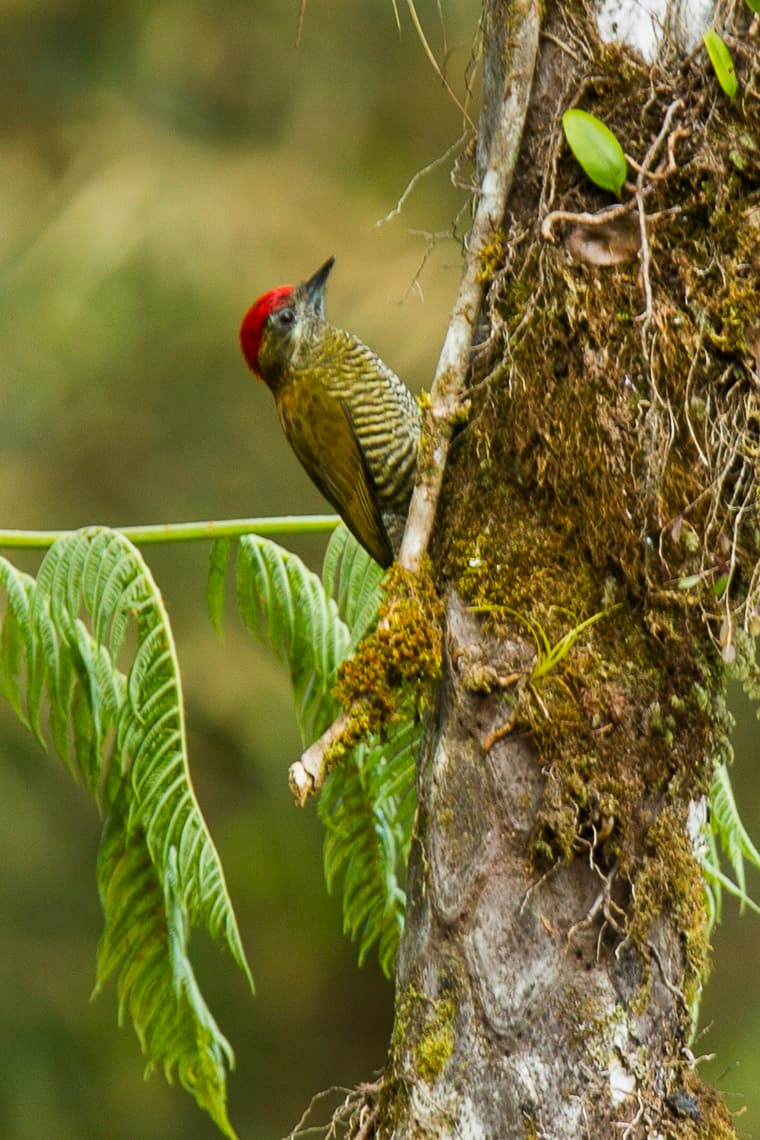
Bar-bellied woodpecker
The bar-bellied woodpecker (Veniliornis nigriceps) is a species of bird found in the montane forests of Bolivia, Colombia, Ecuador, and Peru. This species is characterized by its olive-brown plumage with distinctive dark olive bars on its underparts, and differences in head coloration between males and females. It inhabits humid to wet forests, often favoring areas with dense undergrowth and bamboo.