
Puerto Rican woodpecker
The Puerto Rican woodpecker is a unique species endemic to the archipelago of Puerto Rico, making it the only resident woodpecker species on the island. It is characterized by its striking black plumage, bright red throat and breast, and a distinctive white patch across its head. This species is common throughout Puerto Rico, inhabiting forests, plantations, and groves, and plays a role in the ecosystem by sharing its nesting cavities with other endemic birds.
Key Facts
- ›Endemic to the archipelago of Puerto Rico.
- ›Possesses a black body with a bright red throat and breast, and a white head patch.
- ›Males exhibit more vibrant coloration and slightly larger size than females.
- ›Diet consists primarily of insects, with fruits making up about a quarter of their food intake.
- ›Nesting cavities are also utilized by other Puerto Rican endemic bird species.
- ›Commonly found in forests, coffee plantations, mangroves, and palm groves.

Puerto Rico, Antilles
Forests, Coffee Plantations, Mangroves, Palm Tree Groves, Parks, Gardens
Bright red throat and breast, White patch across the head from eye to eye
Insects, Ants, Beetle Larvae, Fruits
Drills holes in trunks in search of prey
Cavities Carved By Males
About Puerto Rican woodpecker
The Puerto Rican woodpecker (Melanerpes portoricensis) holds the distinction of being the only woodpecker species endemic to the archipelago of Puerto Rico. It is also the sole resident species belonging to the family Picidae found on the island. This bird is commonly observed across Puerto Rico, inhabiting a variety of environments including forests, coffee plantations, mangrove areas, groves of palm trees, as well as parks and gardens. While it is prevalent on the main island, its presence on Vieques is considered rare.
Description and Characteristics
This species exhibits striking plumage, featuring a predominantly black body contrasted by a vibrant red throat and breast. A distinctive white patch spans the head, running from eye to eye. The flanks and lower portions of its body are adorned with a soft tangerine coloration. Sexual dimorphism is evident, with males displaying more intensely colored throats and breasts compared to females, who tend to have duller overall coloration. There is also a notable difference in bill length between the sexes, with males being slightly larger.
Behavior and Ecology
The Puerto Rican woodpecker shares behavioral and structural similarities with the North American red-headed woodpecker. Like most woodpeckers, it uses its bill to excavate holes in tree trunks in its search for food. Its diet is primarily composed of insects, such as ants and beetle larvae, with fruits constituting about a quarter of its intake. Less commonly, their diet may include scorpions, geckos, and coquís.
Reproduction and Nesting
Females lay between one and six white eggs within cavities that are diligently carved out by the males. These nesting sites are ecologically significant, as they are also utilized by other endemic bird species of Puerto Rico, including the Puerto Rican flycatcher and the yellow-shouldered blackbird, highlighting the species' role in supporting local biodiversity.
Source: Wikipedia ↗
Frequently Asked Questions
What are the main physical characteristics of the Puerto Rican woodpecker?
The Puerto Rican woodpecker has a black body, a bright red throat and breast, and a white patch extending from eye to eye across its head. Its flanks and lower body are a light tangerine color. Males tend to have more brightly colored throats and breasts than females, which are generally duller overall.
Where can the Puerto Rican woodpecker be found?
This species is common and widely distributed across the main island of Puerto Rico, found in habitats such as forests, coffee plantations, mangroves, palm tree groves, parks, and gardens. It is also noted as rare on the island of Vieques.
What does the Puerto Rican woodpecker eat?
The principal component of its diet consists of insects, including ants and beetle larvae. Fruits are also a significant food source, making up approximately one-quarter of their diet. Occasionally, they may consume scorpions, geckos, and coquís.
How does the Puerto Rican woodpecker reproduce?
Females lay between 1 to 6 white eggs in cavities that are carved out by the males. These nesting sites are important as they are also used by other endemic Puerto Rican birds.
Is the Puerto Rican woodpecker the only woodpecker in Puerto Rico?
Yes, the Puerto Rican woodpecker is the only woodpecker endemic to Puerto Rico and is the sole resident species of the family Picidae on the island.
Related Woodpecker species

Chestnut piculet
The chestnut piculet is a small bird found in Colombia and Venezuela, known for its rufous-brown plumage and active foraging habits. It inhabits a variety of landscapes, from rainforests to arid scrublands, and is often seen in small groups or mixed-species flocks. While its diet is presumed to consist of small insects, much of its breeding biology remains undocumented.
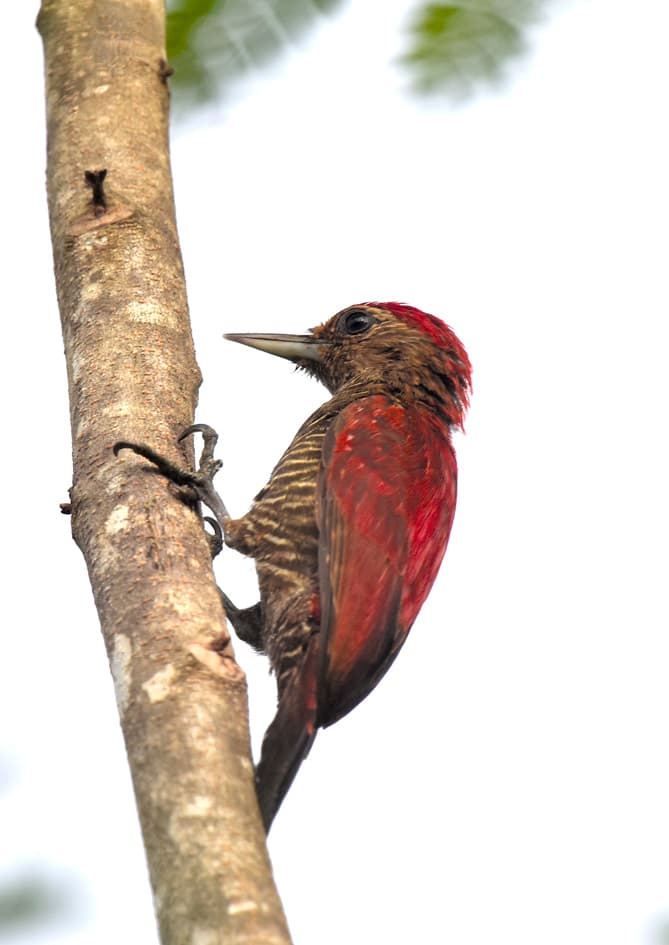
Blood-colored woodpecker
The blood-colored woodpecker is a small bird found in Guyana and Suriname, inhabiting coastal lowlands like mangroves and swamp forests. It is characterized by its crimson-red upperparts and distinctive head plumage, with males having a crimson crown and females a brown crown with white tips. This species is a year-round resident, known for its varied diet and unique nesting habits.

Crimson-backed flameback
The Crimson-backed flameback is a bird species in the woodpecker family, endemic to Sri Lanka. It is distinguished by its crimson upper body plumage, a yellow beak, and less prominent facial stripes compared to its relatives. This species inhabits forests and woodlands within its native range.