
Rufous piculet
The rufous piculet is one of the world's smallest woodpeckers, native to the lowland and montane forests of Southeast Asia. This distinctive bird is characterized by its rufous underparts, green-bronze upperparts, and a unique three-toed foot. It is a resident species, typically found foraging in the lower strata of dense, humid forests.
Key Facts
- ›One of the world's smallest woodpeckers, measuring 8-10 cm in length.
- ›Possesses a distinctive three-toed foot, unlike the typical four toes of most woodpeckers.
- ›Inhabits subtropical and tropical moist lowland and montane forests.
- ›Feeds primarily on ants, termites, small beetles, spiders, and other small invertebrates.
- ›Males have a yellow forehead patch, while females have a bronze patch and a larger beak.
- ›Its conservation status is 'least concern' due to a stable population and extensive range.
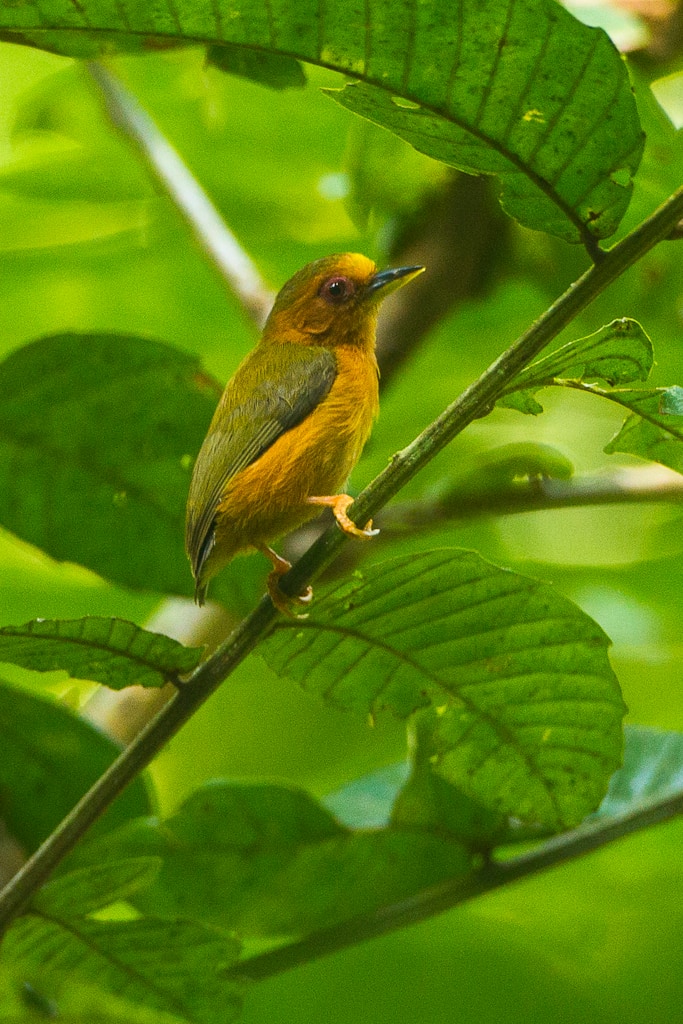
Rufous Piculet
Brunei, Indonesia, Malaysia, Myanmar, Thailand, Borneo, Greater Sunda Islands
- Subtropical or tropical moist lowland forests
- Subtropical or tropical moist montane forests
- Dense humid secondary forests
- Areas with tangled undergrowth, vines, creepers, and bamboos
- One of the World's Smallest Woodpeckers
- Short Wings and An Almost Non-Existent Tail
- Three Toes On Each Foot
- Male Has A Yellow/Golden Forehead Patch
- Female Has A Bronze Forehead Patch and A Larger Beak
- Reddish Iris
- Pinkish Or Purplish Bare Skin Ring Around the Eye
Ants, Ant Larvae, Termites, Small Beetles, Spiders, Other Small Invertebrates
- Gleans scrupulously
- Probes into holes
- Uses a long tongue to extract prey
- Works its way up trunks in a crosswise fashion
- Makes short flights to change orientation
- Forages on trunks, dead branches, vines, bushes, bamboos, and tall grasses
Hole In A Dead Branch, Bamboo
About Rufous piculet
The rufous piculet (Sasia abnormis) is a tiny bird belonging to the woodpecker family, Picidae, notable for being one of the smallest woodpeckers globally and the smallest found outside the Americas. This species is a resident of the tropical forests of Southeast Asia, inhabiting countries such as Myanmar, Thailand, Malaysia, Brunei, and Indonesia, including the Greater Sunda Islands and Borneo. Its natural environment includes both subtropical and tropical moist lowland and montane forests, where it prefers dense, humid secondary growth with abundant undergrowth, vines, and bamboos.
Description and Identification
Adult rufous piculets are characterized by their diminutive size, measuring between 8 and 10 cm in length, with notably short wings and a very short tail. Their upper parts are typically green with bronze tinges, while the underparts range from rufous to orange or cinnamon, often with paler flanks. A key distinguishing feature is their feet, which possess only three toes, a rarity among woodpeckers. Sexual dimorphism is present: males display a yellow or golden patch on their forehead, whereas females have a bronze patch and a slightly larger beak. Both sexes share a blackish upper mandible and a yellowish lower mandible, with reddish irises and a distinctive pinkish or purplish ring of bare skin around their eyes.
Ecology and Behavior
These active birds are typically found in the lowest levels of the forest, usually not exceeding 5 meters from the ground. They move singly or in small groups, foraging diligently on tree trunks, dead branches, vines, bushes, bamboos, and even tall grasses. Their foraging technique involves gleaning insects and probing into crevices with their long tongues. The diet primarily consists of ants and their larvae, termites, small beetles, spiders, and other small invertebrates. They are known cavity nesters, with nests sometimes found in holes in dead branches or within bamboo stalks.
Distribution and Conservation
The rufous piculet has an extensive distribution across Southeast Asia, ranging from sea level up to altitudes of approximately 1,600 meters. It is considered a fairly common or common species within its vast range, estimated to cover nearly 5 million square kilometers. Due to its widespread presence and stable population, with no significant threats currently identified, the International Union for Conservation of Nature (IUCN) has classified its conservation status as 'Least Concern'.
Source: Wikipedia ↗
Frequently Asked Questions
What is the rufous piculet's size?
The rufous piculet is very small, with a length ranging from 8 to 10 cm (3 to 4 inches). Its average body mass is approximately 9.2 grams.
Where can the rufous piculet be found?
This species is native to tropical Southeast Asia, with its range extending from southern Myanmar through Thailand, the Malay Peninsula, and to the Greater Sunda Islands and Borneo.
What does the rufous piculet eat?
Its diet consists mainly of ants and their larvae, termites, small beetles, spiders, and other small invertebrates. It gleans these from tree trunks, branches, vines, and grasses.
How can you tell the difference between male and female rufous piculets?
The sexes differ in plumage and beak size. Males have a yellow or golden patch on their forehead, while females have a bronze patch and a noticeably larger beak.
What kind of habitat does the rufous piculet prefer?
They prefer dense, humid secondary forests with a lot of undergrowth, including vines, creepers, bamboos, and dead trees, often found near streams. They are typically found in lowlands and hills up to about 1,600 meters.
What is the conservation status of the rufous piculet?
The rufous piculet is assessed by the IUCN as 'least concern'. This is due to its extensive range, common or fairly common status, and a believed stable population with no known major threats.
Related Woodpecker species
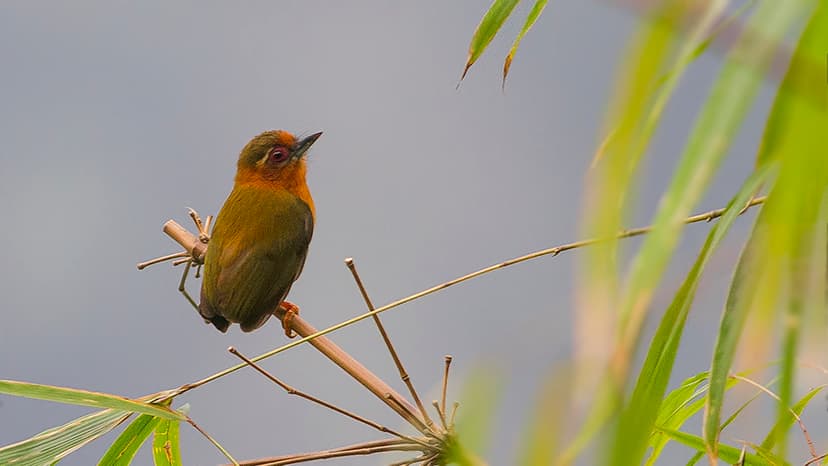
White-browed piculet
The white-browed piculet is a small bird found across Southeast Asia, inhabiting temperate and moist montane forests. It is characterized by its olive-green upperparts, rufous underparts, and a distinctive white streak above its eye. This species primarily feeds on insects and other invertebrates, often foraging in pairs or mixed-species flocks in the forest understory.

Crimson-naped woodpecker
The crimson-naped woodpecker is a species of bird found in the forests of Bhutan, China, India, Myanmar, and Nepal. It is characterized by its black and white plumage with distinct red markings on the breast and nape, particularly prominent in males. This species inhabits both lowland and montane subtropical and tropical moist forests.

Maroon woodpecker
The maroon woodpecker (Blythipicus rubiginosus) is a bird species belonging to the Picidae family. It inhabits subtropical and tropical moist forests, both lowland and montane, across Southeast Asia. This woodpecker is characterized by its predominantly maroon plumage.