
White-browed piculet
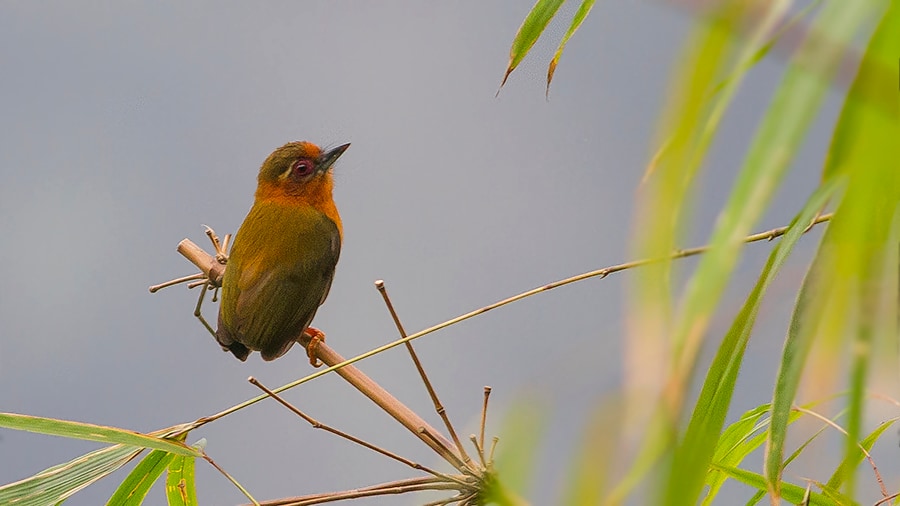
The white-browed piculet is a small bird found across Southeast Asia, inhabiting temperate and moist montane forests. It is characterized by its olive-green upperparts, rufous underparts, and a distinctive white streak above its eye. This species primarily feeds on insects and other invertebrates, often foraging in pairs or mixed-species flocks in the forest understory.
Key Facts
- ›Native to tropical Southeast Asia, with a range extending from India to Vietnam.
- ›Inhabits dense forests, including those with bamboo and swampy areas, up to 2,600 meters in altitude.
- ›Feeds on small insects, bark beetles, ants, termites, spiders, and other invertebrates.
- ›Forages in the understory, often near the ground, and may descend to hop short distances.
- ›Breeding occurs between March and July, with nests constructed using pieces of bamboo.
- ›Classified as 'Least Concern' by the IUCN due to its extensive range and stable population.
Asia
Temperate Forests, Subtropical Or Tropical Moist Montane Forests, Dense Wet Or Dry Forest, Scrub, Swampy Woodlands
- White Streak Above and Immediately Behind the Eye
- Ring of Bare Pinkish Or Reddish Skin Around the Eye
- Stubby Tail
- Three Toes Per Foot
Small Insects, Bark Beetles, Ants, Termites, Spiders, Small Invertebrates
Pecking, Probing, Forages in the understory layer, Descends to the ground to hop short distances
Pieces of Bamboo
About White-browed piculet
The white-browed piculet is a small and distinctive bird species belonging to the woodpecker family (Picidae). It is native to the tropical regions of Southeast Asia, with its distribution spanning across countries such as India, Nepal, Bhutan, Bangladesh, Myanmar, Laos, Vietnam, Cambodia, and Thailand. This species prefers dense forest environments, including temperate forests, subtropical and tropical moist montane forests, as well as areas with abundant vines, bamboo, scrub, and swampy woodlands. They are typically found foraging in the understory, not far above the ground, and can inhabit altitudes up to 2,600 meters.
Description and Identification
Adult white-browed piculets are relatively small, measuring up to 10 cm in length. Their upperparts are generally olive-green, often tinged with chestnut, while their underparts are a warm cinnamon or rufous color, sometimes with yellowish flanks. A notable characteristic is their stubby, blackish tail. The crown is green, and most strikingly, they possess a white streak located above and immediately behind the eye. This eye area is further encircled by a ring of bare, pinkish or reddish skin. A key difference between sexes is that males have a small golden-yellow patch on their forehead, which is absent in females. Juveniles tend to be duller than adults, appearing greener above and grayer beneath. Their beak is gray, their iris is red, and their legs are yellow or orange. Uniquely among woodpeckers, they have only three toes on each foot, whereas four is the norm for the family.
Ecology and Behavior
The diet of the white-browed piculet consists of small insects and other invertebrates, including bark beetles, ants, termites, and spiders. They forage by pecking and probing with their sharp beaks, often in the understory. These birds are known to forage in pairs and may also join small, mixed-species flocks. They are also observed descending to the ground, where they can hop for short distances.
Nesting and Reproduction
Nesting behavior for the white-browed piculet involves the use of bamboo. They are observed to use pieces of bamboo to construct their nests, picking up fragments with their feet and manipulating them with their beaks. The breeding season typically occurs between March and July.
Conservation Status
The white-browed piculet is considered a fairly common bird with a very extensive range. No significant threats are currently known to be impacting the species, and its population is believed to be stable. Consequently, the International Union for Conservation of Nature (IUCN) has assessed its conservation status as 'Least Concern'.
Source: Wikipedia ↗
Frequently Asked Questions
What are the main physical characteristics of the white-browed piculet?
The white-browed piculet is a small bird, growing up to 10 cm in length. It has olive-green upperparts tinged with chestnut, and rufous or cinnamon underparts. A key identifying feature is the white streak above and behind the eye, which is surrounded by bare pinkish skin.
Where is the white-browed piculet found?
This species is native to tropical Southeast Asia. Its geographic range includes countries such as India, Nepal, Bhutan, Bangladesh, Myanmar, Laos, Vietnam, Cambodia, and Thailand.
What kind of habitats does the white-browed piculet prefer?
The white-browed piculet thrives in dense wet or dry forests. It particularly favors areas with plenty of vines and bamboo, as well as scrub and swampy woodlands. It can be found at altitudes up to 2,600 meters.
What does the white-browed piculet eat?
Its diet primarily consists of small insects and invertebrates. This includes bark beetles, ants, termites, and spiders. They peck and probe with their beaks to find their food.
How does the white-browed piculet build its nest?
The white-browed piculet utilizes pieces of bamboo to construct its nest. It uses its feet to pick up broken bamboo and its beak to pull away fragments to shape the nest.
What is the conservation status of the white-browed piculet?
The white-browed piculet is assessed as 'Least Concern' by the International Union for Conservation of Nature. This is due to its extensive range and a population that is believed to be stable.
Related Woodpecker species
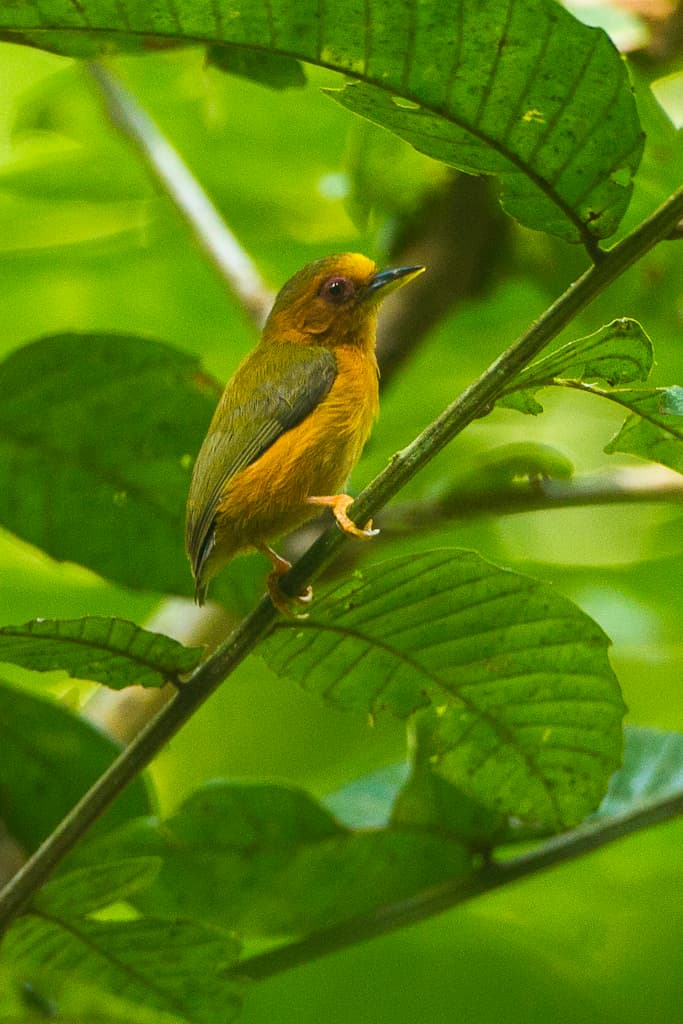
Rufous piculet
The rufous piculet is one of the world's smallest woodpeckers, native to the lowland and montane forests of Southeast Asia. This distinctive bird is characterized by its rufous underparts, green-bronze upperparts, and a unique three-toed foot. It is a resident species, typically found foraging in the lower strata of dense, humid forests.
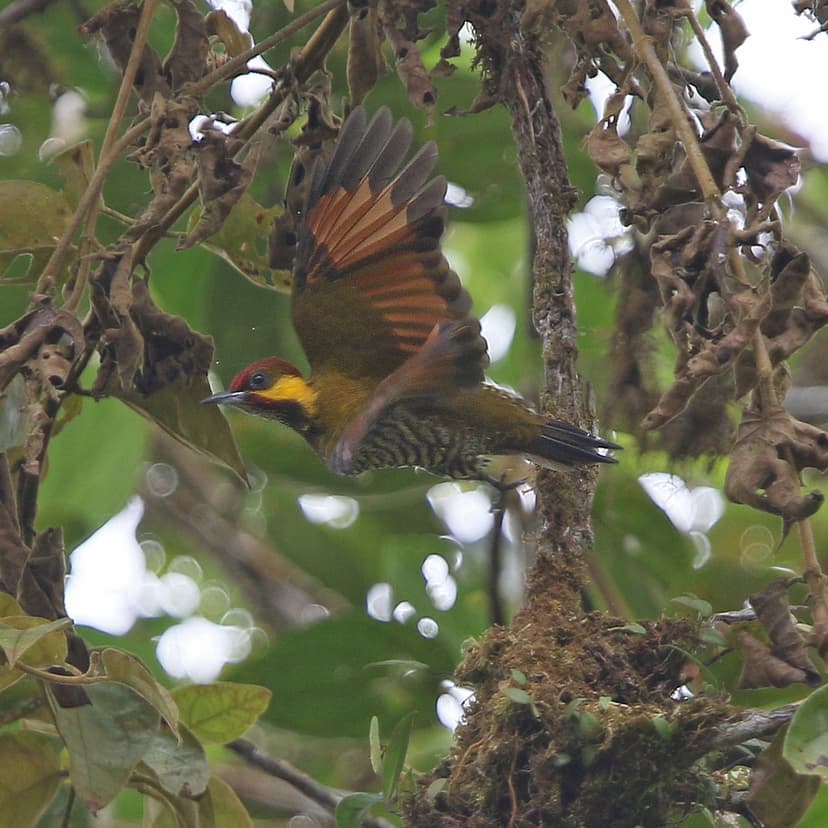
Lita woodpecker
The Lita woodpecker is a small woodpecker species found in Colombia and Ecuador, inhabiting humid and wet primary and secondary forests. Measuring about 17-18 cm, it exhibits distinct sexual dimorphism in its head plumage, with males having more extensive red coloration than females. Its diet is presumed to consist of insects, and it's known for its hissing calls.

Greater flameback
The greater flameback, also known as the greater goldenback, is a large woodpecker species found across the northern Indian subcontinent, extending to southern China, the Malay Peninsula, and parts of Indonesia and Borneo. This species is characterized by its distinctive golden-yellow to dark brown back and wings, red rump, and a prominent red crown in adult males.