
Rufous woodpecker
The rufous woodpecker is a medium-sized brown woodpecker native to South and Southeast Asia, characterized by its short bill and dark, barred plumage. It is known for its unique nesting behavior, often constructing its nest within the carton nests of arboreal ants. This species primarily forages for small insects, particularly ants and termites, in various forest types.
Key Facts
- ›Approximately 25 cm in length with overall dark brown plumage and dark bands.
- ›Forages in pairs for small insects, especially ants and termites.
- ›Nests are built within the carton nests of arboreal ants from the genus Crematogaster.
- ›Males have distinctive red-tipped feathers under the eyes and on the malar region.
- ›Distinctive drumming pattern starts rapidly and then slows down.
- ›Not considered threatened on the IUCN Red List.

Rufous Woodpecker
South Asia, Southeast Asia
Scrub Forests, Evergreen Forests, Deciduous Forests, Plains, Lower Hills
- Short bill
- Dark bands on wings and tail
- Weak, erectile crest
- Red-tipped feathers under eyes and on malar region in males
Ants, Termites, Insects
- Forage in pairs
- Forage on ant nests on trees, fallen logs, dung heaps, ant and termite hills
Within Carton Nests of Arboreal Ants
- Sharp Nasal, Three-Note Call: Keenk-Keenk-Keenk
- Long Wicka
- Series of Wick-Wick Notes
- Distinctive Drumming Note
About Rufous woodpecker
The rufous woodpecker (Micropternus brachyurus) is a medium-sized brown woodpecker found across South and Southeast Asia. It is distinguished by its short bill, overall dark brown plumage with dark barring on its wings and tail, and a weak erectile crest. Males of the species possess a notable characteristic: red-tipped feathers under their eyes and on the malar region, which are absent in females and juveniles.
This species is particularly known for its unique nesting behavior, where it excavates its nest within the carton nests constructed by arboreal ants, primarily from the genus Crematogaster. The rufous woodpecker's diet consists mainly of small insects, with a strong preference for ants and termites, which they forage for in pairs. Beyond insects, they have also been documented consuming nectar from flowers and sap.
Habitat and Distribution
The rufous woodpecker inhabits a wide range of environments, including scrub, evergreen, and deciduous forests, typically found in plains and lower hills, generally below 3000 meters. Its presence has been noted even in areas where natural habitats have been replaced by plantations, such as oil palm estates in Malaysia, indicating a degree of adaptability.
Behavior and Ecology
Foraging in pairs, rufous woodpeckers search for food on ant nests located on trees, fallen logs, and termite mounds. Their vocalizations include a characteristic sharp, nasal, three-note call, as well as a distinctive drumming pattern that begins rapidly and then slows. The breeding season occurs during the pre-monsoon dry period, from February to June. Both parents participate in excavating the nest and feeding the young, which hatch from two white eggs. The species is not considered threatened and is widespread across its geographical range.
Source: Wikipedia ↗
Frequently Asked Questions
What is the scientific name of the rufous woodpecker?
The scientific name of the rufous woodpecker is Micropternus brachyurus. This binomial name reflects its placement in the monotypic genus Micropternus, distinguishing it from the South American genus Celeus, with which it was previously associated due to superficial resemblance.
What are the main food sources for the rufous woodpecker?
The rufous woodpecker primarily feeds on small insects, with a particular preference for ants and termites. They have been observed consuming ants from the genera Crematogaster and Oecophylla. In addition to insects, they have also been known to take nectar from flowers and sap from banana fronds.
Where does the rufous woodpecker build its nest?
A remarkable characteristic of the rufous woodpecker is its nesting habit. It builds its nest within the existing carton nests of arboreal ants, most notably those belonging to the genus Crematogaster. Both the male and female participate in excavating the nest cavity.
What are the distinguishing physical features of the rufous woodpecker?
The rufous woodpecker is a medium-sized bird, about 25 cm long, with overall dark brown plumage marked by dark bands on its wings and tail, giving it a black-barred appearance. It has a short, black bill and a weak, erectile crest. Adult males are distinguished by red-tipped feathers under the eyes and on the malar region, which females and young birds lack.
What sounds does the rufous woodpecker make?
The rufous woodpecker has a characteristic sharp, nasal, three-note call: 'keenk-keenk-keenk'. It also produces other vocalizations, including a long 'wicka' and a series of 'wick-wick' notes. Its drumming pattern is distinctive, starting rapidly and then slowing down in tempo.
What is the conservation status of the rufous woodpecker?
The rufous woodpecker is not considered threatened. Its conservation status on the IUCN Red List is not evaluated as a species of concern, indicating a stable or widespread population across its range.
Related Woodpecker species
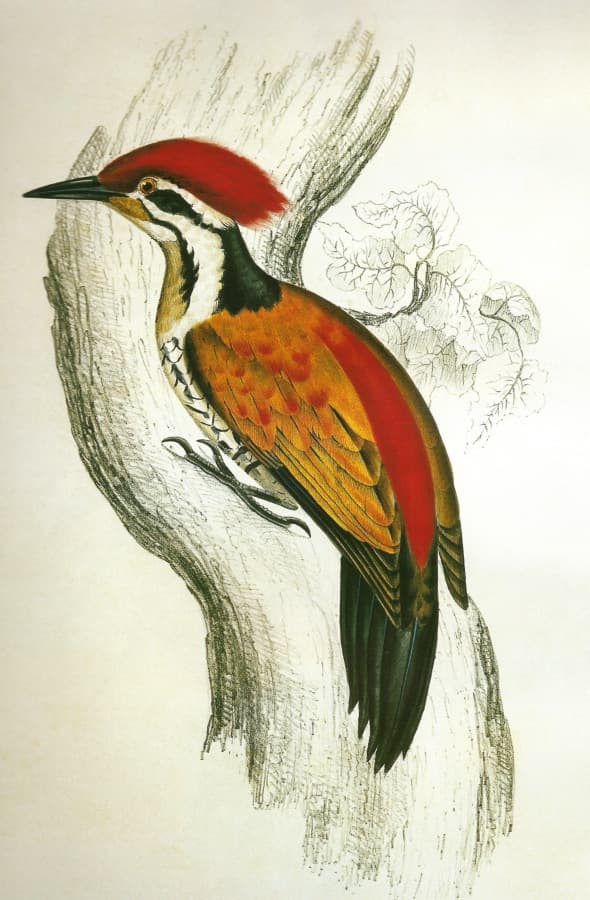
Himalayan flameback
The Himalayan flameback is a woodpecker species found across the Indian subcontinent, primarily inhabiting Himalayan sal forests and other tropical and subtropical woodlands. It is characterized by its black hind neck, distinctive throat markings, and coppery-brown to red wings. While not currently threatened, deforestation poses a potential risk to its populations.

Bay woodpecker
The bay woodpecker is a mid-size bird found in the forests of South and Southeast Asia, inhabiting evergreen and mixed deciduous woodlands. Known for its distinctive rattling call and foraging behavior on tree trunks and logs, this species plays a role in its ecosystem though it is generally uncommon and experiencing a population decline.

White-bellied woodpecker
The white-bellied woodpecker (Dryocopus javensis) is a large woodpecker species found in evergreen forests across the tropical Indian subcontinent and Southeast Asia. It is distinguished by its size, often reaching up to 48 cm, and its loud vocalizations and drumming. While it has 14 subspecies, several island populations are endangered or extinct.