
Asahiyama Zoo
Asahiyama Zoo is Japan's northernmost municipal zoo, located in Asahikawa, Hokkaido. It gained significant popularity for its innovative interactive exhibits that allow visitors to observe animals in unique ways, leading to record visitor numbers. The zoo is accredited by the Japanese Association of Zoos and Aquariums and is known for its focus on showcasing natural animal behaviors.
Key Facts
- ›Opened on July 1, 1967.
- ›The northernmost zoo in Japan.
- ›Features unique interactive viewing facilities like the 'Totori's Village' and a 'walk-through' penguin aquarium.
- ›Achieved over 320,000 visitors in August 2004, surpassing Ueno Zoo.
- ›Construction cost was 250 million yen.
- ›Accredited by the Japanese Association of Zoos and Aquariums (JAZA).

Totori's Village, Polar Bear Aquatic Park, Walk-Through Penguin Aquarium, Orangutan Trapeze, Seal Aquarium With Vertical Tube
About Asahiyama Zoo
Asahiyama Zoo is a municipal zoo situated in Asahikawa, Hokkaido, Japan, and is recognized as the northernmost zoo in the country. Opened on July 1, 1967, it was established on Mount Asahi, chosen for its geological suitability and convenient access. The initial collection comprised 75 species of animals, including 200 common carp.
History and Development
The zoo's development has been marked by a focus on innovative visitor experiences. Following a period of decline in visitor numbers, the zoo began constructing unique interactive animal viewing facilities in 1997, a strategy initiated by chief manager Masao Kosuge. These facilities were designed to showcase animals in more naturalistic and engaging ways. Notable examples include "Totori no Mura" (Totori's Village), a large enclosure allowing birds to fly freely, a "walk-through" penguin aquarium, an orangutan trapeze, and a seal aquarium featuring a vertical swimming tube.
Popularity and Recognition
These innovative exhibits significantly boosted the zoo's popularity. In August 2004, Asahiyama Zoo recorded over 320,000 visitors in a single month, surpassing the attendance of Tokyo's Ueno Zoo. Annual visitor numbers continued to climb, reaching millions in the years that followed, solidifying its position as a major attraction. The zoo's success has garnered considerable media attention, with numerous television programs and publications dedicated to its achievements.
Animal Collections and Facilities
Asahiyama Zoo houses a diverse range of animals across various themed exhibits. These include dedicated areas for polar bears, seals, penguins, monkeys, chimpanzees, orangutans, and various forest-dwelling animals like wolves and sika deer. The zoo also features a children's pasture and an area for Hokkaido's native small animals, alongside amphibian and reptile collections. The zoo is accredited by the Japanese Association of Zoos and Aquariums (JAZA).
Source: Wikipedia ↗
Frequently Asked Questions
When did Asahiyama Zoo open?
Asahiyama Zoo was inaugurated on July 1, 1967. Construction began in April 1966 and was completed in June 1967.
Where is Asahiyama Zoo located?
The zoo is located in Higashi Asahikawa, on the outskirts of Asahikawa, Hokkaido, Japan. It holds the distinction of being the northernmost zoo in the country.
What makes Asahiyama Zoo unique?
Asahiyama Zoo is known for its unique interactive animal viewing facilities. These include structures like 'Totori's Village' where birds fly freely, a 'walk-through' penguin aquarium, and an orangutan trapeze.
How popular is Asahiyama Zoo?
The zoo has achieved significant popularity, with visitor numbers reaching over 320,000 in August 2004, surpassing Ueno Zoo at that time. Annual visitor numbers have reached millions in subsequent years.
Has the zoo ever closed due to animal health issues?
Yes, in 1994, the zoo was closed before the regular season due to the deaths of a western lowland gorilla and a ring-tailed lemur from an echinococcus infection. This closure was implemented to prevent the disease from spreading.
Related Zoos

Akita Omoriyama Zoo
Akita Omoriyama Zoo, also known as "Milve," is a municipal zoo located in Akita, Japan. Opened in its current location in 1972, it is modeled after Hokkaido's Asahiyama Zoo, featuring naturalistic habitats and "action exhibits" to encourage animal activity. The zoo is accredited by the Japanese Association of Zoos and Aquariums (JAZA) and has a history of successful captive breeding programs.
Sabae Nishiyama Park Zoo
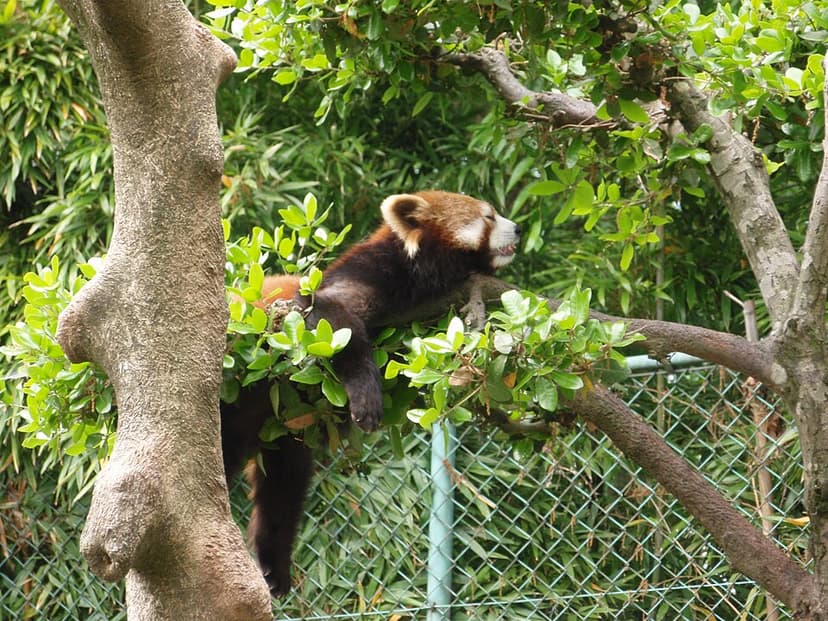
Sabae Nishiyama Park Zoo is a small, admission-free municipal zoo located in Sabae City, Fukui Prefecture, Japan. It is particularly renowned for its significant population of red pandas, which are the official animal of the city and have a long history at the zoo, tracing back to a donation from Beijing Zoo in 1984. The zoo also houses other notable species, contributing to its local importance.

Sapporo Maruyama Zoo
Sapporo Maruyama Zoo is Hokkaido's oldest municipal zoo, established in 1951 in Sapporo, Japan. It is renowned for its commitment to creating naturalistic habitats that mimic the animals' native environments, featuring thematic zones like Wakuwaku Asia and the largest polar bear exhibit in Japan.