
Collazzone
Italy·8th century
Collazzone is a historic Italian comune in the Province of Perugia, Umbria, with roots tracing back to the 8th century. Originally known as Colle di Azzone, its strategic hilltop location has offered commanding views and defense for centuries, evolving from a fortified castle to a municipality with a rich cultural and religious heritage.
Key Facts
- ›The settlement is traditionally traced to the 8th century.
- ›Collazzone was formerly known as Colle DI Azzone.
- ›The town is situated on the summit of a steep hill overlooking the Tiber River.
- ›It was absorbed into the rule of the Baglioni family of Perugia from 1332 until 1647.
- ›In 1895, the municipality had a population of 2,766 inhabitants.
- ›Notable heritage sites include the church of San Michele Arcangelo and the Abbey of San Lorenzo.

About Collazzone
Collazzone is a historic comune (municipality) located in the Province of Perugia within the Italian region of Umbria. Situated approximately 25 kilometers south of Perugia, its strategic position on a hilltop has shaped its development and significance throughout history.
Etymology and Origins
The settlement was formerly known as Colle di Azzone. Local tradition attributes its foundation and ownership to Attone (or Azzone), a powerful lord descended from Hildeprand of Spoleto, from whom the settlement derived its name. The origins of Collazzone are traditionally traced to the 8th century, with its foundation attributed to Azzone of the Atti family, acting on behalf of the dukes of Spoleto.
Historical Development
From the early 11th century, the original hill village saw gradual urban expansion, with satellite settlements forming around the initial nucleus. The 11th and 12th centuries were marked by the decline of the Lombard duchies, allowing for greater local autonomy and involvement in the conflicts between Guelph and Ghibelline factions. The castle endured repeated devastation, notably at the hands of Guglielmo dei Pazzi in 1218, 1220, and 1271. In 1250, Collazzone was sold to Todi and administered several castles. It faced destruction again in 1314 during the war between Perugia and Todi.
From 1332, Collazzone fell under the rule of the Baglioni family of Perugia, a period that lasted until 1647. Following the end of the Baglioni lordship, it was incorporated into the Papal administration. During the Napoleonic era, the territory was separated from Todi and placed within the administrative district of the Department of Trasimeno. By 1817, it was recognized as an autonomous municipality under the government and district of Todi.
Geography and Economy
Collazzone occupies the summit of a steep hill overlooking the Tiber River, providing extensive views of the surrounding countryside. The town center is encircled by high walls with a single entrance, once defended by outer works. A small fortress stands at the lower end of the town. The Tiber flows about 3 miles away, while the torrent Puglia runs closer. The climate is described as rather cold and prone to snow.
The local economy, particularly in the 19th century, was based on agriculture, with produce including grain, wine, oil, acorns, timber, and livestock.
Religion and Cultural Heritage
The archpriestal church of Madonna delle Grazie in Collazzone features five altars and an organ. An ancient convent of Franciscan nuns is also present, with the adjoining church of San Michele Arcangelo. The feast of San Lorenzo is celebrated annually on August 10th as a popular festival. In 1736, a statue of Hercules was discovered near the town, leading to speculation about ancient ruins belonging to a temple of that deity.
San Michele Arcangelo
The church of San Michele Arcangelo is located along Corso Vittorio Emanuele III, following the line of the ancient decumanus. It was annexed to the convent of the Poor Clares in 1370 and likely originated as the castle's earliest chapel. The entrance still bears a legible barbaric monogram of the Redemption, and 14th and 16th-century frescoes have been discovered on its walls.
San Lorenzo
The parish church of San Lorenzo was constructed between the 19th and 20th centuries on the site of the castle's former keep. Its façade is notable for a large rose window and terracotta decorations. Inside, it houses a 13th-century polychrome wooden sculpture of the Madonna and Child, considered a significant work of Umbrian art, along with 15th-century additions and a small 14th-century fresco of the Madonna and Child.
Abbey of San Lorenzo
The Benedictine abbey of San Lorenzo is situated on a hill known as San Giovanni. The complex originated as a Benedictine abbey and is documented from 1227. Evidence from its Romanesque crypt suggests construction dating to at least the 11th century. While its original layout is obscured by later alterations, the church is a simple three-nave structure. The Romanesque crypt, despite 17th-century modifications, retains its original plan and contains the tomb of Matilde Marzia, mother of Blessed Simone da Collazione.
Other Heritage Sites
Other significant sites include a Franciscan nunnery, a portal in Piazza Jacopone attributed to Giacomo Vignola, and the church of Santa Maria Assunta in Collepepe, which exhibits Romanesque and Gothic architecture.
Notable Figures
Collazzone is recognized as the birthplace of the Franciscan Blessed Simone in 1240. The poet Jacopone da Todi also died in the town. Among the principal families of the municipality were the Cascianelli and the Piergentili. In the locality of Collepepe, the Cavaliere Pier Domenico Costantini-Baldini was a notable figure, recorded as serving as Minister of Commerce and Industry in Rome in the mid-19th century.
Source: Wikipedia ↗
Frequently Asked Questions
What is the traditional origin of Collazzone?
According to local tradition, Collazzone was founded and owned by Attone (or Azzone), a powerful lord and descendant of Hildeprand of Spoleto. The settlement's foundation is traditionally traced to the 8th century when Azzone of the Atti family is credited with its establishment on behalf of the dukes of Spoleto.
What was Collazzone's historical relationship with Todi?
In 1250, Collazzone was sold to Todi and held several castles under its authority. However, it was destroyed in 1314 during the war between Perugia and Todi.
When did the Baglioni family rule Collazzone?
The settlement was absorbed into the rule of the Baglioni family of Perugia in 1332. Their control lasted until 1647, when the death of Orazio Baglioni ended their lordship.
What is the significance of the Abbey of San Lorenzo?
The Benedictine abbey of San Lorenzo is first mentioned in documents in 1227. Its Romanesque crypt suggests construction dating back at least to the 11th century. The complex, though altered over centuries, features a church and a crypt containing the tomb of Matilde Marzia.
Who are some notable people associated with Collazzone?
Collazzone was the birthplace of the Franciscan Blessed Simone in 1240. The renowned poet Jacopone da Todi also died there. Prominent local families included the Cascianelli and Piergentili.
What is the geography of Collazzone?
Collazzone is situated on the summit of a steep hill, offering extensive views of the surrounding countryside. The town is enclosed by high walls and features a small fortress at its lower end. The Tiber River flows approximately 3 miles away.
Related Zoos

Bioparco di Roma
Bioparco di Roma is a historic zoological garden located in Rome, Italy, situated within the Villa Borghese estate. Established in 1911, it was initially designed for public entertainment, featuring innovative enclosures like ditches and pits instead of bars. Today, it houses over a thousand animals across hundreds of species, continuing its role as a significant educational and recreational facility.

Faunistic Park Le Cornelle
Faunistic Park Le Cornelle is a zoo and amusement park located in Valbrembo, Lombardy, northern Italy. Founded in 1981 by Angelo Ferruccio Benedetti, the park is dedicated to wildlife preservation through captive breeding programs, including participation in the European Endangered Species Programme (EEP). Its mission involves reintroducing offspring into their original habitats.
Parco Faunistico Cappeller
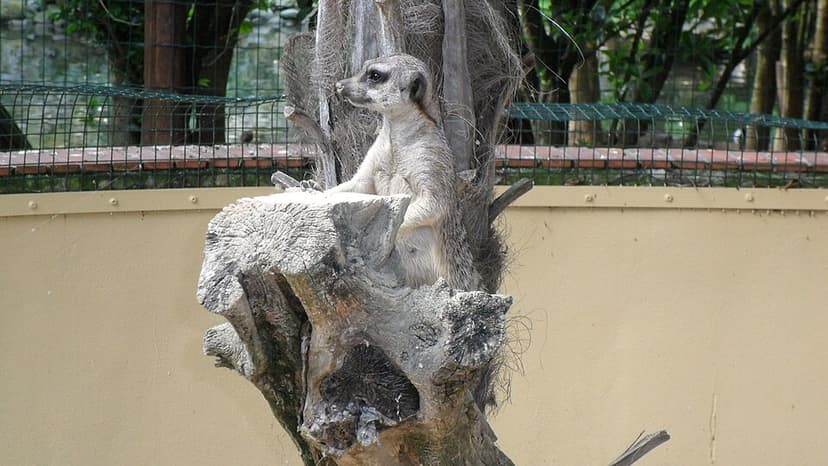
Parco Faunistico Cappeller is a zoo and amusement park located in Cartigliano, Veneto, northern Italy. Opened in 1998, it spans 4 hectares, offering visitors a combination of wildlife and entertainment.