
Dubai Safari Park
Dubai Safari Park is an eco-friendly safari park located in Dubai, United Arab Emirates, designed to provide a safe and healthy environment for a diverse range of animals. It replaced the older Dubai Zoo with a focus on a more modern, open habitat and aims to educate visitors about wildlife welfare and conservation.
Key Facts
- ›The park covers 12.8 million square feet.
- ›It houses approximately 3000 animals from 78 species.
- ›Dubai Safari Park features five main areas: African Village, Explorer Village, Asian Village, Arabian Desert Safari, and Al Wadi.
- ›The park utilizes solar energy as its major source of power.
- ›It aims to raise awareness about wildlife welfare and conservation.
- ›The park reopened in October 2020 after renovations and again in September 2024.

African Village, Explorer Village, Asian Village, Arabian Desert Safari, Al Wadi, Kids Farm
African Elephant, Meerkat, Giraffe, Lion, Tiger, Komodo Dragon, Indian Elephant, Arabian Oryx, Arabian Wolf
- Raising awareness about wildlife welfare and conservation
About Dubai Safari Park
Dubai Safari Park is an expansive eco-friendly safari park situated in Dubai, United Arab Emirates. It was established to replace the former Dubai Zoo, which had faced international criticism for animal welfare conditions. The park is designed to offer a more spacious, modern, and open habitat for its inhabitants, with a significant emphasis on utilizing solar energy as its primary power source.
History and Development
The park's development was initiated by the Dubai Municipality with a substantial allocation of $40.8 million to enhance and modernize the city's zoological facilities. The project was entrusted to Meraas, with Parques Reunidos brought on as the operations manager. Dubai Safari Park first opened its gates on December 12, 2017. However, it soon closed for necessary renovations and improvements in May 2018, eventually reopening in October 2020. The park underwent further closures for renovations during the summer of 2024, reopening in September of that year, during which time over 300 births occurred within the park and several new attractions were introduced.
Park Layout and Features
Spanning 12.8 million square feet, Dubai Safari Park is organized into five distinct themed villages, each offering a unique visitor experience:
- African Village: This section showcases a variety of animal species from the African continent, including large land mammals like the African elephant and smaller creatures such as the Meerkat.
- Explorer Village: An open-area exhibit designed for close encounters, this village allows visitors to observe animals from Africa and Asia, such as giraffes, lions, and tigers, often via guided bus tours.
- Asian Village: Influenced by Asian architecture, this village is home to animals from Asia, including the impressive Komodo dragon and the Indian elephant.
- Arabian Desert Safari: This drive-through attraction covers over 60,000 square meters and is inspired by the desert landscapes of Western Asia. It features animals native to the Arabian Peninsula, such as the Arabian oryx and Arabian wolf, and includes a petting zoo.
- Al Wadi (The Valley): Designed as a relaxation zone after extensive exploration, Al Wadi features lush greenery, ponds, and waterfalls.
Additionally, the park includes a Kids Farm, a dedicated area with friendly animals for children, emphasizing learning and interaction. Two themed souvenir shops, Zwadi and Soko, offer a range of merchandise.
Conservation and Education
Dubai Safari Park aims to be more than just an attraction; it strives to provide a world-class wildlife park that represents over 250 species native to the Middle East, Asia, and Africa. It serves as an edutainment experience for visitors of all ages, seeking to raise awareness about wildlife welfare and conservation through best practices and research. The park houses approximately 3000 animals from 78 species, including a diverse range of mammals, reptiles, birds, amphibians, and invertebrates.
Source: Wikipedia ↗
Frequently Asked Questions
What is Dubai Safari Park?
Dubai Safari Park is an eco-friendly safari park in Dubai, United Arab Emirates, designed to offer a modern and spacious habitat for a wide variety of animals. It aims to provide an educational experience focused on wildlife welfare and conservation.
When did Dubai Safari Park open?
The park initially opened on December 12, 2017, but closed for renovations and improvements in May 2018. It reopened in October 2020 and was again closed for renovations in summer 2024, reopening in September 2024.
How many animals and species are at Dubai Safari Park?
Dubai Safari Park is home to approximately 3000 animals representing 78 different species. This includes mammals, reptiles, birds, amphibians, and invertebrates.
What are the main areas within Dubai Safari Park?
The park is divided into five key areas: African Village, Explorer Village, Asian Village, Arabian Desert Safari, and Al Wadi. Visitors can also explore free-roaming areas like the Safari Journey and Kids Farm.
What is the purpose of the Arabian Desert Safari?
The Arabian Desert Safari is a drive-through attraction spanning over 60,000 square meters, inspired by the deserts of Western Asia. It features animals native to the Arabian Peninsula and includes a petting zoo or children's farm.
What makes Dubai Safari Park eco-friendly?
The park's major source of energy is solar power, contributing to its eco-friendly design. It aims to provide a healthy environment for animals and educate visitors on conservation.
Related Zoos

Al Hefaiyah Conservation Centre
The Al Hefaiyah Mountain Conservation Centre is a wildlife sanctuary and visitor center located in Sharjah, United Arab Emirates, dedicated to the preservation of endangered mountain species. Opened in 2016, it features landscape enclosures designed to house fauna in their natural environments, playing a crucial role in conservation efforts for the region's unique biodiversity.

The Green Planet
The Green Planet is an indoor zoo and garden located in Dubai, United Arab Emirates, featuring an artificial tropical rainforest bio-dome. It houses over 3,000 plants and animals, including birds, reptiles, and fish, in open environments designed to replicate a rainforest ecosystem. The attraction is notable for being the region's first bio-dome of its kind and for its unique central artificial tree.
Al Ain Zoo
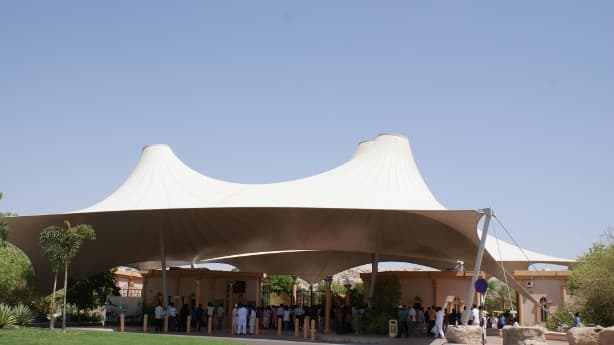
Al Ain Zoo, also known as Al Ain Wildlife Park & Resort, is a 400-hectare zoological park situated in Al Ain, United Arab Emirates. Founded in 1969, it plays a role in wildlife conservation, housing over 4,000 animals, including endangered species and those extinct in the wild.