
Municipal Zoological Park Quinzinho de Barros
The Municipal Zoological Park Quinzinho de Barros, also known as the City Zoo of Sorocaba, is a significant zoological institution in Brazil, recognized for its extensive species collection and commitment to conservation and education. Located in Sorocaba, São Paulo, it plays a vital role in environmental awareness and research within Latin America.
Key Facts
- ›Covers an area of 15 hectares (37 acres).
- ›Inaugurated on October 20, 1968.
- ›Ranked 'a' by IBAMA, the highest classification.
- ›Considered Brazil's second-largest zoo by species count.
- ›Houses a strip of transitional Atlantic Forest and the Historical Museum of Sorocaba.
- ›Attracted over one million visitors in 2007.

Monkey Pits, Aviaries, South American Giant Otter Exhibit, Bear Exhibit
Panthers, Monkeys, Deers, Sloths, Small Crocodiles, Macaws, South American Giant Otter
Breeding Programs For Threatened Species
About Municipal Zoological Park Quinzinho de Barros
The Municipal Zoological Park "Quinzinho de Barros," commonly known as the City Zoo of Sorocaba, is a prominent zoological institution located in Sorocaba, São Paulo, Brazil. Established and officially inaugurated on October 20, 1968, the zoo is situated on a 15-hectare (37-acre) site within the Vila Hortência district.
History and Development
The zoo's origins are intertwined with the history of Sorocaba's public spaces. An earlier animal collection, the "Jardim dos Bichos" (Animal Garden), was established in 1916. Around 1965, the city developed a park along the Sorocaba River, which was enhanced with various bird species and an aquarium, leading to the creation of the second "Jardim dos Bichos" (River Bank Garden) in 1966. The current Municipal Zoological Park Quinzinho de Barros was then established on a property acquired by the city, transferring animals from the River Bank Garden to this new location.
Significance and Operations
Classified with the highest rank ('A') by the Brazilian Institute of Environment and Renewable Natural Resources (IBAMA), the zoo is recognized as a leading facility in Latin America for leisure, research, preservation, and environmental education. In 1992, it housed 1,487 specimens representing 353 different species, with a notable emphasis on Brazilian fauna, including 36 species threatened with extinction. The zoo has attracted significant visitor numbers, exceeding one million in 2007, and has received sponsorship and recognition from international organizations such as the Smithsonian Institution and the World Wide Fund for Nature.
Educational and Conservation Focus
Since 1979, the zoo has actively engaged in educational activities, transforming from a simple animal showcase into a vital learning center. The Environmental Education Center, established in 1988, includes a specialized library, a zoology museum, and facilities for trainees. The park also plays a role in professional training, offering courses to biologists and veterinarians, and training soldiers and officers of the São Paulo Forest Police. The zoo's commitment to conservation is evident in its significant Brazilian fauna collection and its involvement in breeding programs for endangered species.
Source: Wikipedia ↗
Frequently Asked Questions
When was the Municipal Zoological Park Quinzinho de Barros established?
The zoo was officially inaugurated on October 20, 1968. Its origins trace back to earlier animal collections within Sorocaba, with the Jardim dos Bichos being established in 1916 and later relocated and expanded.
What is the size of the zoo?
The Municipal Zoological Park Quinzinho de Barros covers an area of approximately 15 hectares, which is equivalent to about 37 acres.
What is the zoo's significance in Brazil?
The zoo is considered Brazil's second-largest in terms of the number of species it houses. It holds the highest classification ('A') granted by the Brazilian Institute of Environment and Renewable Natural Resources (IBAMA), signifying its importance in leisure, research, preservation, and environmental education.
Does the zoo focus on conservation?
Yes, the zoo is a reference in Latin America for preservation and environmental education. In 1992, 70% of its specimens belonged to Brazilian fauna, with 36 species being threatened by extinction, highlighting its commitment to native wildlife.
What educational programs does the zoo offer?
The zoo began offering educational activities in 1979, transforming it into a learning environment as well as an exhibition space. It features an Environmental Education Center with a specialized library, a museum of zoology, a lecture hall, and a dormitory for trainees, along with a 'Scientists of Nature Lab'.
What kind of exhibits can visitors expect?
The zoo utilizes modern exhibition techniques, including monkey pits, aviaries where visitors can observe birds in flight, and large glass panels to view animals like bears and South American giant otters up close. It also includes natural elements like a strip of Atlantic Forest and a lake.
Related Zoos

São Paulo Zoo
The São Paulo Zoo, inaugurated in 1958, is the largest zoo in Brazil and a significant institution for public education, recreation, and biological research. Spanning over 82 hectares and situated within the Atlantic Forest, it houses thousands of animals from diverse species, many of which are endangered Brazilian fauna. The zoo is notable for its extensive conservation programs, research partnerships, and educational initiatives, including a public library and specialized breeding facilities.
Zoo Botanical Park Dois Irmaos
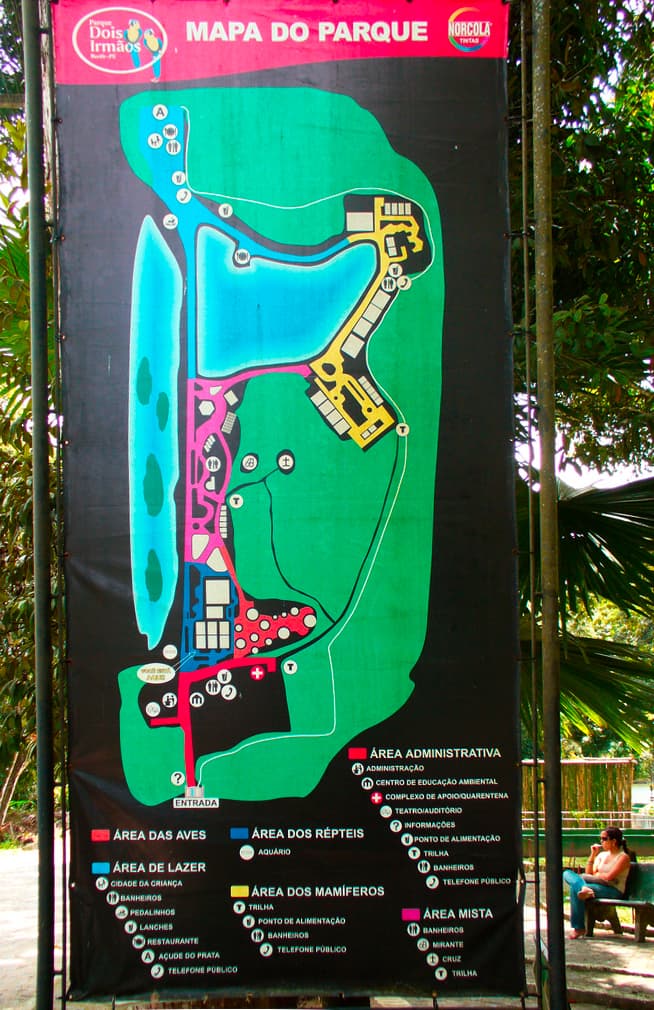
The Zoo Botanical Park Dois Irmãos is a significant zoological and botanical institution located in Recife, Pernambuco, Brazil. It serves as a vital center for environmental education and wildlife conservation, housing a diverse collection of animals and a substantial Atlantic Forest reserve. The park is recognized as the most representative zoo in Brazil's North/Northeast region, offering visitors direct engagement with local ecosystems and wildlife.

Rio de Janeiro Zoo
The Rio de Janeiro Zoo, officially known as Jardim Zoológico do Rio de Janeiro, is a zoological institution located in the São Cristóvão district of Rio de Janeiro, Brazil. It aims to foster environmental and educational activities, showcasing a diverse collection of fish, reptiles, birds, and mammals, with a particular emphasis on rare and endangered species.