
São Paulo Zoo
The São Paulo Zoo, inaugurated in 1958, is the largest zoo in Brazil and a significant institution for public education, recreation, and biological research. Spanning over 82 hectares and situated within the Atlantic Forest, it houses thousands of animals from diverse species, many of which are endangered Brazilian fauna. The zoo is notable for its extensive conservation programs, research partnerships, and educational initiatives, including a public library and specialized breeding facilities.
Key Facts
- ›The São Paulo Zoo is the largest zoo in Brazil, covering 824,529 m2.
- ›It was officially inaugurated on March 16, 1958, with 445 animals.
- ›The zoo hosts over 3,200 animals representing 102 species of mammals, 216 species of birds, 95 species of reptiles, 15 species of amphibians, and 16 species of invertebrates.
- ›It is home to the spring of the historic Ipiranga Brook.
- ›The zoo operates a farm of 574 hectares for animal feed production and breeding.
- ›Since 1994, it has been recognized by the Guinness Book as the largest zoo in Brazil.

Cacareco the Rhinoceros, Lion Tamarin, Spix's Macaw, Lear's Macaw, Golden Lancehead Snake, Alcatraz Snouted Treefrog, Snow Leopard, Spectacled Bear, Orangutans, White Rhinoceroses
- Cerrado Mammals Conservation Program (PCMC)
- Recovery programs for endangered Brazilian species (e.g., lion tamarin, neotropical felids, macaws)
- Breeding programs for species like Damara Zebra, Greater Kudu, Oryx, and Waterbuck
About São Paulo Zoo
The São Paulo Zoo, officially known in Portuguese as Parque Zoológico de São Paulo, is the largest zoological park in Brazil. Inaugurated on March 16, 1958, it is situated in the South Zone of the city and spans 824,529 square meters, much of which is preserved Atlantic Forest. The zoo is recognized by the Guinness Book as the largest in Brazil since 1994 and is a key institution for public education, recreation, and biological research.
History and Foundation
The zoo's origins trace back to June 1957, with an initiative by then-governor Jânio Quadros. The initial collection featured exotic animals acquired from private circuses, alongside Brazilian fauna sourced from Manaus. The park officially opened with 445 animals, including notable species like jaguars and parrots, and famously, the rhinoceros Cacareco, who gained notoriety for being elected a city councilor.
Animal Collection and Habitats
As of recent records, the São Paulo Zoo houses over 3,200 animals across more than 440 species. This diverse collection includes mammals, birds, reptiles, amphibians, and invertebrates, with enclosures designed to replicate their natural habitats. The zoo is particularly recognized for its role in preserving endangered Brazilian species, such as the lion tamarin, various macaws, and small neotropical felids. Rare species like the snow leopard, spectacled bear, orangutans, and white rhinoceroses are also part of its collection.
Conservation and Research
The São Paulo Zoo is deeply committed to conservation, being the first Brazilian institution to actively propose and participate in recovery programs for threatened species. It collaborates with numerous state, federal, and international institutions on research projects aimed at species preservation. The zoo also operates a nursery for abandoned cubs and an incubation room for bird and reptile eggs. Its farm, spanning 574 hectares, plays a crucial role in producing food for the animals and serves as a breeding ground for species that require more space.
Educational Role and Facilities
Education is a cornerstone of the São Paulo Zoo's mission. It features a library open to the public with over four thousand volumes and offers professional qualification programs for students and researchers in zoology and related fields. Visitors can also participate in lectures and workshops. The zoo provides various visitor services, including snack bars, souvenir shops, and the D. Pedro Space for events. Night tours are also offered, allowing visitors to observe the behavior of nocturnal animals.
Zoo Safari
Adjacent to the main zoo is the Zoo Safari, opened in 2001. This facility allows visitors to observe a variety of animals in a more open environment, either from their own vehicles or from park-provided vans, offering a different perspective on wildlife interaction.
Source: Wikipedia ↗
Frequently Asked Questions
When was the São Paulo Zoo founded?
The São Paulo Zoo was created in June 1957, and officially inaugurated on March 16, 1958. Its administrative body, the São Paulo Zoo Foundation, obtained legal personality and autonomy in 1959.
What is the size of the São Paulo Zoo?
The São Paulo Zoo spans 824,529 square meters (approximately 203.7 acres) and is largely covered by Atlantic Forest. The accompanying farm, used for food production and breeding, comprises an additional 574 hectares (approximately 1,420 acres).
How many animals and species are at the São Paulo Zoo?
The facility hosts over 3,200 animals, encompassing 102 species of mammals, 216 species of birds, 95 species of reptiles, 15 species of amphibians, and 16 species of invertebrates.
What are some notable conservation efforts by the São Paulo Zoo?
The São Paulo Zoo was the first Brazilian institution to actively participate in recovery programs for seriously endangered Brazilian species, including the lion tamarin, small neotropical felids, and various macaws. It also supports the Cerrado Mammals Conservation Program.
Does the São Paulo Zoo offer educational programs?
Yes, the zoo emphasizes its educational function with a public library of over four thousand volumes. It also partners with institutions for research and offers professional qualification programs for students and researchers.
What is the Zoo Safari?
The Zoo Safari is an area adjacent to the São Paulo Zoo, inaugurated in 2001. It allows visitors to see dozens of wild animals along a route where animals roam freely, either by driving their own vehicles or using park vans.
Related Zoos

Municipal Zoological Park Quinzinho de Barros
The Municipal Zoological Park Quinzinho de Barros, also known as the City Zoo of Sorocaba, is a significant zoological institution in Brazil, recognized for its extensive species collection and commitment to conservation and education. Located in Sorocaba, São Paulo, it plays a vital role in environmental awareness and research within Latin America.

Rio de Janeiro Zoo
The Rio de Janeiro Zoo, officially known as Jardim Zoológico do Rio de Janeiro, is a zoological institution located in the São Cristóvão district of Rio de Janeiro, Brazil. It aims to foster environmental and educational activities, showcasing a diverse collection of fish, reptiles, birds, and mammals, with a particular emphasis on rare and endangered species.
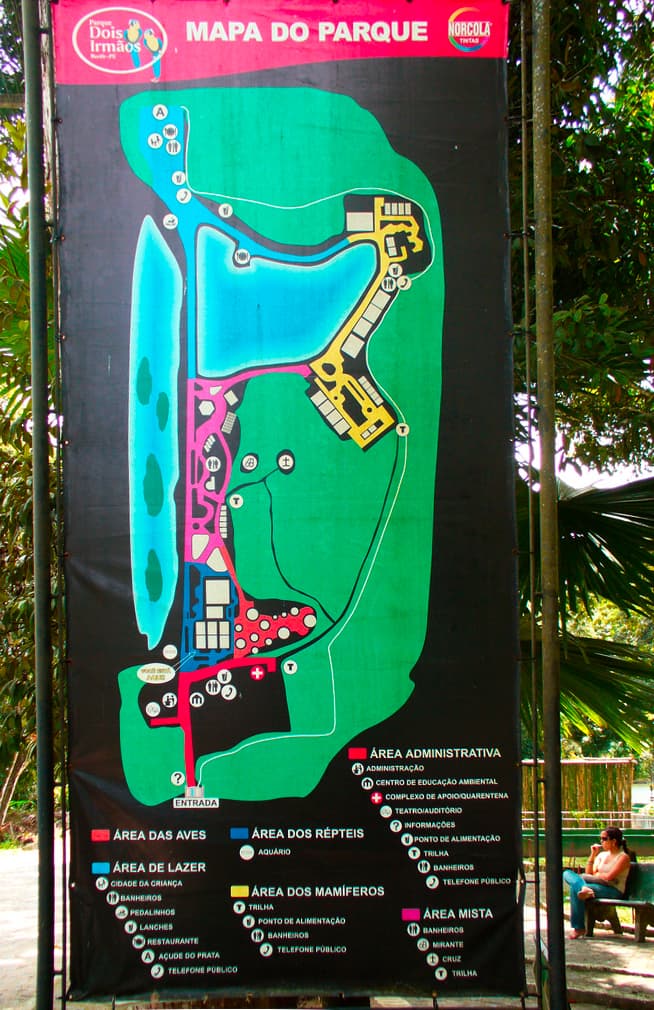
Zoo Botanical Park Dois Irmaos
The Zoo Botanical Park Dois Irmãos is a significant zoological and botanical institution located in Recife, Pernambuco, Brazil. It serves as a vital center for environmental education and wildlife conservation, housing a diverse collection of animals and a substantial Atlantic Forest reserve. The park is recognized as the most representative zoo in Brazil's North/Northeast region, offering visitors direct engagement with local ecosystems and wildlife.