
Skansen
Sweden·Open-air Museum and Zoo·19th century
Skansen is the world's oldest open-air museum and zoo, located on the island of Djurgården in Stockholm, Sweden. Founded in 1891 by Artur Hazelius, its primary purpose is to showcase the traditional Swedish way of life prior to the industrial era. The museum features historical buildings, a replica 19th-century town, and a zoo with Scandinavian wildlife.
Key Facts
- ›Founded on October 11, 1891, by Artur Hazelius.
- ›Located on the island of Djurgården in Stockholm, Sweden.
- ›Covers an area of 75 acres (300,000 m²).
- ›Attracts over 1.3 million visitors annually.
- ›Houses a zoo with a variety of Scandinavian animals and farmsteads with rare breeds.
- ›Features a replica 19th-century town with demonstrating craftspeople.

Replica 19th-Century Town, Skogaholm Manor House, äLvros Farmhouses
Brown Bear, Moose, Grey Seal, Eurasian Lynx, Arctic Fox, Reindeer, Eurasian Eagle Owl, Great Grey Owl, Wolverine
About Skansen
Skansen is an internationally recognized open-air museum and zoo situated on the island of Djurgården in Stockholm, Sweden. Established on October 11, 1891, by Artur Hazelius, it holds the distinction of being the world's oldest open-air museum. Hazelius's vision for Skansen was to preserve and exhibit the diverse Swedish way of life, customs, and occupations that were rapidly disappearing due to industrialization.
History and Development
Artur Hazelius, who had previously founded the Nordic Museum, established Skansen on a prominent hill on Djurgården. The museum's collection comprises approximately 150 historical buildings, meticulously transported and reconstructed from various regions across Sweden, and one structure from Norway. These buildings represent a comprehensive picture of traditional Swedish life, ranging from the 17th-century Skogaholm Manor to 16th-century farmhouses. Skansen operated as a part of the Nordic Museum until 1963, when it became an independent organization, though the objects within its buildings remain the property of the Nordic Museum. Skansen's innovative concept laid the groundwork for numerous other open-air museums throughout Scandinavia and beyond.
Exhibits and Attractions
Skansen attracts over 1.3 million visitors annually. The 75-acre site is a living historical village, featuring a full replica of an average 19th-century town where skilled craftspeople, dressed in period attire, demonstrate traditional trades such as tanning, shoemaking, silversmithing, baking, and glass-blowing. In addition to its historical and cultural exhibits, Skansen houses a zoo dedicated to Scandinavian wildlife. Visitors can observe animals like brown bears, moose, Eurasian lynx, Arctic foxes, otters, reindeer, and various owl species, alongside rare breeds of farm animals.
Events and Facilities
Throughout the year, Skansen hosts various events and activities. A popular Christmas market has been held in the central Bollnäs square since 1903, drawing large crowds each weekend. During the summer, visitors can enjoy folk dancing displays and concerts. The site is also accessible via the Skansens Bergbana, a funicular railway that has operated on the northwest side of the hill since 1897, and by tram line 7.
Source: Wikipedia ↗
Frequently Asked Questions
What is Skansen?
Skansen is the world's oldest open-air museum and zoo, dedicated to preserving and showcasing the traditional Swedish way of life before industrialization. It features historical buildings, demonstrations of traditional crafts, and a collection of Scandinavian animals.
Who founded Skansen?
Skansen was founded by Artur Hazelius, a Swedish ethnographer and antiquarian. He also founded the Nordic Museum and established Skansen to illustrate the diverse customs and occupations of Sweden's past.
What can visitors see at Skansen?
Visitors can explore historical buildings from different regions of Sweden, observe craftspeople demonstrating traditional skills in a replica 19th-century town, and visit a zoo featuring Scandinavian wildlife such as brown bears, moose, and lynx. There are also farmsteads with rare breeds of domestic animals.
When was Skansen established?
Skansen was opened on October 11, 1891.
What is the significance of the name 'Skansen'?
The term 'Skansen' has become a generic name for other open-air museums and collections of historic structures, particularly in Central and Eastern Europe, and also in the United States.
Does Skansen have a zoo?
Yes, Skansen features an open-air zoo that houses a wide range of Scandinavian animals, including brown bears, moose, lynx, and Arctic foxes, as well as some non-Scandinavian species. It also includes farmsteads with rare breeds of farm animals.
Related Zoos

Parken Zoo
Parken Zoo is an amusement park and zoo located in Eskilstuna, Sweden. Established with its amusement park component in 1898, the zoo began featuring animal displays in the early 1950s and started charging admission in 1954. It has since developed a focus on feline carnivores and is known for its animal collection.

Slottsskogens djurpark
Slottsskogens djurpark is a historic Swedish zoo located within Gothenburg's Slottsskogen park, serving as the country's oldest zoological institution. It is notable for its focus on Nordic animals and heritage breeds, as well as its free admission policy and membership in the European Association of Zoos and Aquaria (EAZA).
Borås Djurpark
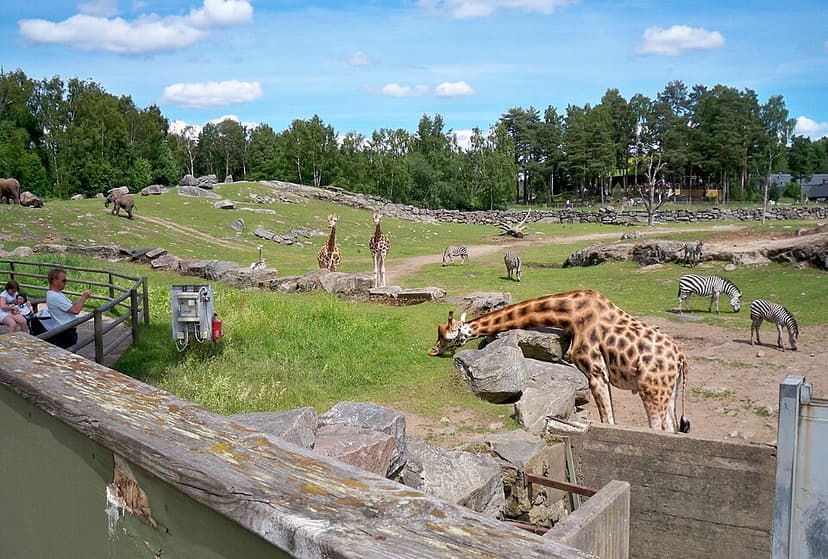
Borås Djurpark is a 40-hectare zoo located in Borås, Sweden, housing approximately 500 animals across 80 species. Founded in 1962, it is notable for being the only zoo in Sweden with African bush elephants and actively participates in European breeding programs for endangered species.