
Hemicyon
Mammal, Carnivora, Ursidae (Hemicyoninae subfamily)·Hypercarnivorous
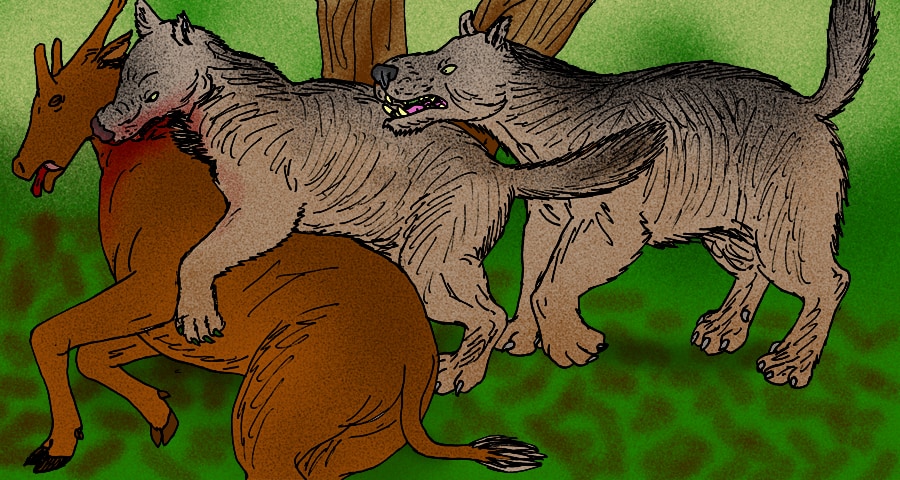
Hemicyon, also known as the "dog-bear," was an extinct genus of hemicyonine bear that likely originated in Eurasia. It existed during the Miocene epoch and is notable for its digitigrade stance, long metapodials, and hypercarnivorous diet, suggesting it was an active hunter and runner. Hemicyon is considered the best-known genus within the Hemicyoninae subfamily, which is positioned intermediate between bears and their Caniform ancestors.
Key Facts
- ›Hemicyon existed during the Miocene epoch, approximately 16 to 13 million years ago.
- ›It was characterized by a digitigrade stance, walking on its toes rather than its soles.
- ›The genus is believed to have been hypercarnivorous, with specialized teeth for cutting meat.
- ›Hemicyon was roughly 1.5 meters (5 feet) long and 70 centimeters (28 inches) tall at the shoulder.
- ›Fossil evidence for Hemicyon has been found across Europe, Asia, and North America.
- ›It is classified within the Hemicyoninae subfamily, considered an evolutionary link between bears and their Caniform ancestors.
Open Ground
Eurasia, Europe, Asia, North America
Active Hunter, Good Runner, Hunts By Pursuing Prey
About Hemicyon
Hemicyon: The "Dog-Bear"
Hemicyon, a genus of extinct bear colloquially known as the "dog-bear," roamed parts of Eurasia and North America during the Miocene epoch, approximately 16 to 13 million years ago. Its name, derived from Greek roots meaning "half dog," aptly describes its unique morphology that suggested a blend of canine and ursine features. Hemicyon is the most representative genus of the Hemicyoninae subfamily, a group of ancient carnivores considered to be evolutionarily positioned between modern bears and their more ancient Caniform ancestors.
Morphology and Lifestyle
Fossil evidence indicates that Hemicyon was a formidable predator, measuring around 1.5 meters (5 feet) in length and standing about 70 centimeters (28 inches) tall. A defining characteristic was its digitigrade stance, meaning it walked on its toes, unlike the plantigrade posture of modern bears. This, coupled with long metapodials, suggests Hemicyon was an agile runner, likely adapted for actively pursuing prey across open landscapes. Its dentition featured prominent carnassial blades, specialized for shearing meat, reinforcing its classification as a hypercarnivore. This predatory lifestyle and unique locomotion set Hemicyon apart from many of its bear relatives.
Geographic Distribution and Fossil Record
The fossil record of Hemicyon spans continents, with significant finds in Europe, Asia, and North America. Early occurrences in North America, such as at the Thomas Farm site in Florida, date back to the medial Hemingfordian (around 18 million years ago), indicating a close relationship with European species from the early Burdigalian period. Other important fossil sites include various formations in China (Gansu Province), Spain, Turkey, Bosnia, and the United States (Delaware and New Mexico). While some evidence from Panama has been tentatively linked to Hemicyonidae, its classification remains indeterminate due to potential confusion with Amphicyonidae.
Source: Wikipedia ↗
Frequently Asked Questions
What does the name Hemicyon mean?
The name Hemicyon literally translates to 'half dog' from Greek roots: 'hemi-' meaning half, and 'kyon' meaning dog. This name reflects its appearance, which was described as a combination of a dog and a bear.
When did Hemicyon live?
Hemicyon lived during the Miocene epoch. Its existence is estimated to be from approximately 16 to 13 million years ago.
What was Hemicyon's diet?
Hemicyon is widely accepted to have been hypercarnivorous, meaning its diet consisted primarily of meat. Its teeth featured carnassial blades specifically adapted for cutting flesh.
How did Hemicyon move?
Unlike modern bears, Hemicyon walked on its toes (digitigrade) rather than its entire foot (plantigrade). It also possessed long metapodials, suggesting it was a capable runner and likely hunted by pursuing prey across open terrain.
Where have fossils of Hemicyon been found?
Fossils of Hemicyon have been discovered in various locations across Eurasia and North America. Notable sites include Spain, China, Bosnia, and the United States (Delaware, New Mexico).
What is the significance of the Hemicyoninae subfamily?
Hemicyoninae is a subfamily of bears that is considered to be intermediate between bears and their Caniform (dog-like) ancestors. Hemicyon is the most well-known genus within this subfamily.
