
Plithocyon
Mammal, Carnivora, Ursidae, Hemicyoninae·carnivore
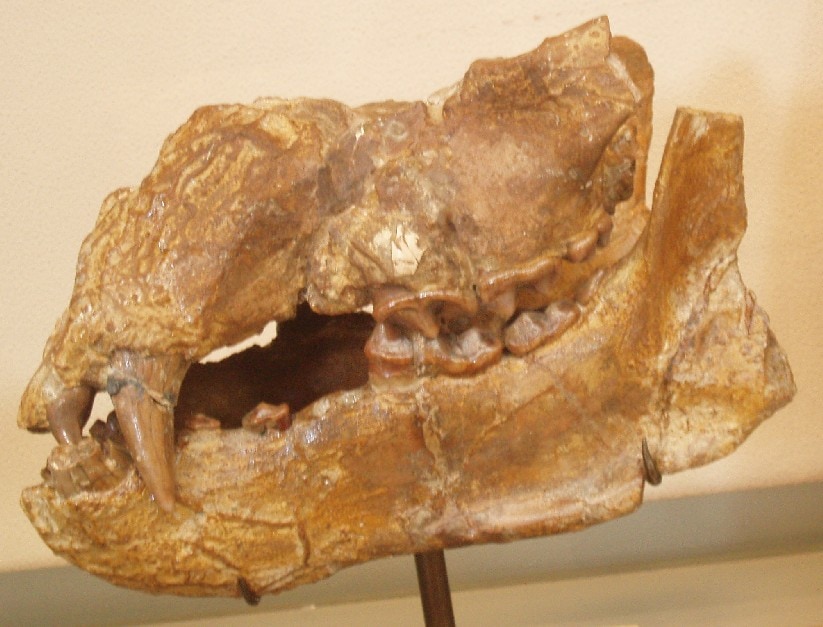
Plithocyon is an extinct genus of hemicyonine bear that lived during the Miocene epoch, with fossil evidence found in both North America and Europe. This genus existed for approximately 4 million years, from about 15.97 to 11.61 million years ago. Its distinctiveness lies in its classification as a hemicyonine bear, a group of extinct caniform carnivorans.
Key Facts
- ›Plithocyon is an extinct genus of bear belonging to the hemicyonine subfamily.
- ›Fossils of Plithocyon have been discovered in both North America and Europe.
- ›The genus existed during the Miocene epoch, approximately 15.97 to 11.61 million years ago.
- ›Its existence spanned roughly 4 million years.
- ›Several species have been attributed to the genus Plithocyon.
North America, Europe
About Plithocyon
Plithocyon is an extinct genus of bear that roamed parts of North America and Europe during the Miocene epoch. This ancient predator existed for approximately four million years, with fossil evidence suggesting its presence from about 15.97 to 11.61 million years ago.
Fossil Distribution
Remains of Plithocyon have been unearthed at several key paleontological sites. In North America, fossils have been found in the Hemicyon Quarry within the Barstow Formation in San Bernardino County, California, dating to approximately 13.7 to 11.6 million years ago. Another North American location yielding Plithocyon evidence, though with a broader age range of 23 to 5.3 million years ago, is the Ruby River Basin No.5 in Madison County, Montana. European fossil sites include the Pasalar site in Bursa, Turkey, with specimens dated to around 16 to 13.7 million years ago, and the Pontigne site in France, dating from 11.6 to 7.2 million years ago.
Species
Several species have been described within the genus Plithocyon, reflecting the diversity and geographical spread of this ancient bear lineage. These include Plithocyon antunesi, Plithocyon armagnacensis, Plithocyon barstowensis, Plithocyon bruneti, Plithocyon conquense, and Plithocyon ursinus.
Source: Wikipedia ↗
Frequently Asked Questions
What is Plithocyon?
Plithocyon is an extinct genus of bear that lived during the Miocene epoch. It is classified as a hemicyonine bear, a group of extinct caniform carnivorans.
Where were Plithocyon fossils found?
Fossils attributed to Plithocyon have been found in both North America and Europe. Specific sites include California and Montana in the United States, and Turkey and France.
When did Plithocyon live?
Plithocyon lived during the Miocene epoch, with its existence estimated to be between approximately 15.97 and 11.61 million years ago. This means it was present for about 4 million years.
What kind of bear was Plithocyon?
Plithocyon was a hemicyonine bear. This subfamily represents a group of extinct bears that were distinct from modern bear lineages.
Related Bears

Steppe Brown Bear
The Steppe Brown Bear (Ursus arctos priscus) was a disputed extinct subspecies of brown bear that inhabited Eurasia during the Pleistocene or early Holocene epochs. Its precise geological age remains uncertain, and some researchers argue for its invalidity due to its skull being identical to modern brown bears. This bear was notably larger and more carnivorous than its modern counterparts.

Ursavinae
Ursavinae is an extinct tribe of mammals belonging to the bear family, Ursidae. This group existed from the Miocene through the Pliocene epochs, approximately 23 to 2.5 million years ago, across North America, Europe, Africa, and Asia. Ursavinae is notable for its long period of existence and includes genera such as Agriotherium and Ursavus.