
Steppe Brown Bear
The Steppe Brown Bear (Ursus arctos priscus) was a disputed extinct subspecies of brown bear that inhabited Eurasia during the Pleistocene or early Holocene epochs. Its precise geological age remains uncertain, and some researchers argue for its invalidity due to its skull being identical to modern brown bears. This bear was notably larger and more carnivorous than its modern counterparts.
Key Facts
- ›Lived in Eurasia during the Pleistocene or early Holocene.
- ›Fossils have been found in various caves in Slovakia.
- ›Adult males are estimated to have weighed 700–800 kg, with some reaching up to 1,000 kg.
- ›Was more carnivorous than modern brown bears, consuming significant amounts of meat daily.
- ›Its taxonomic validity as a distinct subspecies is debated.

Caves
Eurasia
About Steppe Brown Bear
What is known about the Steppe Brown Bear
The Steppe Brown Bear (Ursus arctos priscus) is an extinct subspecies of brown bear whose existence is primarily known from fossil evidence found in Eurasia. Its period of habitation is generally placed within the Pleistocene or the early Holocene epochs, though its precise geological age remains a subject of uncertainty among paleontologists. The discovery of its fossils in various Slovakian caves, including Vazec and Lisková, has provided key insights into its morphology and potential ecological niche.
Description and Diet
This bear was notable for its considerable size. Adult males are estimated to have weighed between 700 to 800 kilograms, with exceptional individuals potentially reaching up to 1,000 kilograms. In terms of diet, the Steppe Brown Bear appears to have been more carnivorous than its modern brown bear relatives. Daily consumption estimates suggest it could have consumed approximately 50 kilograms of meat, indicating a predator role in its ecosystem.
Taxonomic Debate
The validity of Ursus arctos priscus as a distinct subspecies is a point of contention within the scientific community. Some researchers question its status due to the ambiguity surrounding its geological age. Furthermore, the assertion that its skull morphology is indistinguishable from that of modern brown bears leads some to argue that the subspecies should be invalidated, with specimens being reclassified under existing brown bear species.
Source: Wikipedia ↗
Frequently Asked Questions
When did the Steppe Brown Bear live?
The Steppe Brown Bear is believed to have lived in Eurasia during either the Pleistocene or the early Holocene epochs. However, the exact geological age of its fossils is uncertain.
Where have fossils of the Steppe Brown Bear been found?
Fossils attributed to the Steppe Brown Bear have been discovered in various caves located in Slovakia. Notable sites include Vazec, Vyvieranie, Lisková, Kupcovie Izbicka, and Okno.
How large was the Steppe Brown Bear?
Adult males of the Steppe Brown Bear were substantial in size, with average weights estimated between 700–800 kg (1,500–1,800 lb). The largest individuals could have weighed up to 1,000 kg (2,200 lb).
What was the diet of the Steppe Brown Bear?
The Steppe Brown Bear was more carnivorous than modern brown bears. It is estimated to have consumed around 50 kg (110 lb) of meat per day.
Is the Steppe Brown Bear considered a valid subspecies?
The classification of the Steppe Brown Bear as a distinct subspecies is disputed. Some researchers argue that its geological age is unclear and that its skull morphology is identical to modern brown bears, suggesting it should be considered invalid.
Related Bears

Ursavinae
Ursavinae is an extinct tribe of mammals belonging to the bear family, Ursidae. This group existed from the Miocene through the Pliocene epochs, approximately 23 to 2.5 million years ago, across North America, Europe, Africa, and Asia. Ursavinae is notable for its long period of existence and includes genera such as Agriotherium and Ursavus.
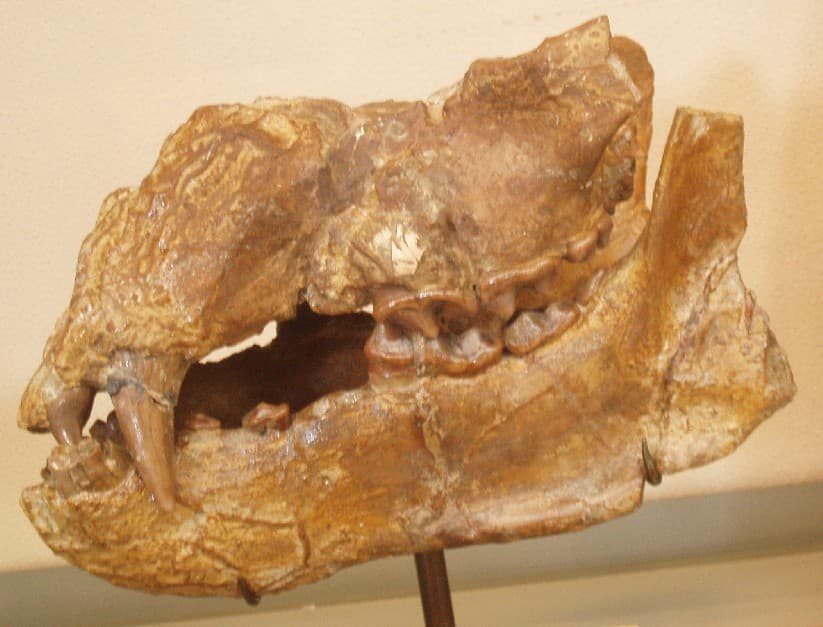
Plithocyon
Plithocyon is an extinct genus of hemicyonine bear that lived during the Miocene epoch, with fossil evidence found in both North America and Europe. This genus existed for approximately 4 million years, from about 15.97 to 11.61 million years ago. Its distinctiveness lies in its classification as a hemicyonine bear, a group of extinct caniform carnivorans.
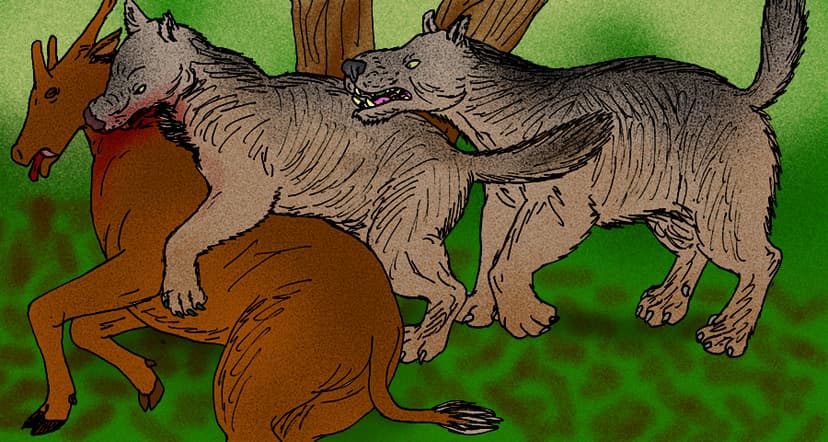
Hemicyoninae
Hemicyoninae, often referred to as dog bears, were an extinct subfamily of Ursidae that existed from the Oligocene through the Miocene epochs. These bear-like carnivorans inhabited parts of Europe, North America, Africa, and Asia, and are notable for their long evolutionary history, spanning approximately 28.6 million years.