
Tremarctos
Vulnerable·Mammal, Carnivora, Ursidae, Tremarctinae·Omnivore·Solitary, except for mother-cub units during rearing period.
Tremarctos is a genus of bears endemic to the Americas, known for its "short-faced" appearance due to its deep snouts and short nasal bones. The genus includes the extinct Florida short-faced bear (T. floridanus) and the sole living species, the South American spectacled bear (T. ornatus). Tremarctos is distinctive within the bear family for its specific cranial and dental morphology, and the living spectacled bear is the only bear species found in South America.
Key Facts
- ›Tremarctos is a genus of short-faced bears within the subfamily Tremarctinae.
- ›The Florida short-faced bear (T. floridanus) is an extinct species, while the spectacled bear (T. ornatus) is the only living representative.
- ›Spectacled bears inhabit the highlands of the Andes Mountains in South America.
- ›Tremarctos species have relatively short mandibles and crania, with small canines and large molars, indicating an omnivorous diet with a preference for plants and fruits.
- ›Spectacled bears are considered vulnerable due to threats such as poaching and habitat loss.
- ›Unlike most bears, spectacled bears are diurnal or crepuscular and do not hibernate.

Black, Tan Facial Markings
Highland Humid Tropical Rain Forests, Temperate Grasslands, Deciduous Forests
North America, South America
Diturnal, Polygamous, Polyesterous
Poaching, Habitat Loss, Parasites, Diseases, Predators
Jaguars, Cougars
About Tremarctos
The genus Tremarctos represents a lineage of bears native to the Americas, distinguished by their "short-faced" morphology. This characteristic is an optical illusion created by deep snouts and short nasal bones, setting them apart from the more elongated skulls of ursine bears. The genus encompasses two species: the now-extinct Florida short-faced bear (T. floridanus) and the sole living representative, the South American spectacled bear (T. ornatus).
Evolutionary Context
Tremarctos belongs to the subfamily Tremarctinae, which originated in North America during the late Miocene. Fossil evidence suggests that Plionarctos is a likely ancestor to the Tremarctos genus, with genetic divergence dates pointing to the Miocene-Pliocene boundary. The genus is thought to have evolved in North America, with T. floridanus possibly being the ancestor of the extant T. ornatus. The migration of Tremarctos into South America is believed to have occurred independently of other short-faced bears like Arctotherium, potentially after the extinction of the latter.
Morphology and Diet
Species within Tremarctos are of moderate size, comparable to the American black bear, though T. floridanus was significantly larger than T. ornatus. A notable feature across the genus is their dentition, characterized by short mandibles and crania, small canines, and large molars. This morphology, along with resilient teeth near the cheeks, indicates an omnivorous diet with a strong preference for plants and fruits, though they are known to consume meat as well. Both species possess long, curved claws and plantigrade feet, and T. ornatus forelimbs are longer than its hindlimbs, possibly aiding in arboreal activities.
Habitat and Behavior
The extinct T. floridanus was a temperate species found in North America. In contrast, the spectacled bear (T. ornatus) inhabits the Andean highlands of South America, dwelling in humid tropical rain forests, temperate grasslands, and deciduous forests. They are known to build nests in trees for resting and feeding. Unlike many bear species, Tremarctos bears are diturnal, meaning they are active throughout the day and night, and they do not hibernate. Their activity patterns are influenced by their location and the season.
Reproduction and Conservation
Spectacled bears are polygamous and polyesterous, with females typically giving birth to twins. Cubs are born altricial, with closed eyes and no teeth, and are cared for by their mothers for approximately three years. While T. floridanus is extinct, the spectacled bear (T. ornatus) is currently listed as vulnerable. Major threats to its survival include human poaching and habitat loss, with jaguars and cougars being among its natural predators. The species also faces challenges from parasites and diseases.
Source: Wikipedia ↗
Frequently Asked Questions
What does the name "Tremarctos" mean?
The genus name Tremarctos is derived from Greek and translates to "hole bear." This name may refer to the entepicondylar foramen on the humerus or to the facial markings that leave the eye area clear, making the eyes appear like holes.
What is the difference between the Florida short-faced bear and the spectacled bear?
The Florida short-faced bear (T. floridanus) was an extinct species that was about twice the size of the spectacled bear (T. ornatus). T. floridanus also had a relatively narrower rostrum and a distinctive "glabella" (dome-like protrusion) on its skull, which T. ornatus lacks.
Where do spectacled bears live?
Spectacled bears (T. ornatus) are found in South America, specifically in the highlands associated with the Andes Mountains, in countries such as Bolivia, Colombia, Peru, and Venezuela. They are the only bear species native to South America.
What do Tremarctos bears eat?
Tremarctos bears are omnivores, with a diet that includes fruit, corn, plants, insects, and sometimes farm animals. Their dentition, with short mandibles and large molars, suggests a diet primarily of plants and fruits, with meat consumed less frequently.
Are spectacled bears endangered?
The spectacled bear (T. ornatus) is listed as vulnerable on the Threatened Species List. Their populations are declining due to threats such as poaching by humans and habitat loss.
Do spectacled bears hibernate?
No, spectacled bears are diturnal, meaning they are active during the day, evening, or night, and they do not hibernate. Their activity patterns depend on their location and the current season.
Related Bears

Melursus
The sloth bear (Melursus ursinus) is a distinctive myrmecophagous bear species native to the Indian subcontinent, known for its long shaggy fur, mane, and specialized snout for sucking up insects. It is listed as vulnerable due to habitat loss and degradation, and is the sole member of the genus Melursus.
Helarctos
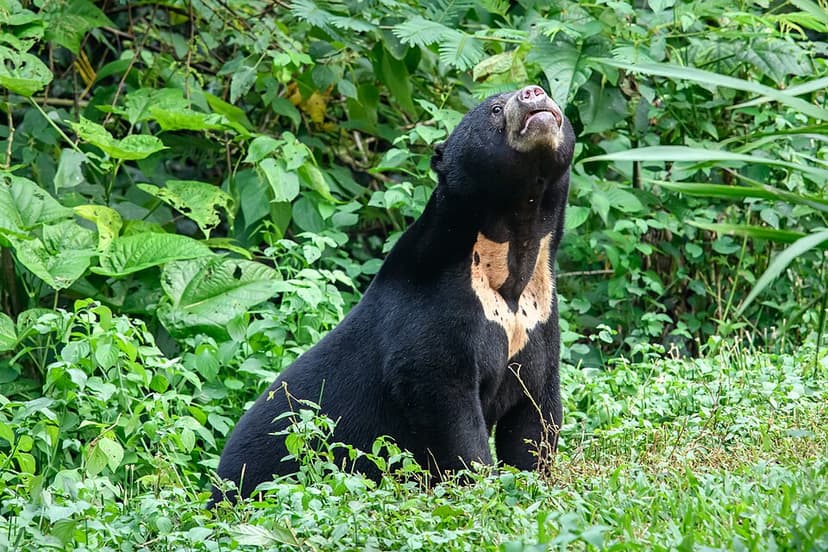
The sun bear (Helarctos malayanus) is the smallest bear species, native to the tropical forests of Southeast Asia. Distinctive for its short, jet-black fur and a characteristic orange to cream-colored chest patch, it is highly adapted for an arboreal lifestyle. Facing significant threats from deforestation and poaching, its population has seen a considerable decline.

Arctotherium
Arctotherium was an extinct genus of short-faced bears that inhabited Central and South America during the Late Pliocene and Late Pleistocene epochs. These bears migrated from North America following the formation of the Isthmus of Panama and diversified within the Neotropical realm, preferring open, arid, and semi-arid habitats. Arctotherium is notable for its range in size, from the gigantic Arctotherium angustidens to smaller species comparable to modern bears, and for its varied omnivorous diet, with some species leaning heavily towards carnivory and others towards herbivory.