
Helarctos
Vulnerable·Mammal, Carnivora, Ursidae·Omnivore·Tends to remain solitary, but sometimes occur in pairs, such as a mother and her cub.
The sun bear (Helarctos malayanus) is the smallest bear species, native to the tropical forests of Southeast Asia. Distinctive for its short, jet-black fur and a characteristic orange to cream-colored chest patch, it is highly adapted for an arboreal lifestyle. Facing significant threats from deforestation and poaching, its population has seen a considerable decline.
Key Facts
- ›Smallest bear species, weighing 25-65 kg and standing about 70 cm at the shoulder.
- ›Possesses unique adaptations for climbing, including inward-turned front feet and large claws.
- ›Primarily an omnivore, with a diet including insects, honey, fruits, and occasional vertebrates.
- ›Does not hibernate, likely due to year-round food availability.
- ›Highly arboreal, often sleeping and sunbathing in trees.
- ›Listed as Vulnerable on the IUCN Red List due to population decline.
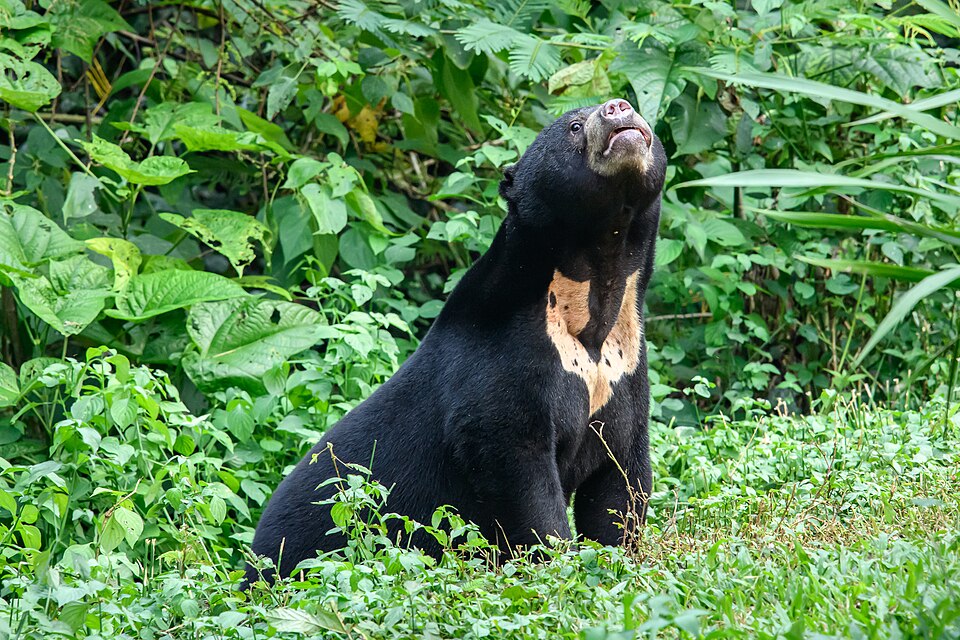
Jet Black, Grey, Red
Tropical Forests, Deciduous Forests, Seasonally Evergreen Forests, Non-Seasonal Evergreen Forests, Low Altitudes, Montane Areas, Moist Evergreen Forests, Dipterocarp Forests, Mangroves
Southeast Asia, Northeast India, Bangladesh, Myanmar, Thailand, Cambodia, Laos, Vietnam, Brunei, Indonesia, Malaysia, China
Arboreal, Solitary, Excellent Climber, Efficient Swimmer, Intelligent, Mimicry of Facial Expressions
Deforestation, Habitat Loss, Poaching, Wildlife Trade, Human-Bear Conflicts, Pet Trade, Bear Bile Trade
Tiger, Dholes, Leopards, Reticulated Python
About Helarctos
Sun Bear (Helarctos malayanus)
The sun bear, scientifically known as Helarctos malayanus, is the smallest species of bear, native to the tropical forests of Southeast Asia. This bear is immediately recognizable by its short, typically jet-black fur and a distinctive, often crescent-shaped, orange to cream-colored patch on its chest. Its physical characteristics, including large paws, strongly curved claws, and inward-turned front feet, are indicative of its highly arboreal lifestyle.
Adaptation and Behavior
Helarctos malayanus is an exceptional climber, spending significant time in trees where it sunbathes and rests. It is predominantly active during the day, though this can shift towards nocturnal behavior in areas with human presence. Unlike many other bear species, the sun bear does not hibernate, likely due to the consistent availability of food resources throughout the year in its tropical habitat. It is an omnivore, with a diet consisting of ants, bees, termites, honey, various fruits, and seeds, occasionally supplemented by small vertebrates.
Distribution and Conservation
The sun bear's geographic range spans across Southeast Asia, from Northeast India and Bangladesh down through mainland Southeast Asia, including countries like Thailand, Cambodia, Laos, Vietnam, and extending to Brunei, Indonesia, and Malaysia. It has also been sighted in China's Yunnan Province. Unfortunately, this species is facing significant threats, primarily from extensive deforestation driven by agriculture and logging, as well as widespread poaching for food and the wildlife trade. Consequently, the sun bear is listed as Vulnerable on the IUCN Red List, with its global population having declined substantially since the 1990s.
Source: Wikipedia ↗
Frequently Asked Questions
What is the scientific name for the sun bear?
The scientific name for the sun bear is Helarctos malayanus. It is the only species within the genus Helarctos.
What are the main threats to sun bears?
Sun bears are primarily threatened by heavy deforestation due to agriculture and logging, and by poaching for food and the wildlife trade. They are also harmed in conflicts with humans when they enter farmlands.
What do sun bears eat?
Sun bears are omnivores with a varied diet. They commonly eat ants, bees, beetles, honey, termites, seeds, and various fruits. Occasionally, they will also consume vertebrates like birds and deer.
Where do sun bears live?
Sun bears are found in the tropical forests of Southeast Asia, with their range extending from Northeast India and Bangladesh south through mainland Southeast Asia, Brunei, and Indonesia.
How large are sun bears?
Sun bears are the smallest bear species. Adults typically weigh between 25 to 65 kg (55 to 143 lb) and stand about 70 cm (28 in) at the shoulder. Their head-and-body length ranges from 100 to 140 cm (39 to 55 in).
Do sun bears hibernate?
No, sun bears do not hibernate. This is likely due to the year-round availability of food resources within their tropical habitat.
Related Bears

Tremarctos
Tremarctos is a genus of bears endemic to the Americas, known for its "short-faced" appearance due to its deep snouts and short nasal bones. The genus includes the extinct Florida short-faced bear (T. floridanus) and the sole living species, the South American spectacled bear (T. ornatus). Tremarctos is distinctive within the bear family for its specific cranial and dental morphology, and the living spectacled bear is the only bear species found in South America.
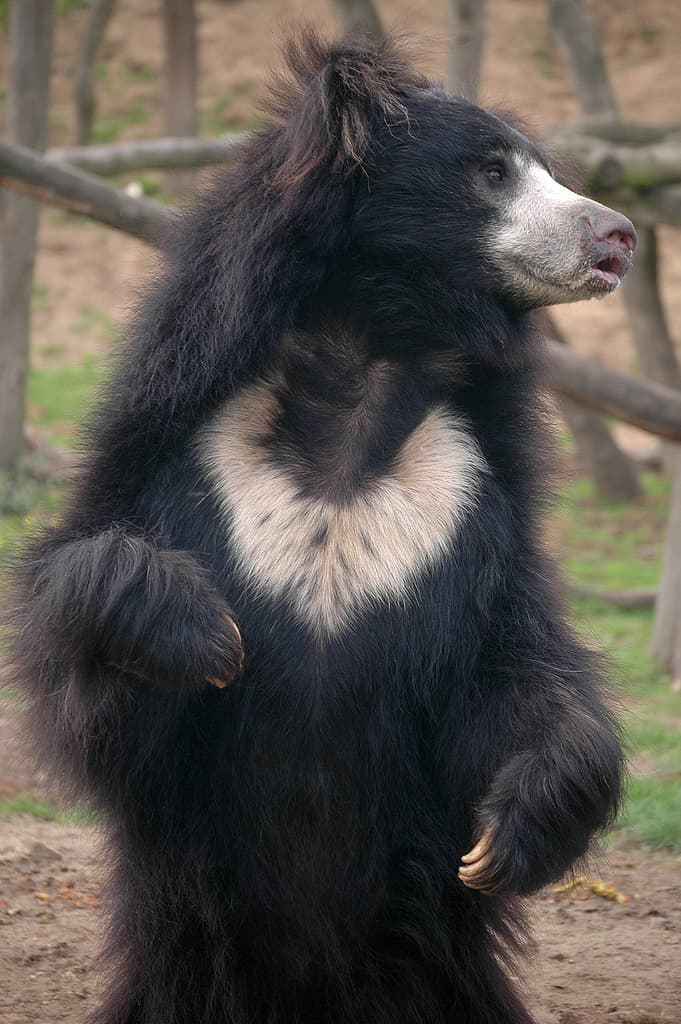
Melursus
The sloth bear (Melursus ursinus) is a distinctive myrmecophagous bear species native to the Indian subcontinent, known for its long shaggy fur, mane, and specialized snout for sucking up insects. It is listed as vulnerable due to habitat loss and degradation, and is the sole member of the genus Melursus.

Ursus
Ursus is a genus of bears in the family Ursidae, encompassing several well-known species such as the brown bear, polar bear, American black bear, and Asian black bear. The genus name itself is derived from the Latin word for 'bear'. These mammals are characterized by their solitary nature, except during mating seasons and when females are raising cubs, and exhibit complex mating systems driven by sexual selection.