
Caecilia tentaculata
South America·Brazil, Colombia, Ecuador, French Guiana, Peru, Suriname, and Venezuela; potentially Bolivia and Guyana.
Caecilia tentaculata is a species of caecilian, a type of limbless amphibian, belonging to the Caeciliidae family. This species is native to the neotropical region, inhabiting moist forests, plantations, and gardens across several South American countries. It is distinguished by its serpentine body and its adaptation to both terrestrial and semi-aquatic environments, though it is primarily fossorial.
Key Facts
- ›Found in Brazil, Colombia, Ecuador, French Guiana, Peru, Suriname, and Venezuela, with potential presence in Bolivia and Guyana.
- ›Inhabits tropical and subtropical moist lowland forests, plantations, rural gardens, and deforested areas.
- ›Belongs to the family Caeciliidae.
- ›A fossorial species, meaning it primarily lives by burrowing.
- ›Serpentine-bodied amphibian.

Subtropical Moist Lowland Forests, Tropical Moist Lowland Forests, Plantations, Rural Gardens, Deforested Areas
About Caecilia tentaculata
Caecilia tentaculata is a species of caecilian, a group of limbless, serpentine amphibians belonging to the family Caeciliidae. This species is native to the neotropical region of South America, with its distribution spanning countries such as Brazil, Colombia, Ecuador, French Guiana, Peru, Suriname, and Venezuela. It may also be found in Bolivia and Guyana.
Habitat and Lifestyle
This caecilian species inhabits a range of moist environments, including subtropical and tropical lowland forests. It has also adapted to human-modified landscapes, being found in plantations, rural gardens, and even deforested areas, indicating a degree of resilience. Caecilia tentaculata is primarily a fossorial animal, meaning it spends much of its life burrowing underground, a characteristic common among caecilians which aids in avoiding predators and conserving moisture.
Source: Wikipedia ↗
Frequently Asked Questions
What is Caecilia tentaculata?
Caecilia tentaculata is a species of caecilian, which are limbless, serpentine amphibians. They belong to the family Caeciliidae and are found in various moist habitats across South America.
Where is Caecilia tentaculata found?
This species is native to several South American countries including Brazil, Colombia, Ecuador, French Guiana, Peru, Suriname, and Venezuela. It may also be found in Bolivia and Guyana.
What kind of habitat does Caecilia tentaculata prefer?
Caecilia tentaculata thrives in subtropical and tropical moist lowland forests. It can also be found in man-made environments such as plantations, rural gardens, and areas that have been deforested.
Is Caecilia tentaculata an aquatic or terrestrial animal?
While caecilians can adapt to various environments, Caecilia tentaculata is primarily a fossorial species, meaning it lives by burrowing underground. Its habitat preferences suggest it is well-suited to moist, terrestrial environments.
Related Caecilian species

Chthonerpeton exile
Chthonerpeton exile is a species of caecilian found exclusively in Brazil, known only from a single, now-lost specimen. Its specific name, 'exile', reflects its slender and delicate body shape, and it is also known by the common name Bahia caecilian. Little is documented about its habitat or population status.
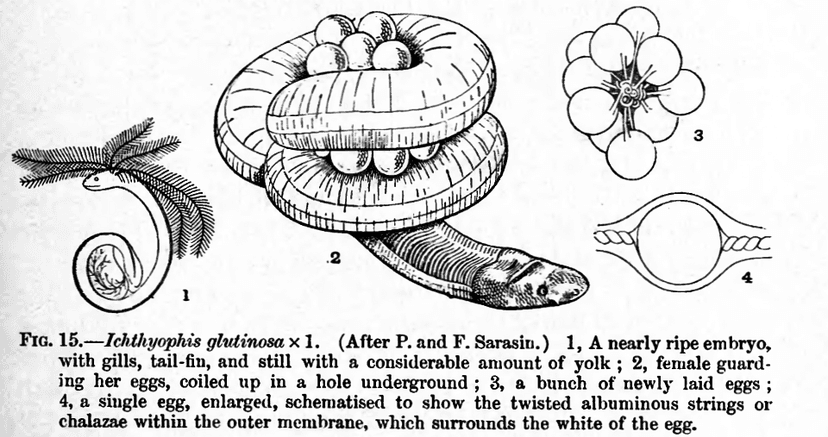
Common yellow-banded caecilian
The Common yellow-banded caecilian, also known as the Ceylon caecilian, is a species of caecilian endemic to Sri Lanka. It is characterized by its earthworm-like appearance, with steely blue and pale yellow coloration and a distinctive yellow band along its sides. This adaptable species inhabits moist tropical and subtropical forests and pastures, where it burrows in damp earth or leaf litter.
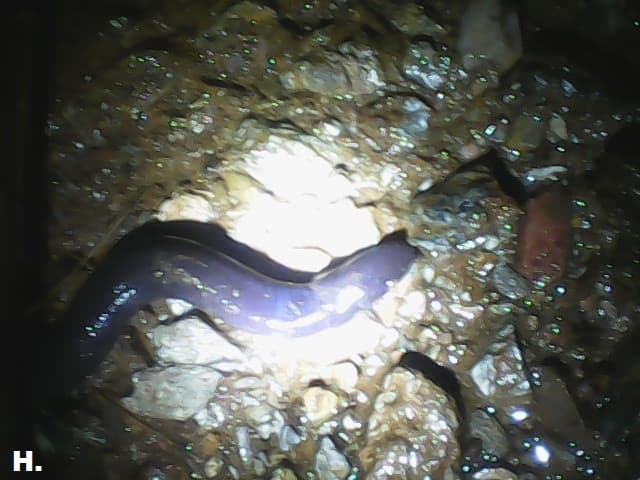
Darjeeling caecilians
The Darjeeling caecilian, scientifically known as Ichthyophis sikkimensis, is a species of amphibian native to the Himalayan foothills of India, Nepal, and potentially Bhutan. This burrowing amphibian is characterized by its elongated, worm-like body and smooth, moist skin, typically found in damp soil and leaf litter.