
Ichthyophiidae
Asia·Oviparous with aquatic larvae·South and Southeast Asia, southernmost China
The Ichthyophiidae, also known as Asiatic tailed caecilians or fish caecilians, are a primitive family of caecilians found across South and Southeast Asia and in southernmost China. They are distinguished by their tails, numerous body scales, and mouths that are not recessed, setting them apart from more derived caecilian families. Ichthyophiidae reproduce by laying eggs in moist soil, with larvae that develop in water before metamorphosing into terrestrial adults, and females may exhibit parental care.
Key Facts
- ›Found in South and Southeast Asia and southernmost China.
- ›Possess tails and numerous scales on their bodies.
- ›Mouths are not recessed underneath their heads.
- ›Lay eggs in moist soil cavities; larvae develop in water.
- ›Females may protect their eggs until hatching.
- ›Unique among caecilians for having two sets of jaw muscles.
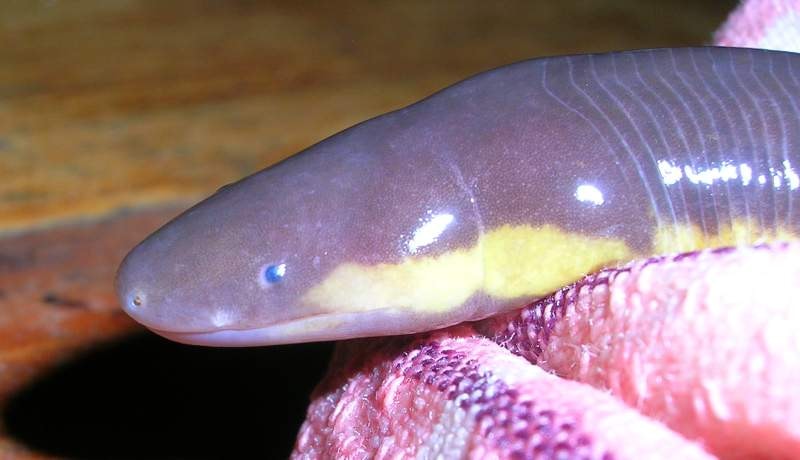
Moist Soil Cavities, Streams, Underground Seepages
Asiatic Tailed Caecilians, Fish Caecilians
About Ichthyophiidae
The Ichthyophiidae, commonly referred to as Asiatic tailed caecilians or fish caecilians, represent a distinct family of amphibians found across South and Southeast Asia, extending into the southernmost regions of China. These caecilians are considered primitive, exhibiting several characteristics that differentiate them from more evolutionarily advanced families.
Key Distinguishing Features
Among the notable traits of Ichthyophiidae are the presence of tails, a feature absent in many other caecilian groups. Their bodies are covered by numerous scales, and their mouths are positioned forward rather than recessed underneath the head. A unique anatomical feature found in this family is the presence of two sets of muscles dedicated to jaw closure, a characteristic not observed in related families like Rhinatrematidae.
Reproduction and Life Cycle
The reproductive strategy of Ichthyophiidae involves laying eggs in moist soil cavities. Upon hatching, the young emerge as larvae, which then seek out aquatic environments such as streams or underground seepages. These larvae undergo metamorphosis before developing into adult caecilians. There is some evidence to suggest that female Ichthyophiidae may exhibit parental care, protecting their eggs until they hatch.
Source: Wikipedia ↗
Frequently Asked Questions
What are Asiatic tailed caecilians?
Asiatic tailed caecilians, belonging to the family Ichthyophiidae, are a type of amphibian found in South and Southeast Asia and southernmost China. They are considered primitive caecilians due to their presence of tails and scales, and mouths that are not recessed.
What makes Ichthyophiidae different from other caecilians?
Ichthyophiidae are distinguished by several characteristics, including the presence of tails, numerous scales on their bodies, and mouths that are not recessed under their heads. They also possess two sets of muscles for closing their jaws, a feature unique to caecilians.
How do Ichthyophiidae reproduce?
These caecilians lay their eggs in cavities within moist soil. The eggs hatch into larvae, which then move to streams or underground seepages to develop before metamorphosing into adult caecilians.
Do female Ichthyophiidae care for their young?
Some evidence suggests that female Ichthyophiidae may protect their eggs until they hatch. This indicates a potential for parental care within the family.
Related Caecilian species
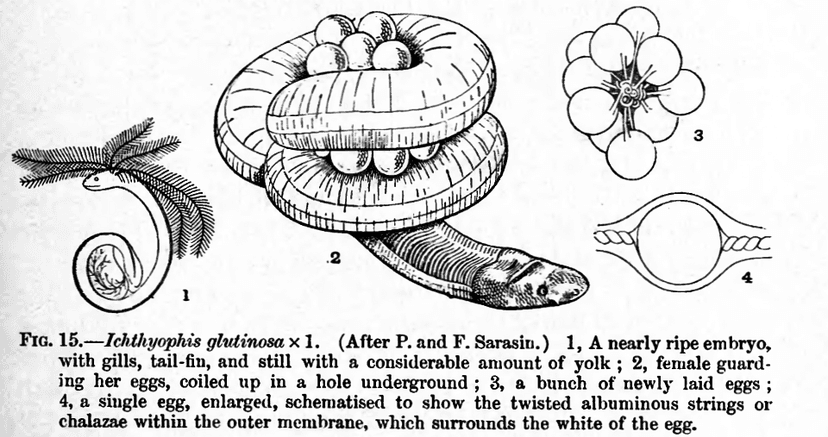
Ichthyophis glutinosus
The Ichthyophis glutinosus, commonly known as the Ceylon caecilian or common yellow-banded caecilian, is a species of caecilian native to Sri Lanka. It is characterized by its long, segmented appearance, steely blue and yellow coloration, and its habitat in moist tropical and subtropical forests and pastures.
Common yellow-banded caecilian
The Common yellow-banded caecilian, also known as the Ceylon caecilian, is a species of caecilian endemic to Sri Lanka. It is characterized by its earthworm-like appearance, with steely blue and pale yellow coloration and a distinctive yellow band along its sides. This adaptable species inhabits moist tropical and subtropical forests and pastures, where it burrows in damp earth or leaf litter.

Herpele squalostoma
Herpele squalostoma, also known as the Congo caecilian, is a species of caecilian found in Central and extreme eastern West Africa. This species is characterized by its cylindrical body, prominent snout, and eyes covered by bone, and it exhibits parental care through maternal dermatophagy.