
Oscaecilia ochrocephala
South America·Panama and Colombia
Oscaecilia ochrocephala is a species of caecilian belonging to the family Caeciliidae. It is primarily found in Panama and Colombia, inhabiting moist lowland forests, plantations, and degraded forest areas.
Key Facts
- ›Native to Panama and Colombia.
- ›Inhabits subtropical or tropical moist lowland forests.
- ›Also found in plantations, rural gardens, and degraded former forests.
- ›Belongs to the family Caeciliidae.

Subtropical Moist Lowland Forests, Tropical Moist Lowland Forests, Plantations, Rural Gardens, Heavily Degraded Former Forests
About Oscaecilia ochrocephala
Oscaecilia ochrocephala is a species of caecilian that belongs to the family Caeciliidae. These amphibians are known for their legless, worm-like appearance.
Distribution and Habitat
This species is most commonly found in the countries of Panama and Colombia. Its natural habitats are diverse, including subtropical or tropical moist lowland forests. Oscaecilia ochrocephala also adapts to human-influenced environments, such as plantations, rural gardens, and areas that were once forests but have undergone significant degradation.
Source: Wikipedia ↗
Frequently Asked Questions
Where is Oscaecilia ochrocephala found?
Oscaecilia ochrocephala is most commonly found in Panama and Colombia. Its natural habitats are subtropical or tropical moist lowland forests, plantations, rural gardens, and heavily degraded former forests.
What family does Oscaecilia ochrocephala belong to?
Oscaecilia ochrocephala belongs to the family Caeciliidae, which is a family of caecilians.
What kind of environments does Oscaecilia ochrocephala live in?
This caecilian species prefers subtropical or tropical moist lowland forests. It can also be found in man-made environments like plantations, rural gardens, and areas that were formerly forests but have been heavily degraded.
Related Caecilian species

Atretochoana eiselti
Atretochoana eiselti is a unique species of lungless caecilian, distinguished by its large size, broad flat head, and fleshy dorsal fin. Originally known from only two preserved specimens, it was rediscovered in 2011 in Brazil, inhabiting aquatic environments. Its most striking feature is the complete absence of lungs, a rarity among tetrapods, leading to ongoing questions about its respiratory mechanisms.
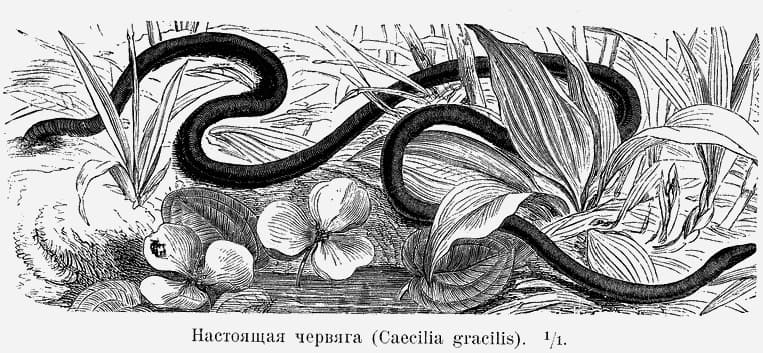
Caecilia gracilis
Caecilia gracilis is a species of caecilian belonging to the Caeciliidae family. It is native to several South American countries, including Brazil, French Guiana, Peru, and Suriname, with possible occurrences in Colombia and Guyana. This species inhabits moist lowland forests, savannas, and degraded areas, distinguishing itself by its adaptation to these varied tropical environments.

Caecilia nigricans
Caecilia nigricans, also known as the Rio Lita caecilian, is a subterranean amphibian species found in the tropical forests and foothills of Colombia, Ecuador, and Panama. While it is not currently endangered, its habitat is threatened by deforestation and other human activities.