
Caecilia nigricans
South America·Least Concern·Colombia, Ecuador, and Panama
Caecilia nigricans, also known as the Rio Lita caecilian, is a subterranean amphibian species found in the tropical forests and foothills of Colombia, Ecuador, and Panama. While it is not currently endangered, its habitat is threatened by deforestation and other human activities.
Key Facts
- ›Native to Colombia, Ecuador, and Panama.
- ›Inhabits moist subtropical and tropical lowland forests, plantations, rural gardens, and foothill forests.
- ›Primarily a subterranean species.
- ›Listed as a species of Least Concern by the IUCN.
- ›Threatened by habitat loss due to deforestation.
- ›Found in protected areas such as Darién National Park.

Moist Subtropical Lowland Forests, Tropical Lowland Forests, Plantations, Rural Gardens, Foothill Forests
Rio Lita Caecilian
Deforestation, Human Activities
About Caecilia nigricans
Caecilia nigricans: The Rio Lita Caecilian
The Caecilia nigricans, commonly referred to as the Rio Lita caecilian, is a species of amphibian belonging to the Caeciliidae family. This creature is characterized by its subterranean lifestyle, spending the majority of its existence beneath the surface of the earth.
Geographic Distribution and Habitat
Caecilia nigricans is naturally found in the countries of Colombia, Ecuador, and Panama. Its preferred habitats are moist environments, including subtropical and tropical lowland forests, as well as plantations, rural gardens, and foothill forests. These locations provide the necessary moisture and soil conditions for its burrowing existence.
Conservation Status and Threats
Presently, Caecilia nigricans is classified as a species of Least Concern by the International Union for Conservation of Nature (IUCN), indicating that it is not facing an immediate risk of extinction. However, the species is not without threats. Human activities, particularly deforestation, pose a significant risk by destroying and fragmenting its natural habitat. Despite these challenges, the species can be found in several protected areas within Colombia, such as Darién National Park, which offers some refuge.
Source: Wikipedia ↗
Frequently Asked Questions
What is the Rio Lita caecilian?
The Rio Lita caecilian (Caecilia nigricans) is a species of amphibian belonging to the Caeciliidae family. It is characterized by its subterranean lifestyle and is found in specific regions of South America and Central America.
Where can Caecilia nigricans be found?
This species is naturally located in Colombia, Ecuador, and Panama. Its habitat includes moist subtropical and tropical lowland forests, plantations, rural gardens, and foothill forests.
What is the conservation status of Caecilia nigricans?
Caecilia nigricans is currently listed as a species of Least Concern by the IUCN. This means it is not facing an immediate threat of extinction.
What are the main threats to Caecilia nigricans?
The primary threat to Caecilia nigricans is human activity, particularly deforestation, which leads to habitat loss. This can impact populations even within protected areas.
Does Caecilia nigricans live above ground?
No, Caecilia nigricans is a subterranean species, meaning it primarily lives underground. Its natural environments are moist forests, gardens, and plantations where it can burrow.
Related Caecilian species

Atretochoana eiselti
Atretochoana eiselti is a unique species of lungless caecilian, distinguished by its large size, broad flat head, and fleshy dorsal fin. Originally known from only two preserved specimens, it was rediscovered in 2011 in Brazil, inhabiting aquatic environments. Its most striking feature is the complete absence of lungs, a rarity among tetrapods, leading to ongoing questions about its respiratory mechanisms.
Chthonerpeton indistinctum
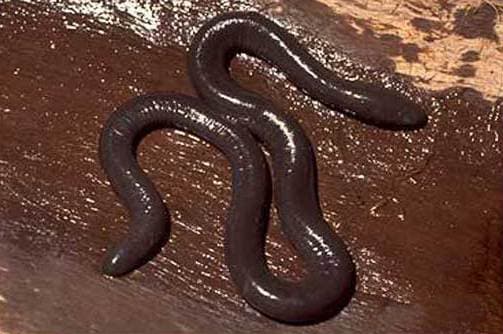
Chthonerpeton indistinctum is a limbless amphibian belonging to the Typhlonectidae family, native to northeastern Argentina, Paraguay, Uruguay, and southeastern Brazil. It is distinguished by its snakelike body with numerous transverse folds, sensory tentacles near its nostrils, and a unique white flecked coloration.
Dermophis mexicanus
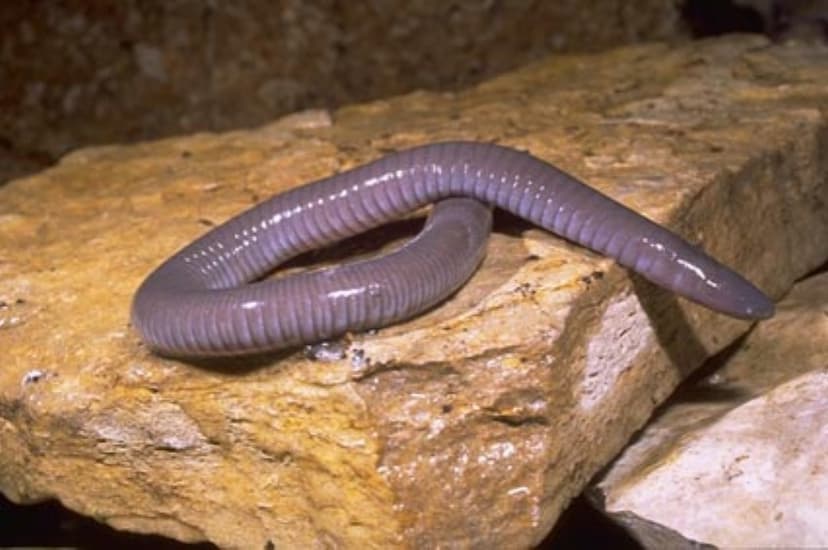
Dermophis mexicanus, also known as the Mexican burrowing caecilian, is a limbless amphibian native to Mexico and Central America. This species is characterized by its earthworm-like appearance, with a segmented body due to numerous skin folds, and lives a fossorial lifestyle, burrowing under leaf litter and debris.