
Atretochoana eiselti
Atretochoana eiselti is a unique species of lungless caecilian, distinguished by its large size, broad flat head, and fleshy dorsal fin. Originally known from only two preserved specimens, it was rediscovered in 2011 in Brazil, inhabiting aquatic environments. Its most striking feature is the complete absence of lungs, a rarity among tetrapods, leading to ongoing questions about its respiratory mechanisms.
Key Facts
- ›It is the largest known tetrapod to completely lack lungs.
- ›Atretochoana eiselti possesses a broad, flat head with sealed nostrils and an enlarged, mobile mouth.
- ›The species has a fleshy dorsal fin, a feature not common among other caecilians.
- ›Gas exchange is believed to occur through capillaries in its skin.
- ›It was originally classified in the genus Typhlonectes before being moved to its own genus, Atretochoana.
- ›The conservation status is currently listed as Least Concern by the IUCN.

Aquatic Environments, Rivers
Predator, Scavenger
Penis Snake, Man-Aconda, Floppy Snake
About Atretochoana eiselti
Atretochoana eiselti is a remarkable species of caecilian, notable for being the largest known tetrapod that completely lacks lungs. This lungless amphibian, discovered in the Brazilian rainforest, presents a unique case study in vertebrate adaptation and respiration.
Discovery and Classification
The species was first known from two preserved specimens collected in the late 1800s. One specimen, housed in the Naturhistorisches Museum in Vienna, was initially classified within the genus Typhlonectes in 1968. However, further examination revealed distinct anatomical features, particularly the absence of lungs and sealed choanae, leading to its reclassification into its own monotypic genus, Atretochoana, in 1996. The genus name itself, derived from Greek, signifies 'imperforate' and 'funnel,' referencing its unique nasal and respiratory structures.
Physical Characteristics
Atretochoana eiselti possesses a limbless, snake-like body adorned with rings, characteristic of caecilians. It is distinguished by a broad, flat head, sealed nostrils, and an enlarged, mobile mouth. A fleshy dorsal fin is another prominent feature. The absence of lungs is the most significant characteristic, with gas exchange believed to occur through capillaries embedded within its skin. This adaptation is essential for its aquatic lifestyle, although the precise mechanisms of its respiration in varying water conditions remain a subject of scientific inquiry.
Habitat and Biology
While initially presumed to inhabit cold, fast-flowing waters, recent findings suggest Atretochoana eiselti may be found in warmer aquatic environments. The species is believed to be viviparous, meaning it gives birth to live young, and is likely a predator or scavenger within its ecosystem. Its distribution is considered limited, and it is thought to be uncommon.
Conservation Status
The International Union for Conservation of Nature (IUCN) classifies Atretochoana eiselti as 'Least Concern.' This designation reflects the current understanding of its population status and the threats it faces, though ongoing research into its ecology and distribution is vital for comprehensive conservation efforts.
Source: Wikipedia ↗
Frequently Asked Questions
What makes Atretochoana eiselti unique among tetrapods?
Atretochoana eiselti is exceptionally unique because it is the largest tetrapod known to completely lack lungs. This absence of lungs, coupled with other specialized anatomical features, sets it apart from nearly all other terrestrial and aquatic vertebrates.
How does Atretochoana eiselti breathe without lungs?
The exact mechanism by which Atretochoana eiselti respires is not fully understood, which is a significant scientific question. It is theorized that gas exchange occurs directly through its skin, which is permeated with capillaries that allow for oxygen absorption from the water.
Where was Atretochoana eiselti first discovered and rediscovered?
The first specimens of Atretochoana eiselti were discovered in the Brazilian rainforest in the late 1800s. After being known only from these preserved specimens for over a century, the species was rediscovered in 2011 by engineers working on a hydroelectric dam project in Brazil.
What are some of the physical characteristics of Atretochoana eiselti?
Atretochoana eiselti has a snake-like, limbless amphibian body with rings similar to earthworms. It has a distinctively broad, flat head, sealed nostrils, an enlarged mouth, and a fleshy dorsal fin. Adults can reach lengths of over 70 cm.
What is the typical habitat of Atretochoana eiselti?
While initially thought to inhabit cold, fast-flowing waters, recent discoveries suggest Atretochoana eiselti may be found in warmer waters with less oxygen. Its relatives are aquatic, and it is believed to be an aquatic species, potentially inhabiting rivers.
Related Caecilian species
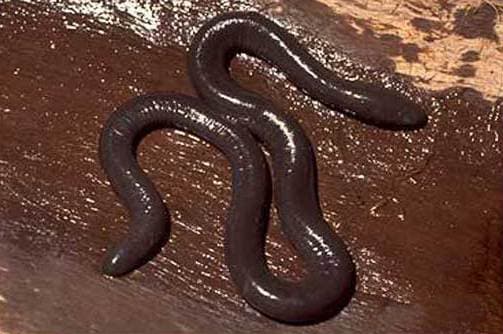
Chthonerpeton indistinctum
Chthonerpeton indistinctum is a limbless amphibian belonging to the Typhlonectidae family, native to northeastern Argentina, Paraguay, Uruguay, and southeastern Brazil. It is distinguished by its snakelike body with numerous transverse folds, sensory tentacles near its nostrils, and a unique white flecked coloration.

Chthonerpeton viviparum
Chthonerpeton viviparum, also known as the Santa Catarina caecilian, is an aquatic species of caecilian found exclusively in the vicinity of Joinville, in eastern Santa Catarina State, Brazil. Its ecology and specific habitat requirements are not well-documented, but it is known to inhabit standing bodies of water.
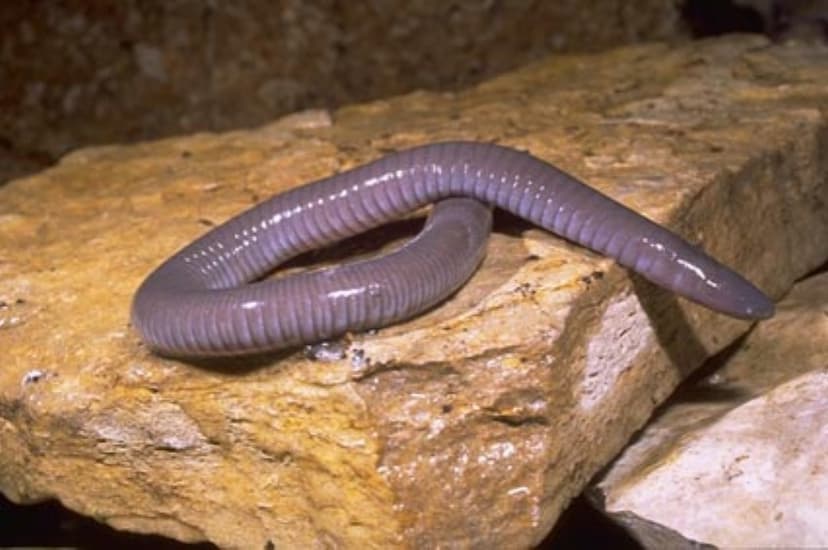
Dermophis mexicanus
Dermophis mexicanus, also known as the Mexican burrowing caecilian, is a limbless amphibian native to Mexico and Central America. This species is characterized by its earthworm-like appearance, with a segmented body due to numerous skin folds, and lives a fossorial lifestyle, burrowing under leaf litter and debris.