
Typhlonectes cunhai
South America·Ovoviviparous·Least Concern·Amazonian Brazil, Peru, Colombia, Guyana, French Guiana, likely Suriname, and possibly Venezuela.
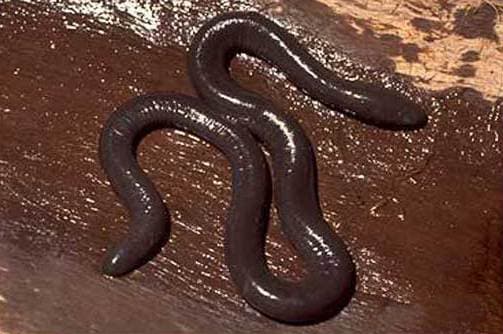
The Cayenne caecilian, scientifically known as Typhlonectes compressicauda, is an aquatic amphibian native to the Amazon basin and river systems of the Guianas in South America. This limbless creature is characterized by its laterally flattened body, a dorsal fin, and transverse folds, and it possesses a unique ovoviviparous reproductive strategy where young develop inside the female and are nourished by oviduct secretions.
Key Facts
- ›Inhabits permanent rivers and marshes in lowland forest zones.
- ›Possesses a flattened body with a dorsal fin and segmented appearance due to transverse folds.
- ›Detects prey using touch and vibrations due to a lack of functional eyes.
- ›Reproduces ovoviviparously, with young consuming oviduct secretions until birth.
- ›Secretes noxious mucus when threatened, but is preyed upon by birds, snakes, and large fish.
- ›Listed as 'Least Concern' by the IUCN due to its commonality and wide distribution.

Permanent Rivers, Marshes, Lowland Forest Zones, Shallow Streams
Small Invertebrates, Insect Larvae, Shrimps, Small Fish
Cayenne Caecilian
About Typhlonectes cunhai
Typhlonectes compressicauda
The Cayenne caecilian, scientifically classified as Typhlonectes compressicauda, is an aquatic amphibian species found in the freshwater environments of South America. Its natural range encompasses the Amazon basin and the river systems of the Guianas, including countries such as Brazil, Peru, Colombia, Guyana, and French Guiana, with potential presence in Suriname and Venezuela. This species primarily inhabits permanent rivers, marshes, and shallow streams within lowland forest zones.
Description and Biology
This caecilian is characterized by its limbless, elongated body, which is laterally flattened and typically colored dark grey, black, or steely blue. A notable feature is the presence of transverse folds along its body, giving it a segmented appearance, and a long fin running along its back. Lacking functional eyes, the Cayenne caecilian relies on touch and the detection of vibrations to locate its prey, which includes small invertebrates like insect larvae and shrimps, as well as small fish. When threatened, it can secrete a significant amount of noxious mucus from specialized glands covering its body, though it is preyed upon by birds, snakes, and larger fish.
Reproduction
The reproductive strategy of Typhlonectes compressicauda is ovoviviparous. Mating involves a male and female twining together, with the male transferring a spermatophore into the female's cloaca. Fertilization is internal. The embryos develop within the female's oviduct, initially feeding on their egg yolks. As development progresses, the young develop rasping teeth and consume glandular secretions produced by the oviduct lining. Birth occurs after approximately eight months, at which point the juvenile caecilians shed their temporary teeth and develop their adult dentition.
Conservation Status
Due to its commonality and wide distribution across its native range, the Cayenne caecilian is classified as 'Least Concern' by the International Union for Conservation of Nature (IUCN) Red List of Threatened Species. This status indicates that the species is not currently facing significant threats that would lead to its endangerment.
Source: Wikipedia ↗
Frequently Asked Questions
What is the Cayenne caecilian?
The Cayenne caecilian, Typhlonectes compressicauda, is an aquatic amphibian belonging to the family Typhlonectidae. It is found in various river systems in South America, including the Amazon basin and the Guianas.
What does the Cayenne caecilian look like?
It is an elongated, limbless amphibian, typically dark grey, black, or steely blue. Its body is flattened laterally and features transverse folds giving it a segmented look, along with a long fin running down its back.
How does the Cayenne caecilian reproduce?
The Cayenne caecilian is ovoviviparous. Fertilization is internal, and the young hatch inside the female's oviduct, feeding on egg yolks and later on glandular secretions from the oviduct lining before birth.
What does the Cayenne caecilian eat?
It hunts through sediment for small invertebrates such as insect larvae and shrimps. It also consumes small fish. It lacks functional eyes and likely finds its prey through touch or by sensing vibrations.
What is the conservation status of the Cayenne caecilian?
The Cayenne caecilian is listed as 'Least Concern' on the IUCN Red List of Threatened Species. This classification is due to its common occurrence and extensive geographical range.
Related Caecilian species

Rio Rauca caecilian
The Rio Rauca caecilian, scientifically known as Typhlonectes natans, is a species of amphibian found in parts of South America and potentially Trinidad and Tobago. It is distinguished by its ovoviviparous reproductive strategy, where it gives birth to live young, and its reliance on cutaneous respiration, breathing primarily through its skin.

Atretochoana eiselti
Atretochoana eiselti is a unique species of lungless caecilian, distinguished by its large size, broad flat head, and fleshy dorsal fin. Originally known from only two preserved specimens, it was rediscovered in 2011 in Brazil, inhabiting aquatic environments. Its most striking feature is the complete absence of lungs, a rarity among tetrapods, leading to ongoing questions about its respiratory mechanisms.
Chthonerpeton indistinctum
Chthonerpeton indistinctum is a limbless amphibian belonging to the Typhlonectidae family, native to northeastern Argentina, Paraguay, Uruguay, and southeastern Brazil. It is distinguished by its snakelike body with numerous transverse folds, sensory tentacles near its nostrils, and a unique white flecked coloration.