
Chthonerpeton indistinctum
South America·viviparous·Least Concern·Northeastern Argentina, Paraguay, Uruguay, and southeastern Brazil
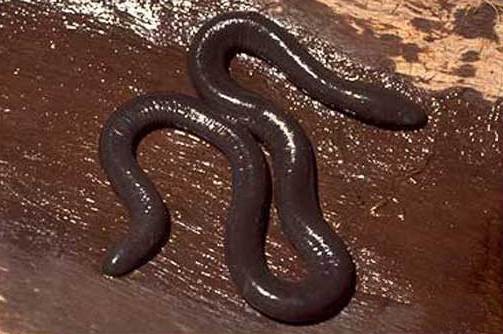
Chthonerpeton indistinctum is a limbless amphibian belonging to the Typhlonectidae family, native to northeastern Argentina, Paraguay, Uruguay, and southeastern Brazil. It is distinguished by its snakelike body with numerous transverse folds, sensory tentacles near its nostrils, and a unique white flecked coloration.
Key Facts
- ›Found in northeastern Argentina, Paraguay, Uruguay, and southeastern Brazil.
- ›Possesses a snakelike body with 70 to 80 transverse folds.
- ›Features sensory tentacles between the nostrils and eyes.
- ›Coloration is black above and dark grey beneath, both with tiny white flecks.
- ›Reproduction is viviparous, with live young being born.
- ›Classified as 'Least Concern' by the IUCN Red List.
Partially Terrestrial, Partially Aquatic, River Banks, Brackish Water of Estuaries
Argentine Caecilian
About Chthonerpeton indistinctum
Chthonerpeton indistinctum, commonly known as the Argentine caecilian, is a species of limbless amphibian belonging to the Typhlonectidae family. This species is found in the South American countries of northeastern Argentina, Paraguay, Uruguay, and southeastern Brazil, inhabiting areas up to 1,000 meters in altitude.
Description and Physiology
This caecilian possesses a distinctive snakelike body, reaching an average adult length of approximately 53 centimeters. Its body is characterized by 70 to 80 transverse folds, which create a segmented appearance. A notable feature of its head is the presence of sensory tentacles situated between the nostrils and the eyes, an area of skin that is white. The coloration of Chthonerpeton indistinctum is typically black on its upper side and dark grey on its underside, with both surfaces speckled with tiny white flecks. The cloacal region is a flat, disc-like area that is creamy white.
Distribution and Habitat
Chthonerpeton indistinctum has a broad distribution across Paraguay, Uruguay, Brazil, and Argentina. It is considered a common species, often found in large numbers. Its habitat is a mix of terrestrial and aquatic environments; it is frequently found near river banks but can also venture some distance from water. Notably, individuals have been found alive in the brackish waters of estuaries, suggesting some adaptability to varying salinity levels. There is speculation that the species may engage in annual migrations between its terrestrial and aquatic habitats.
Biology and Reproduction
A significant biological trait of Chthonerpeton indistinctum is its viviparous reproductive strategy, meaning it gives birth to live young. The species is also considered to exhibit characteristics that suggest it is more primitive compared to other, more evolved caecilian species. Chromosome studies have indicated a diploid number of 20 for C. indistinctum, which is lower than that of the more derived species Typhlonectes compressicauda (which has 28). Further research is anticipated to fully elucidate the taxonomic relationships among different caecilian species.
Conservation Status
The International Union for Conservation of Nature (IUCN) Red List of Threatened Species has assessed Chthonerpeton indistinctum as being of "Least Concern." This classification indicates that the species is widespread and not currently facing immediate threats that would jeopardize its survival.
Source: Wikipedia ↗
Frequently Asked Questions
What is the Argentine caecilian?
The Argentine caecilian, scientifically known as Chthonerpeton indistinctum, is a species of caecilian found in South America. It is a limbless amphibian characterized by its snakelike appearance and unique coloration.
Where is Chthonerpeton indistinctum found?
Chthonerpeton indistinctum is naturally distributed across northeastern Argentina, Paraguay, Uruguay, and southeastern Brazil. It inhabits areas with altitudes up to 1,000 meters.
What does Chthonerpeton indistinctum look like?
This caecilian has a snakelike body that can reach approximately 53 cm in length and lacks limbs. Its body is marked by 70 to 80 transverse folds, giving it a segmented look. The head features sensory tentacles, and its skin is black above and dark grey below, both adorned with small white flecks.
How does Chthonerpeton indistinctum reproduce?
Chthonerpeton indistinctum is a viviparous species, meaning it gives birth to live young. This reproductive strategy is a notable characteristic of its biology.
What is the conservation status of Chthonerpeton indistinctum?
The International Union for Conservation of Nature (IUCN) Red List classifies Chthonerpeton indistinctum as 'Least Concern'. This indicates that the species is widespread and not currently facing significant threats to its survival.
Related Caecilian species

Atretochoana eiselti
Atretochoana eiselti is a unique species of lungless caecilian, distinguished by its large size, broad flat head, and fleshy dorsal fin. Originally known from only two preserved specimens, it was rediscovered in 2011 in Brazil, inhabiting aquatic environments. Its most striking feature is the complete absence of lungs, a rarity among tetrapods, leading to ongoing questions about its respiratory mechanisms.

Chthonerpeton viviparum
Chthonerpeton viviparum, also known as the Santa Catarina caecilian, is an aquatic species of caecilian found exclusively in the vicinity of Joinville, in eastern Santa Catarina State, Brazil. Its ecology and specific habitat requirements are not well-documented, but it is known to inhabit standing bodies of water.
Dermophis mexicanus
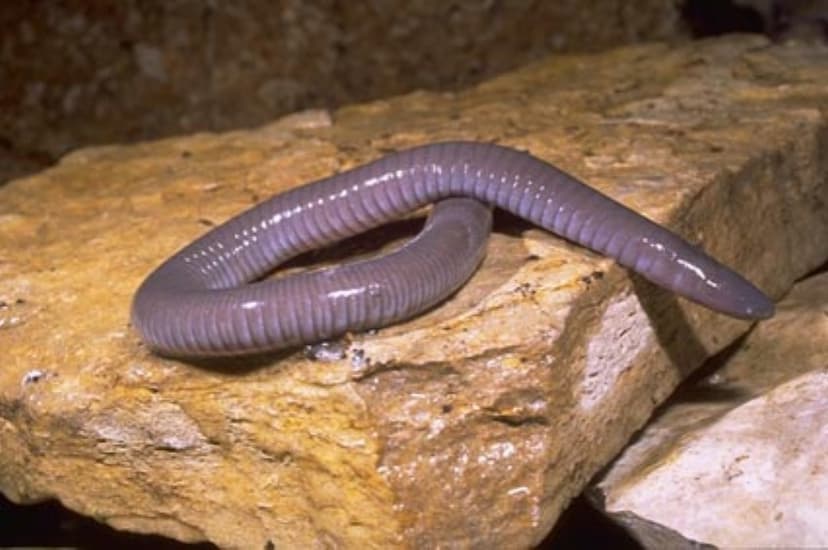
Dermophis mexicanus, also known as the Mexican burrowing caecilian, is a limbless amphibian native to Mexico and Central America. This species is characterized by its earthworm-like appearance, with a segmented body due to numerous skin folds, and lives a fossorial lifestyle, burrowing under leaf litter and debris.