
Chrysocyon
Chrysocyon·omnivorous·solitary·near threatened
The maned wolf (Chrysocyon brachyurus) is a large, distinctive canine native to South America, easily recognized by its unusually long legs and reddish coat, which gives it a fox-like appearance but it is neither a fox nor a wolf. It is the sole member of the genus Chrysocyon and plays a crucial role in seed dispersal, particularly of the wolf apple. This solitary, omnivorous animal inhabits open grasslands and scrublands, communicating primarily through scent marking and a unique vocalization known as "roar-barking".
Key Facts
- ›It is the largest canine in South America, with long legs adapted for tall grasslands.
- ›The maned wolf is omnivorous, with fruits, especially the wolf apple, forming a significant part of its diet.
- ›It is a solitary animal, communicating mainly through scent marking and a 'roar-barking' call.
- ›Its conservation status is listed as 'near threatened' by the IUCN, with some regional classifications being more severe.
- ›Habitat loss due to deforestation and roadkill are major threats to the species.

Aguará Guazú, Kalak, Lobo-Guará, Lobo De CríN, Lobo De Los Esteros, Lobo Colorado, Borochi, Skunk Wolf
South America
Grasslands, Scrub Prairies, Savanna, Semi-Open Habitats
Reddish-Brown, Golden Orange, Black, White
Roar-Barking
Jaguar, Puma
Long Legs, Black Mane, Large Ears, Whitish Tuft At Tail Tip, White Bib Beneath Throat
About Chrysocyon
Chrysocyon (Maned Wolf)
The maned wolf, scientifically classified as Chrysocyon brachyurus, is a captivating and unique canid species native to the open grasslands and savannas of South America. It is the sole member of its genus, Chrysocyon, and is distinguished by its remarkably long legs, a reddish-brown coat, and a prominent black mane along its neck, which it can erect when threatened. Despite its common name, the maned wolf is neither a true wolf nor a fox, possessing distinct evolutionary traits that set it apart from other canids.
Ecology and Behavior
Maned wolves are primarily crepuscular, displaying peak activity during twilight hours, though their activity patterns can be influenced by humidity and temperature. They are solitary animals, typically hunting alone rather than in packs. Their diet is omnivorous, with a significant portion consisting of fruits, particularly the wolf apple (Solanum lycocarpum), for which they are important seed dispersers. They also consume small mammals, birds, reptiles, and insects. Communication is largely through scent marking, with their urine possessing a distinctive odor likened to cannabis, and they also emit a loud vocalization known as "roar-barking."
Physical Description
Standing as the tallest canid in South America, the maned wolf can reach up to 110 cm (43 in) at the shoulder, with its long legs being an adaptation to navigate tall grasses. Adults typically weigh between 20-30 kg (44-66 lb). Its coat is usually a golden orange to reddish-brown, with black legs and the characteristic black mane. A white tuft on the tail and a white patch on the throat are also notable features. Melanistic individuals, which are black, are rare but have been documented.
Reproduction and Life Cycle
Breeding seasons vary, with gestation lasting approximately 60 to 65 days. Litters usually consist of two to six pups, born with black fur that changes to red after about ten weeks. Pups are dependent on their parents for food and protection for their first year. While captive lifespans are estimated between 12 to 15 years, longevity in the wild is less understood.
Conservation
Conservation efforts are vital for the maned wolf. Its designation as 'near threatened' by the IUCN reflects concerns over declining populations, primarily due to habitat loss from deforestation, agricultural expansion, and increasing roadkill. While protected in several countries, ongoing threats require continued monitoring and conservation strategies to ensure the survival of this unique South American canid.
Source: Wikipedia ↗
Frequently Asked Questions
What is a maned wolf?
The maned wolf, scientifically known as Chrysocyon brachyurus, is a large South American canine. Despite its name and appearance resembling a fox, it is neither a fox nor a wolf, but a unique species within its own genus.
Where do maned wolves live?
Maned wolves are found in open and semi-open habitats across South America, primarily in the grasslands and savannas of Brazil, Paraguay, northern Argentina, and southeastern Peru. They are very rare in Uruguay.
What do maned wolves eat?
Maned wolves are omnivorous and have a diverse diet. While they prey on small mammals, birds, and reptiles, a substantial portion of their diet consists of fruits, especially the wolf apple, playing a key role in seed dispersal.
Are maned wolves solitary or do they live in packs?
Maned wolves are generally solitary animals. They typically hunt alone and communicate primarily through scent marking, though monogamous pairs may defend a shared territory.
What is the conservation status of the maned wolf?
The International Union for Conservation of Nature (IUCN) lists the maned wolf as 'near threatened' due to declining populations. However, some Brazilian state lists classify it as 'vulnerable' or even 'endangered'.
What makes the maned wolf distinctive?
The maned wolf is easily identified by its exceptionally long legs, which are an adaptation to its grassland habitat, and a distinctive black mane along its nape. It also has a unique odor in its scent markings, often compared to cannabis.
Related Canid species
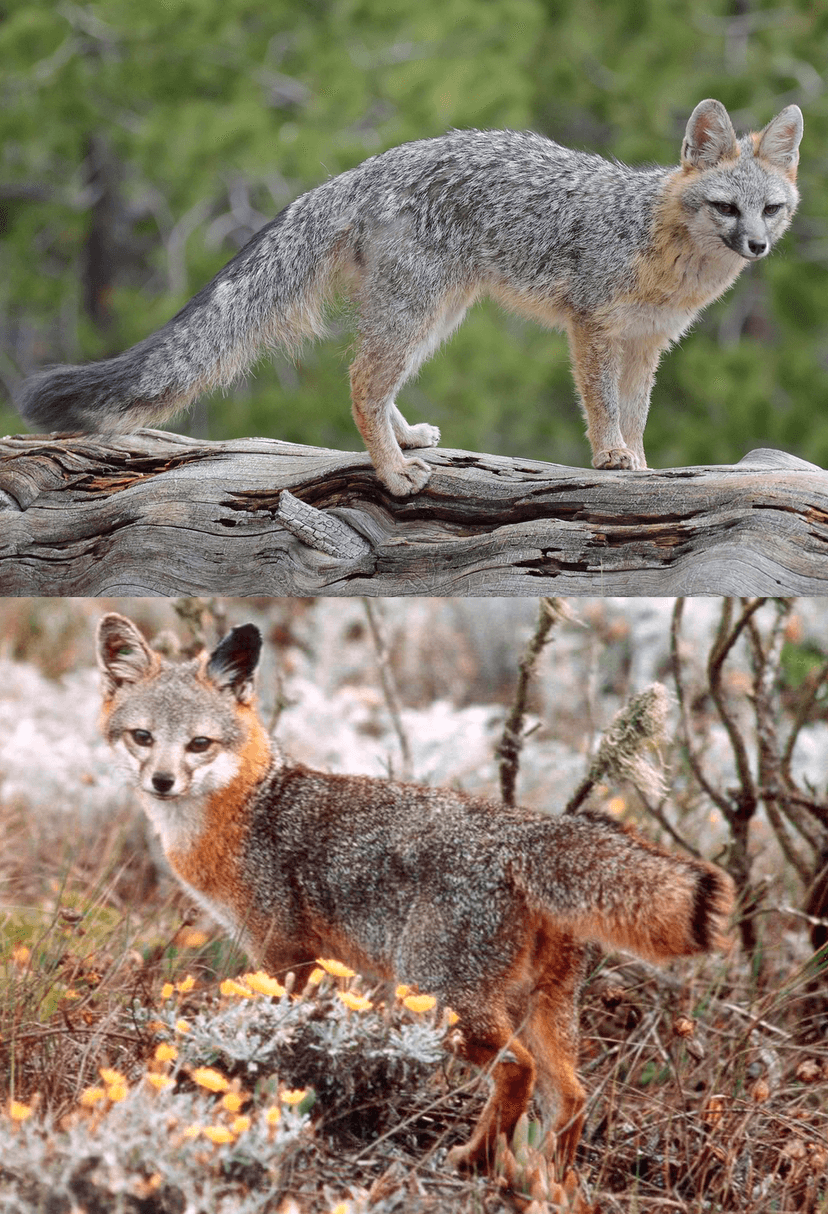
Urocyon
Urocyon is a genus of canids native to the Western Hemisphere, encompassing the gray fox and the island fox. Genetic studies suggest that Urocyon is the most basal lineage among living canids. Fossils indicate the genus has a history dating back to the Upper Pliocene.
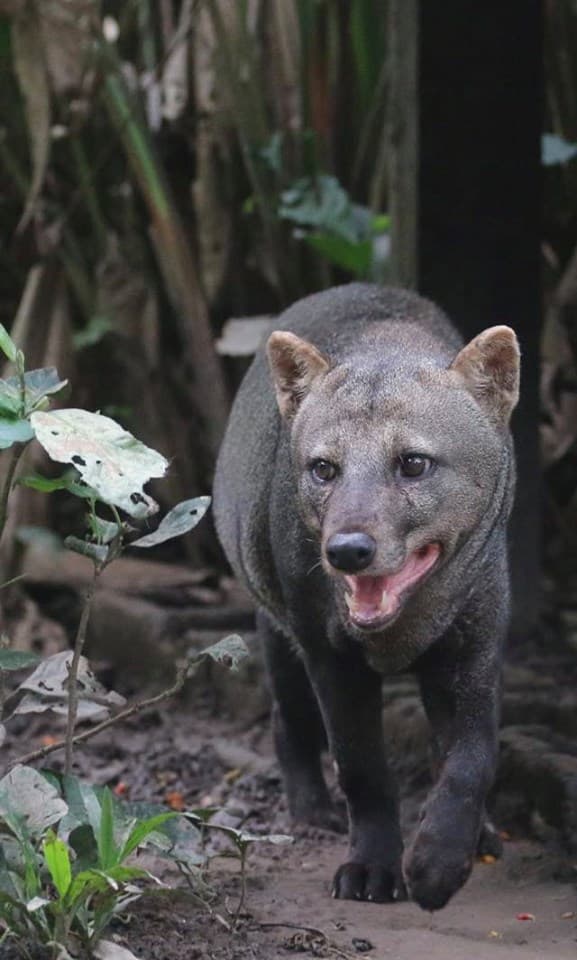
Atelocynus
The short-eared dog (Atelocynus microtis) is a rare and elusive canid species found exclusively in the Amazonian basin of South America. It is the sole member of the genus Atelocynus and is distinguished by its short ears, partially webbed paws, and a preference for solitary life in undisturbed rainforest environments.

Cerdocyon
The crab-eating fox (Cerdocyon thous), also known as the forest dog or wood fox, is a medium-sized canid species native to central South America. Despite its name, it is not closely related to true foxes and possesses both dog- and fox-like characteristics. It is the sole living representative of the genus Cerdocyon and is distinguished by its opportunistic omnivorous diet, which includes crabs, insects, rodents, and fruit.