
Urocyon
Urocyon·Omnivorous·Solitary or pairs
Urocyon is a genus of canids native to the Western Hemisphere, encompassing the gray fox and the island fox. Genetic studies suggest that Urocyon is the most basal lineage among living canids. Fossils indicate the genus has a history dating back to the Upper Pliocene.
Key Facts
- ›Includes the gray fox and the island fox.
- ›Found in the Western Hemisphere.
- ›Considered the most basal lineage among living canids.
- ›Fossils of an ancestral species, Urocyon progressus, date back to the Upper Pliocene.
- ›The Cozumel fox is a critically endangered dwarf form related to Urocyon.
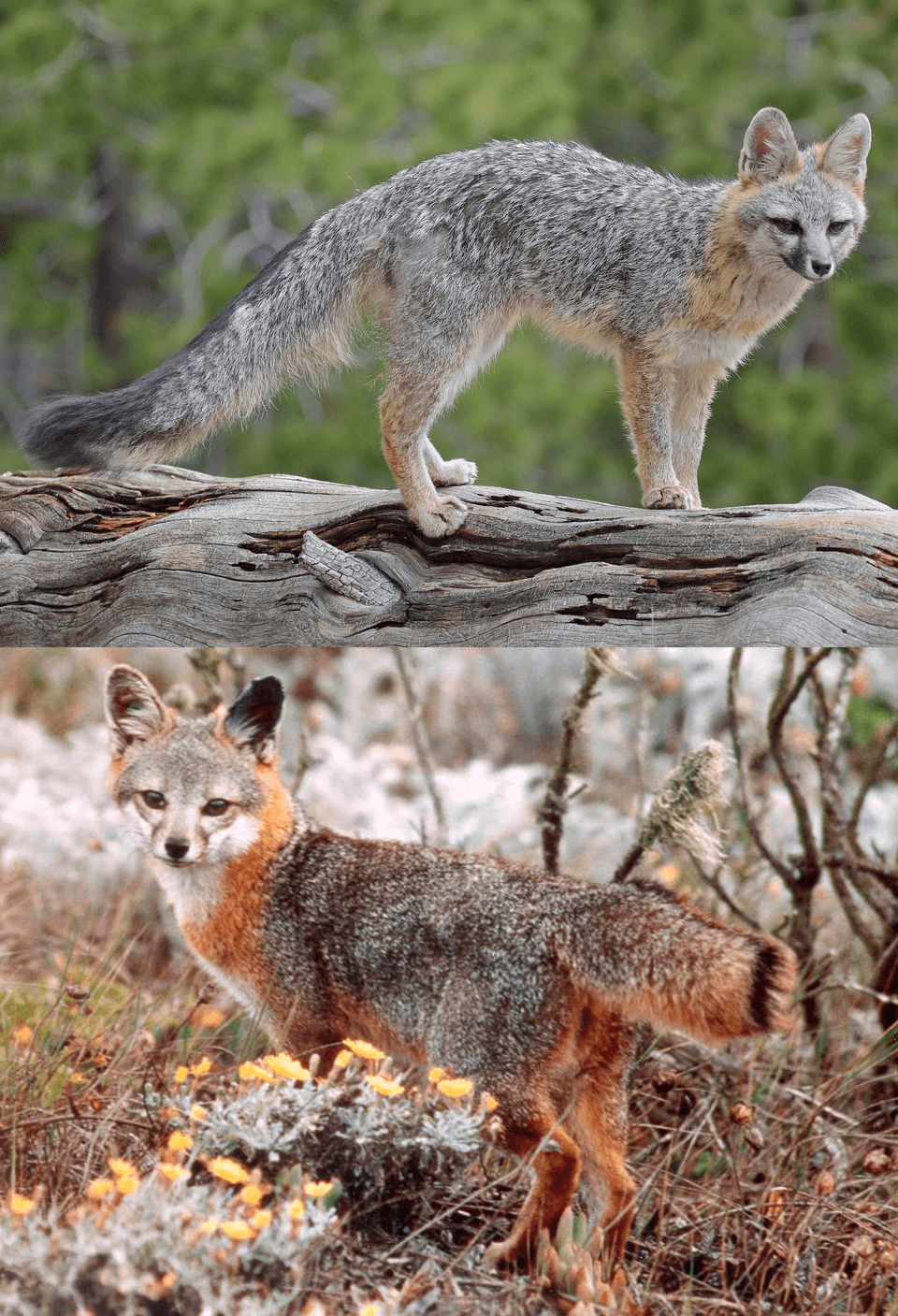
Gray Fox, Island Fox, Cozumel Fox
North America
Gray, Reddish-Brown, White
Bark, Howl, Yell
Coyotes, Bobcats, Eagles
- Partially Retractable Claws
- Gray Coat With Reddish-Brown and White Markings
- Long, Bushy Tail
About Urocyon
Urocyon is a genus of canids, commonly known as foxes, that are native to the Western Hemisphere. The genus name itself comes from Greek, translating to "tailed dog." This genus is notable for containing two extant species: the widespread gray fox (Urocyon cinereoargenteus) and the diminutive island fox (Urocyon littoralis), which is found on the Channel Islands off the coast of California.
Evolutionary Significance
Genetic studies, particularly whole genome sequencing, have placed the Urocyon genus as the most basal lineage among living canids. This suggests that Urocyon represents the earliest diverging branch from the common ancestor of all modern canids. Fossil evidence supports a deep history for the genus, with fossils of what is believed to be the ancestor of the gray fox, Urocyon progressus, discovered in Kansas, dating back to the Upper Pliocene epoch.
Extant and Extinct Species
The gray fox is a medium-sized fox found across much of North and Central America, inhabiting a variety of environments including forests, grasslands, and shrublands. The island fox, a much smaller species, is endemic to the Channel Islands and is thought to have evolved from a mainland gray fox ancestor that became isolated on the islands. Its small size is an example of island dwarfism.
While not yet scientifically described, the Cozumel fox is a critically endangered dwarf form found on Cozumel Island, Mexico. It is considered a relative of the island fox and has likely been isolated on the island for thousands of years. Examination of sub-fossil remains suggests it is significantly smaller than mainland gray foxes. Surveys are ongoing to better understand its population status, with recent sightings offering a glimmer of hope for this rare canid.
Source: Wikipedia ↗
Frequently Asked Questions
What species are included in the Urocyon genus?
The Urocyon genus includes the gray fox (Urocyon cinereoargenteus) and the island fox (Urocyon littoralis). It also encompasses the critically endangered Cozumel fox, which is a dwarf form.
Where are Urocyon species found?
Species within the Urocyon genus are found in the Western Hemisphere. This includes North and Central America, as well as islands such as Cozumel and the Channel Islands.
What is the evolutionary significance of the Urocyon genus?
Whole genome sequencing indicates that Urocyon is the most basal lineage among living canids, meaning it diverged earliest from the common ancestor of other canid genera.
When do the earliest Urocyon fossils date back to?
Fossils believed to be from an ancestor of the gray fox, Urocyon progressus, have been found in Kansas and date to the Upper Pliocene epoch.
What is known about the Cozumel fox?
The Cozumel fox is a critically endangered dwarf form found on Cozumel Island, Mexico. It is genetically related to the island fox and is thought to have been isolated on the island for at least 5,000 years, possibly much longer.
Related Canid species

Chrysocyon
The maned wolf (Chrysocyon brachyurus) is a large, distinctive canine native to South America, easily recognized by its unusually long legs and reddish coat, which gives it a fox-like appearance but it is neither a fox nor a wolf. It is the sole member of the genus Chrysocyon and plays a crucial role in seed dispersal, particularly of the wolf apple. This solitary, omnivorous animal inhabits open grasslands and scrublands, communicating primarily through scent marking and a unique vocalization known as "roar-barking".

Cerdocyon
The crab-eating fox (Cerdocyon thous), also known as the forest dog or wood fox, is a medium-sized canid species native to central South America. Despite its name, it is not closely related to true foxes and possesses both dog- and fox-like characteristics. It is the sole living representative of the genus Cerdocyon and is distinguished by its opportunistic omnivorous diet, which includes crabs, insects, rodents, and fruit.
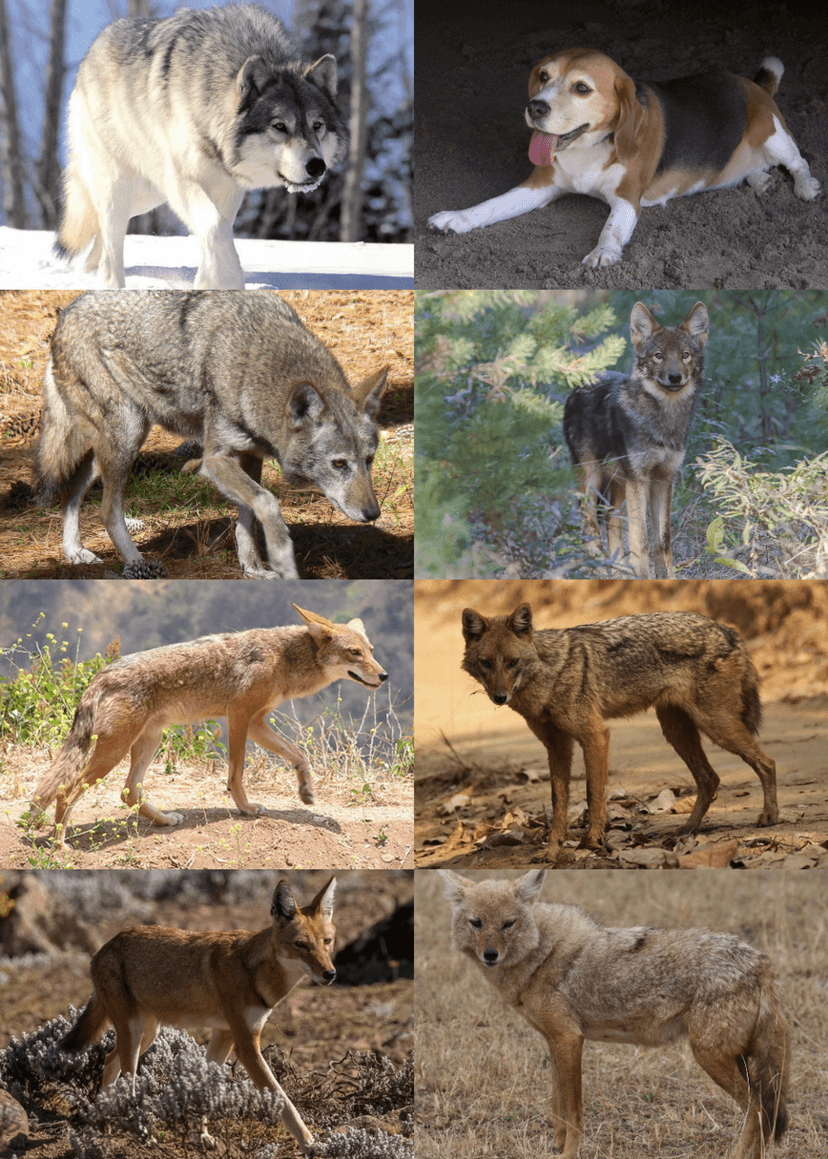
Canis
Canis is a genus of canids that encompasses a diverse group of animals including wolves, dogs, coyotes, and jackals. These species are characterized by their moderate to large size, robust skulls and dentition, long legs, and relatively short ears and tails. They are found across various continents and play significant roles in their respective ecosystems.