
Cuon
Cuon·carnivorous·clan-living, pack hunter·Endangered
The dhole (Cuon alpinus) is a canid native to South, East, and Southeast Asia, distinguished by its unique skull morphology, lack of a third lower molar, and single-cusped upper molars. These highly social animals live in large clans and are diurnal pack hunters, primarily targeting large and medium-sized ungulates. Historically widespread, their range has significantly contracted due to habitat loss, prey depletion, and competition, leading to their current Endangered status.
Key Facts
- ›Native to South, East, and Southeast Asia, with a historical range extending into Europe.
- ›Distinctive anatomical features include a convex skull profile and reduced molar structure.
- ›Highly social, living in large clans of around 12 individuals, sometimes exceeding 40.
- ›Diurnal pack hunters that preferentially target large and medium-sized ungulates.
- ›Listed as Endangered on the IUCN Red List due to declining populations and various threats.
- ›Competes with tigers and leopards for prey in tropical forests.

Asian Wild Dog, Asiatic Wild Dog, Indian Wild Dog, Whistling Dog, Red Dog, Red Wolf
Asia
Forest, Alpine Steppe, Plains Regions
Reddish, Rusty-Red, Brownish, Yellowish, Whitish, Dark Brown, Greyish-Reddish, Reddish-Ocher
Whistle, Coo-Coo, Scream, Whine, Growl, Chatter, Yapping Cry
Convex Skull Profile, Lacks A Third Lower Molar, Single-Cusp Upper Molars, Well-Developed Sagittal Crest, Hyena-Like Face, Shorter Rostrum Than Domestic Dogs, Luxurious and Fluffy Tail, Long Backbone, Slender Limbs, Cat-Like Appearance
About Cuon
What is the Dhole?
The dhole (Cuon alpinus), also known as the Asian wild dog, is a canid species native to South, East, and Southeast Asia. It is the sole member of the genus Cuon and possesses several anatomical distinctions from the genus Canis, including a convex skull profile, the absence of a third lower molar, and upper molars with only a single cusp. Historically, the dhole's range was extensive, covering much of Asia and extending into Europe during the Pleistocene, though it has since become restricted.
Ecology and Behavior
Dholes are highly social animals, living in large clans that can comprise about 12 individuals, with groups of over 40 being recorded. Unlike some other canids, they have less rigid dominance hierarchies. They are diurnal pack hunters, primarily targeting large and medium-sized ungulates. In tropical forest environments, they compete with tigers and leopards, often by exploiting somewhat different prey species.
Conservation Status
The dhole is listed as Endangered on the IUCN Red List, with estimated mature populations fewer than 2,500 individuals. Key factors contributing to their decline include habitat loss, reduction in prey availability, competition with other species, persecution due to livestock predation, and the transmission of diseases from domestic dogs. Their range has become fragmented, and they are now extinct in Central Asia, parts of Southeast Asia, and potentially in Russia and the Korean peninsula.
Source: Wikipedia ↗
Frequently Asked Questions
What is a dhole?
A dhole, scientifically known as Cuon alpinus, is a species of canid native to Asia. It is the only member of the genus Cuon and is distinguished from other canids by several unique anatomical features, including its skull shape and molar structure.
Where do dholes live?
Dholes are found in South, East, and Southeast Asia. Historically, their range was much larger, extending into parts of Europe and even a controversial record from North America, but they are now extinct in many of these areas and their current presence in some regions is uncertain.
What is the social structure of dholes?
Dholes are highly social animals that live in large clans, typically consisting of about 12 individuals, though larger groups of over 40 have been observed. They exhibit less rigid dominance hierarchies compared to other canids like wolves.
What do dholes eat?
Dholes are diurnal pack hunters that primarily prey on large and medium-sized ungulates. They compete with other large carnivores like tigers and leopards, often targeting slightly different prey species.
What is the conservation status of the dhole?
The dhole is listed as Endangered on the IUCN Red List. Populations are decreasing due to factors such as habitat loss, loss of prey, competition with other species, persecution, and disease transfer from domestic dogs.
What are some distinctive physical features of the dhole?
Dholes have a reddish coat, which is brightest in winter, with variations in tone across their body. They possess a luxurious, fluffy tail and have a distinctive skull with a well-developed sagittal crest. Their appearance has been described as combining features of the gray wolf and red fox.
Related Canid species

Cerdocyon
The crab-eating fox (Cerdocyon thous), also known as the forest dog or wood fox, is a medium-sized canid species native to central South America. Despite its name, it is not closely related to true foxes and possesses both dog- and fox-like characteristics. It is the sole living representative of the genus Cerdocyon and is distinguished by its opportunistic omnivorous diet, which includes crabs, insects, rodents, and fruit.

Otocyon
The bat-eared fox (Otocyon megalotis) is a unique canid species native to the African savanna, distinguished by its exceptionally large ears which aid in thermoregulation and prey detection. It is the sole surviving member of its genus and is considered genetically distinct from true foxes, with fossil records indicating its appearance in the middle Pleistocene. This small canid primarily feeds on insects, a dietary specialization uncommon among canids, and lives in social groups or pairs in arid and semi-arid environments.
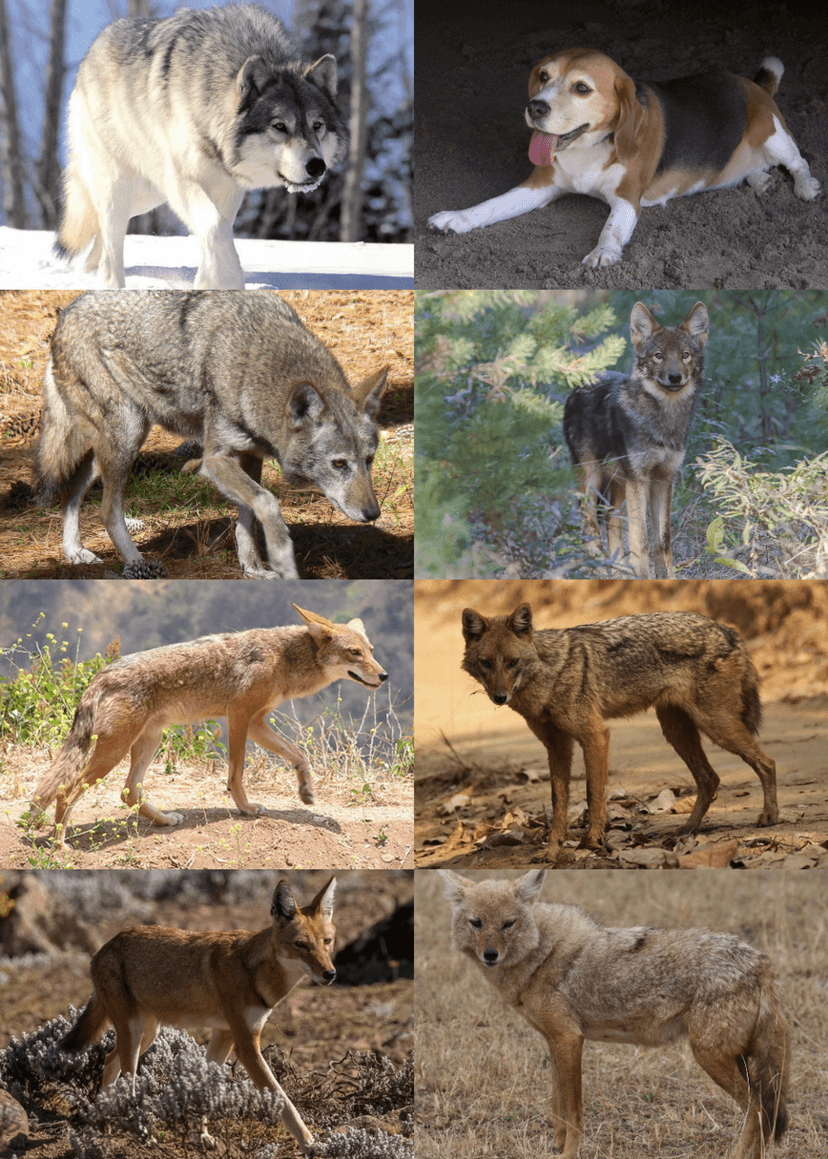
Canis
Canis is a genus of canids that encompasses a diverse group of animals including wolves, dogs, coyotes, and jackals. These species are characterized by their moderate to large size, robust skulls and dentition, long legs, and relatively short ears and tails. They are found across various continents and play significant roles in their respective ecosystems.