
Canis
Canis·Carnivorous to Omnivorous·Monogamous pairs, family groups, packs
Canis is a genus of canids that encompasses a diverse group of animals including wolves, dogs, coyotes, and jackals. These species are characterized by their moderate to large size, robust skulls and dentition, long legs, and relatively short ears and tails. They are found across various continents and play significant roles in their respective ecosystems.
Key Facts
- ›The genus Canis includes well-known species like wolves, dogs, coyotes, and jackals.
- ›Members of this genus typically have moderate to large body size with strong skulls and dentition.
- ›Canis species are phylogenetically closely related and can potentially interbreed.
- ›The genus has a long evolutionary history, with early ancestors appearing in North America and Eurasia millions of years ago.
- ›Behavioral studies highlight variations in mating systems and parental care among Canis species.
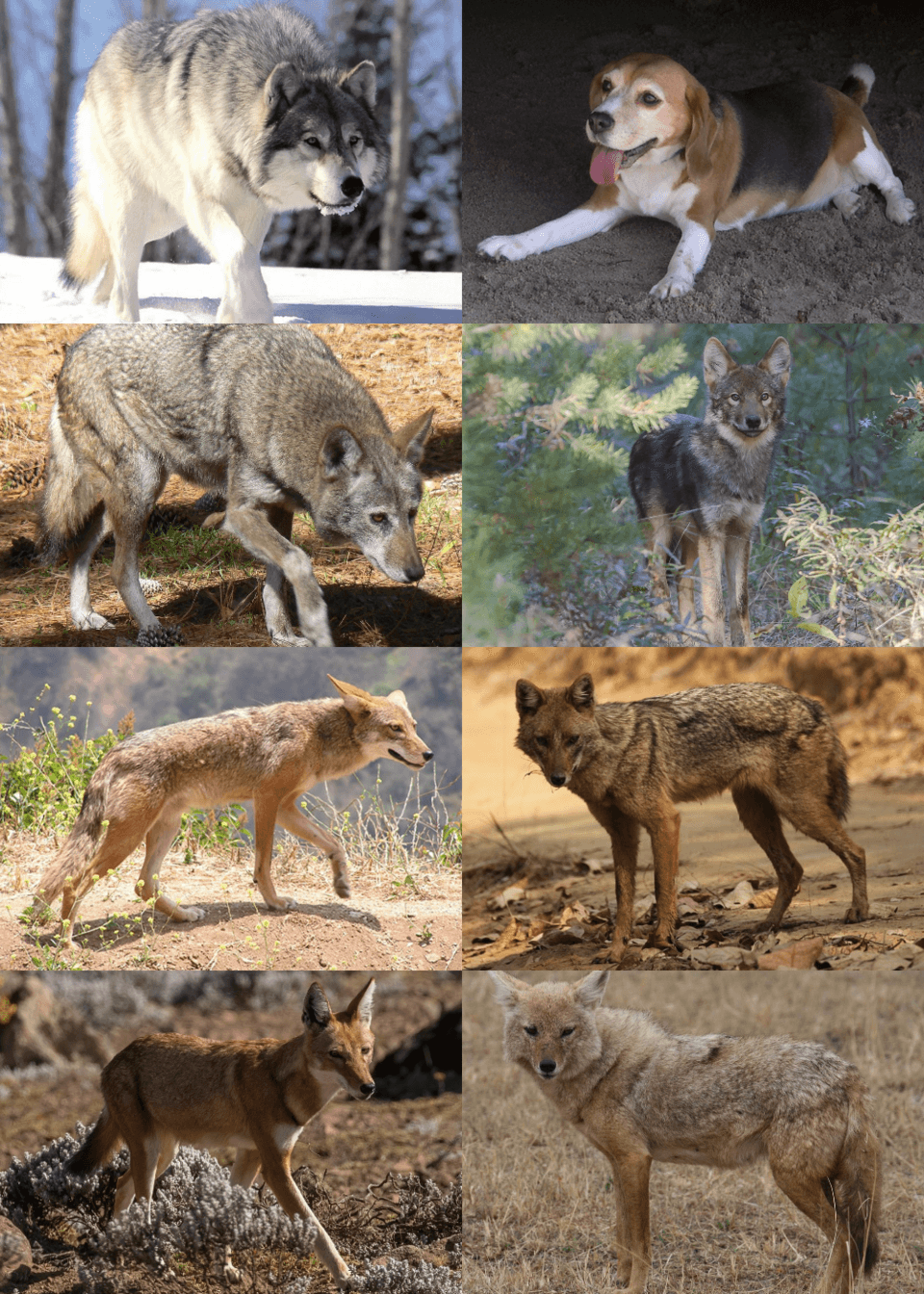
Wolf, Dog, Coyote, Jackal
North America, Eurasia, Africa
Howl, Bark, Whine
Massive, Well-Developed Skulls and Dentition, Long Legs, Comparatively Short Ears and Tails
About Canis
What is Canis?
Canis is a genus within the Caninae subfamily, encompassing a diverse array of well-known carnivorous mammals. This genus includes species such as wolves, domestic dogs, coyotes, and various types of jackals. These animals are recognized for their moderate to large body size, characterized by robust skulls and powerful dentition, along with distinctive long legs and relatively short ears and tails.
Evolutionary History and Diversity
The evolutionary lineage of Canis is extensive, with fossil records indicating its emergence millions of years ago. Early ancestors appeared in North America, with forms like Eucyon giving rise to early Canis species. These canids later migrated to Eurasia, where they evolved and diversified, eventually becoming significant predators across the Palearctic region. Throughout their history, members of the genus have undergone adaptations, leading to the variety of species observed today. Recent genetic studies have also refined understanding of their relationships, leading to proposals for reclassifying some species into distinct genera. The genus has a notable presence in Africa, with evidence of colonization from Eurasia during the Pliocene and Pleistocene epochs.
Physical and Behavioral Traits
Species within the Canis genus share several key physical traits, including strong jaws and teeth adapted for processing meat and bone. Their dentition plays a crucial role in their feeding strategies. Behaviorally, there is considerable diversity. While many species, like gray wolves, live in complex social structures such as packs, and exhibit monogamous mating systems, others may have different social organizations and mating behaviors. Parental care also varies among species, with studies showing adaptations in energy and time investment from parents to offspring.
Ecological Significance
Canis species are integral components of their respective ecosystems. As predators, they influence prey populations and contribute to the overall health and balance of their environments. Their dietary flexibility has allowed them to adapt to a wide range of habitats, from forests and grasslands to deserts and tundras, and to survive significant environmental changes and extinction events.
Source: Wikipedia ↗
Frequently Asked Questions
What animals are included in the genus Canis?
The genus Canis is a taxonomic classification that includes several extant species. Among the most well-known members are wolves, domestic dogs, coyotes, and golden jackals. These animals share common evolutionary roots and exhibit related physical and behavioral traits.
What are the distinctive physical features of Canis species?
Species within the genus Canis are generally distinguished by their moderate to large size. They possess massive, well-developed skulls and dentition, adapted for their predatory lifestyle. Other common characteristics include long legs and comparatively short ears and tails.
Can different species within the genus Canis interbreed?
Yes, all species within the genus Canis are phylogenetically closely related and share the same number of chromosomes. This close genetic relationship means that they can potentially interbreed and produce viable offspring.
Where did the genus Canis originate?
The evolutionary history of Canis indicates its origins are complex, with ancestors appearing in North America and Eurasia. Early canid ancestors emerged millions of years ago, with species like Eucyon giving rise to early Canis in North America and later evolving in Eurasia, eventually becoming dominant predators.
How do the diets of Canis species vary?
The diet of Canis species can vary significantly based on the specific animal and its environment. While many are primarily carnivorous, some exhibit omnivorous tendencies. Their dentition, particularly the ratio of the trigonid to talonid in the lower carnassial, can indicate whether a species is more carnivorous or omnivorous.
Are all Canis species pack animals?
While many Canis species, such as wolves, are known for living and hunting in packs, not all members of the genus exhibit this social structure. Some species may be more solitary or live in smaller family groups. The social behavior is diverse and can vary significantly between species.
Related Canid species
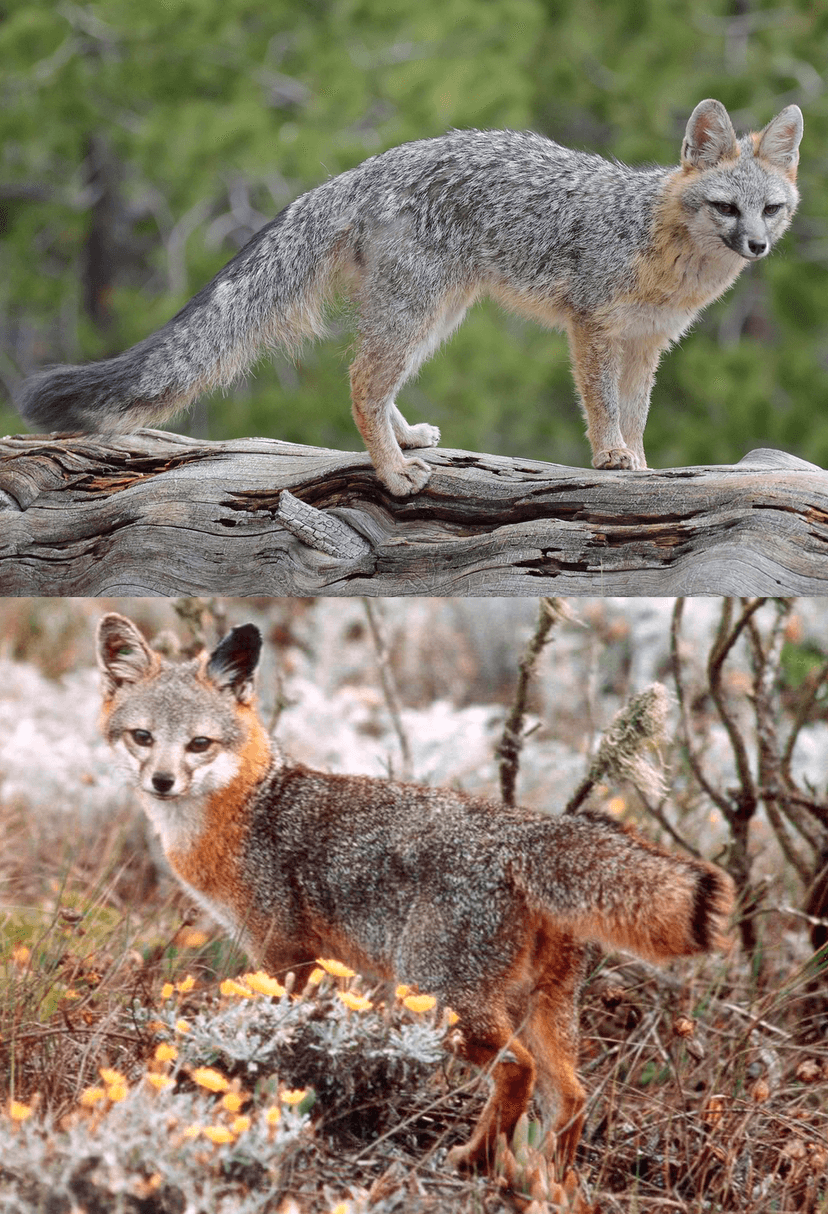
Urocyon
Urocyon is a genus of canids native to the Western Hemisphere, encompassing the gray fox and the island fox. Genetic studies suggest that Urocyon is the most basal lineage among living canids. Fossils indicate the genus has a history dating back to the Upper Pliocene.

Otocyon
The bat-eared fox (Otocyon megalotis) is a unique canid species native to the African savanna, distinguished by its exceptionally large ears which aid in thermoregulation and prey detection. It is the sole surviving member of its genus and is considered genetically distinct from true foxes, with fossil records indicating its appearance in the middle Pleistocene. This small canid primarily feeds on insects, a dietary specialization uncommon among canids, and lives in social groups or pairs in arid and semi-arid environments.

Canina
Canina is a taxonomic subtribe within the tribe Canini, encompassing wolf-like canids. Fossils indicate their existence as far back as 9 million years ago, making them an ancient lineage within the dog family. A distinctive characteristic of Canina members is their shared karyotype of 78 chromosomes, which allows for the production of hybrids.