
Otocyon
Otocyon·Insectivorous·Social groups or pairs·Least Concern
The bat-eared fox (Otocyon megalotis) is a unique canid species native to the African savanna, distinguished by its exceptionally large ears which aid in thermoregulation and prey detection. It is the sole surviving member of its genus and is considered genetically distinct from true foxes, with fossil records indicating its appearance in the middle Pleistocene. This small canid primarily feeds on insects, a dietary specialization uncommon among canids, and lives in social groups or pairs in arid and semi-arid environments.
Key Facts
- ›The only extant species in the genus Otocyon, and sister to all other members of the tribe Vulpini.
- ›Primarily insectivorous, with harvester termites making up 80-90% of its diet.
- ›Possesses unusually large ears, crucial for thermoregulation and locating prey.
- ›Found in two disjunct populations in arid and semi-arid regions of Eastern and Southern Africa.
- ›Males take on the majority of parental care responsibilities for their pups.
- ›Considered a least-concern species by the IUCN, with no major threats identified.

Big-Eared Fox, Black-Eared Fox, Long-Eared Fox, Delalande's Fox, Cape Fox, Motlosi
Africa
Tan, Grey Agouti, Buff, Dark Brown, Black
Contact Calls, Warning Calls
Large Mammalian Carnivores, Large Raptors, Central African Rock Python, Black-Backed Jackals
Proportionally Large Ears, Smaller Than Average Canid Teeth, Subangular Process On Lower Jaw
About Otocyon
Otocyon: The Bat-Eared Fox
The bat-eared fox, scientifically known as Otocyon megalotis, is a distinctive canid species native to the African savanna. It is the sole surviving member of its genus, Otocyon, and is recognized as being genetically distinct from true foxes, with fossil evidence suggesting its emergence during the middle Pleistocene epoch. Its common name is derived from its exceptionally large ears, which are crucial for both thermoregulation in its arid habitat and for detecting prey. The species is found in two geographically separated populations across Eastern and Southern Africa.
Description and Adaptations
Bat-eared foxes are relatively small canids, characterized by their tan-colored fur, often with grey agouti guard hairs, and darker limbs and extremities. Their most striking feature is their large ears, measuring 11–13 cm in length. These ears help radiate heat and are highly sensitive to sound, enabling them to locate insects beneath the ground. Morphologically, they possess unusual dentition with smaller, blunter teeth and a greater number of molars than most canids, adaptations for their insectivorous diet. A unique subangular process on the lower jaw enhances bite force and facilitates rapid chewing.
Distribution and Habitat
The species occupies arid and semi-arid regions of Africa, with two allopatric subspecies: O. m. virgatus in East Africa and O. m. megalotis in Southern Africa. They prefer habitats with bare ground and short grasses maintained by grazing ungulates, such as short grasslands, open acacia woodlands, and woodland edges. Bat-eared foxes dig dens for shelter and to raise their young, and also utilize shade from trees to escape extreme temperatures.
Behavior and Diet
Bat-eared foxes are social animals, living in pairs or family groups. They engage in communal foraging, grooming, and resting, which enhances protection from predators. Communication involves visual displays, such as ear and tail positioning, and limited vocalizations like contact and warning calls. Their diet is highly specialized, consisting primarily of harvester termites, which they locate by sound while slowly foraging with their noses to the ground and ears tilted forward. While they rarely drink from free-standing water, they obtain sufficient hydration from their insect prey. Other food items may include other arthropods, small vertebrates, and some plant matter.
Reproduction and Life Cycle
Predominantly socially monogamous, bat-eared foxes exhibit a unique reversal in parental roles, with males performing the majority of pup care. This includes grooming, defending, and transporting the young. Gestation lasts 60–70 days, with litters typically comprising one to six pups. Pups are weaned after 14–15 weeks. Young foxes disperse around 5–6 months of age and reach sexual maturity by 8–9 months. In the wild, they can live up to 9 years, with captive individuals recorded to live over 14–17 years.
Conservation and Human Interaction
The bat-eared fox is classified as a species of Least Concern by the IUCN, as no major threats are identified. While individual populations may be affected by diseases, drought, or predation, the species as a whole is stable. They play a role in controlling harvester termite populations, which are considered pests in some human-populated areas. Historically, they have been hunted for their fur by indigenous peoples in Botswana. Captive individuals can be found in zoos worldwide.
Source: Wikipedia ↗
Frequently Asked Questions
What makes the bat-eared fox's diet unique?
The bat-eared fox is the only truly insectivorous canid, with harvester termites forming the vast majority of its diet. This specialization is unusual among canids, which are typically carnivorous or omnivorous.
What is the purpose of the bat-eared fox's large ears?
The bat-eared fox's large ears serve a dual purpose: they help in dissipating heat, which is crucial for survival in warm climates, and they are highly effective in locating prey, particularly insects, by amplifying sounds.
Where do bat-eared foxes live?
Bat-eared foxes inhabit the arid and semi-arid regions of Eastern and Southern Africa. They are found in two separate populations, adapted to environments like short grasslands and open acacia woodlands.
What is the social structure of bat-eared foxes?
Bat-eared foxes are social animals, typically living in pairs or stable family groups. They forage, play, and groom together, which aids in protection against predators and strengthens group cohesion.
Who takes care of the pups in bat-eared fox families?
In a reversal of typical canid parental roles, the male bat-eared fox undertakes the majority of parental care. This includes grooming, defending, and moving the young between den sites, while the female focuses on foraging to produce milk.
What are the main threats to bat-eared foxes?
No major threats are identified for bat-eared fox populations, and they are listed as a least-concern species. However, individual animals can be affected by diseases, drought, and predation by larger carnivores and raptors.
Related Canid species

Cerdocyon
The crab-eating fox (Cerdocyon thous), also known as the forest dog or wood fox, is a medium-sized canid species native to central South America. Despite its name, it is not closely related to true foxes and possesses both dog- and fox-like characteristics. It is the sole living representative of the genus Cerdocyon and is distinguished by its opportunistic omnivorous diet, which includes crabs, insects, rodents, and fruit.
Canis
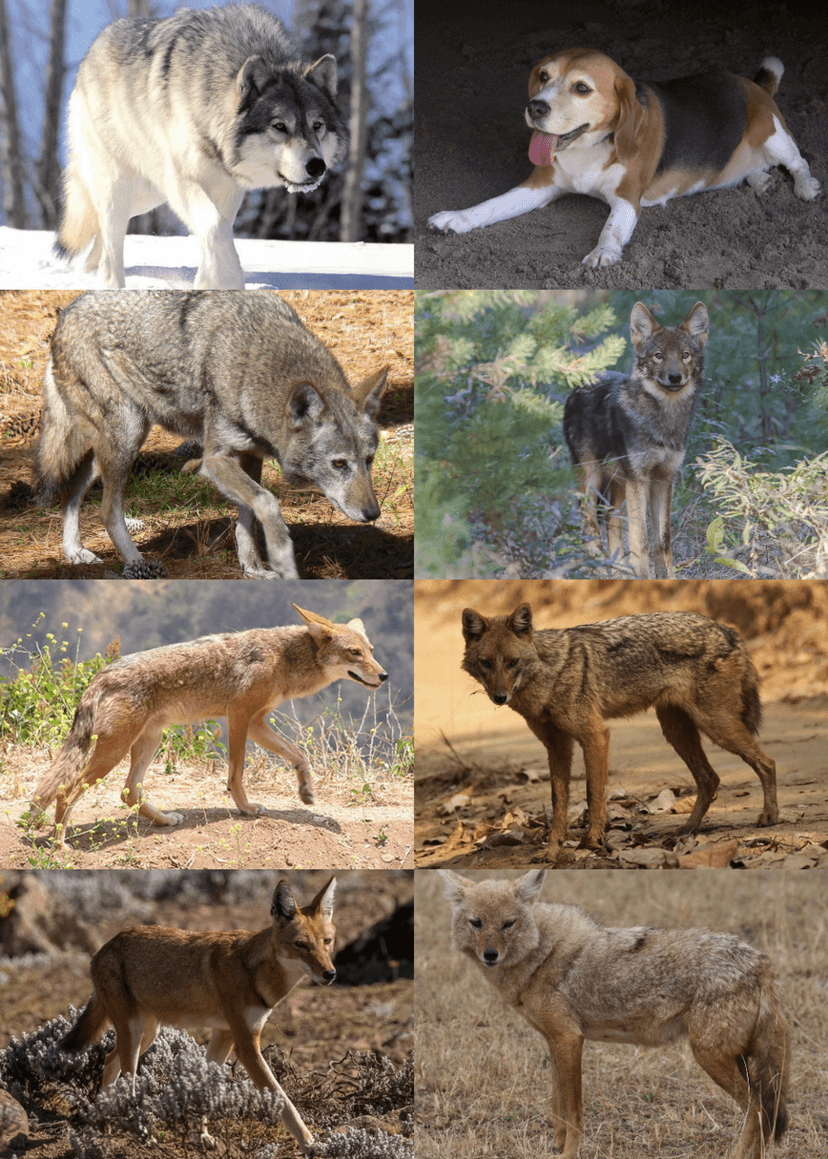
Canis is a genus of canids that encompasses a diverse group of animals including wolves, dogs, coyotes, and jackals. These species are characterized by their moderate to large size, robust skulls and dentition, long legs, and relatively short ears and tails. They are found across various continents and play significant roles in their respective ecosystems.

Chrysocyon
The maned wolf (Chrysocyon brachyurus) is a large, distinctive canine native to South America, easily recognized by its unusually long legs and reddish coat, which gives it a fox-like appearance but it is neither a fox nor a wolf. It is the sole member of the genus Chrysocyon and plays a crucial role in seed dispersal, particularly of the wolf apple. This solitary, omnivorous animal inhabits open grasslands and scrublands, communicating primarily through scent marking and a unique vocalization known as "roar-barking".